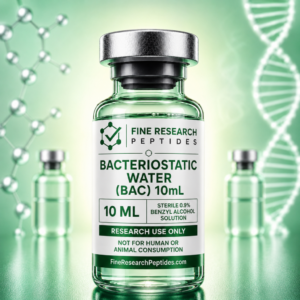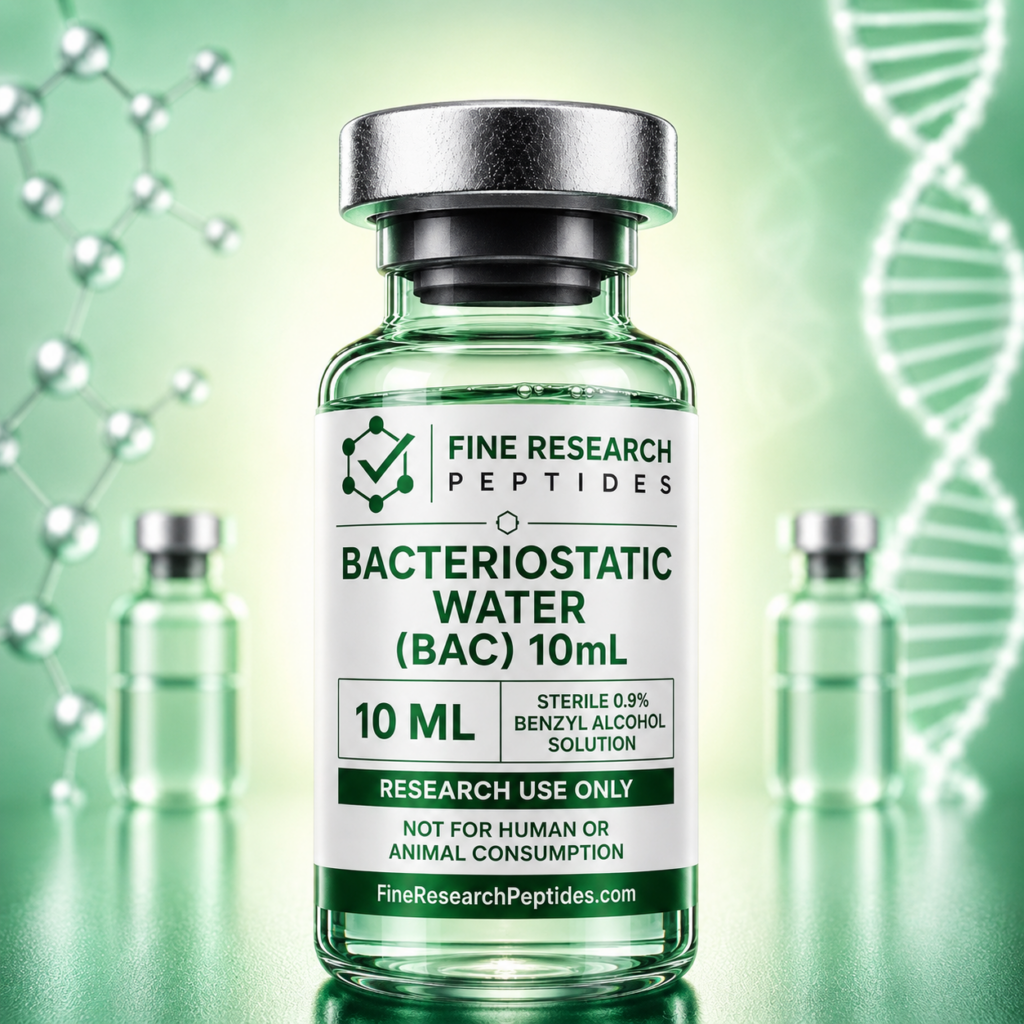
bacteriostatic water for injection
Bacteriostatic water for injection is a sterile, nonpyrogenic preparation designed to serve as a diluent or solvent for certain injectable medicines when specified by the product manufacturer. Unlike plain sterile water, the bacteriostatic formulation commonly contains a small amount of benzyl alcohol as a preservative. The preservative helps inhibit bacterial growth in a properly handled multidose container. Because formulations and labeling can vary, users should always rely on the specific product information and professional guidance associated with the intended medication.
The term “bacteriostatic” describes the ability of the preservative to inhibit bacterial growth; it does not mean that the product can make contaminated materials safe. Maintaining sterility still depends on appropriate storage, handling, container integrity, and aseptic practices. Bacteriostatic water should also not be viewed as a medication by itself. Its purpose is generally to provide a suitable vehicle for another drug when the manufacturer’s instructions specifically identify it as an appropriate diluent.
Common Uses in Pharmaceutical and Clinical Settings
The primary purpose of bacteriostatic water for injection is to dilute or dissolve compatible injectable medications according to their approved instructions. The appropriate volume, route, concentration, and handling requirements depend on the specific medication and its manufacturer. For this reason, there is no universal preparation method that can safely be applied to every drug. Healthcare professionals should consult the relevant prescribing information or pharmacist when determining whether a particular diluent is suitable.
Its multidose format can also be useful in settings where repeated withdrawals are permitted under appropriate aseptic conditions. However, the presence of a preservative does not eliminate the need for careful handling. Container seals, solution appearance, labeling, storage conditions, and compatibility all matter. If a product is cloudy, discolored, damaged, or otherwise inconsistent with its labeling, it should not be treated as automatically suitable for use.
Benefits and Important Limitations
One potential benefit of bacteriostatic water for injection is the presence of a preservative that helps limit bacterial growth after appropriate entry into a multidose container. This characteristic can distinguish it from preservative-free sterile water products intended for different purposes. The formulation can therefore be useful when a compatible medication specifically calls for a bacteriostatic diluent. Its usefulness, however, depends on the drug, route, formulation, and instructions provided by the manufacturer.
Bacteriostatic water is not appropriate for every situation. Benzyl alcohol can present particular safety concerns in certain populations, especially neonates, and some administration routes or medications may require a different vehicle. It should not be used as a general-purpose substitute for sterile water, saline, or another diluent. Understanding these limitations is essential because choosing an inappropriate vehicle can affect compatibility, safety, stability, or the performance of the medication being prepared.
Proper Handling and Storage Considerations
Proper handling begins with checking the product label and ensuring that the container is intact before use. The solution should normally be clear and free from unexpected particles or discoloration, while the vial or container should remain properly sealed until needed. Once opened, handling should follow the product’s labeled instructions and applicable professional procedures. Aseptic technique is important because the preservative does not compensate for careless handling or deliberate contamination.
Storage conditions should also follow the manufacturer’s labeled requirements rather than assumptions based on another product. Researchers and healthcare professionals should keep containers appropriately identified and maintain records when necessary. If bacteriostatic water is being used as part of a laboratory or clinical workflow, traceability can help establish which product and batch were involved. These practices support consistency and can make it easier to investigate unexpected issues associated with a prepared medication.
Compatibility Matters Before Use
Not every injectable medication is compatible with bacteriostatic water. Some formulations may interact with benzyl alcohol or may require a different diluent because of their chemical composition, stability characteristics, or approved administration instructions. Therefore, selecting a diluent should never be based solely on convenience. The medication’s official instructions, institutional protocol, pharmacist guidance, or other qualified professional direction should determine whether bacteriostatic water is appropriate.
This consideration is especially important when people encounter online discussions involving peptide products. Searches such as best place to buy pt-141 may lead to research-oriented listings or products presented with claims that are not equivalent to approved pharmaceutical information. Online availability does not establish authenticity, regulatory approval, clinical suitability, or safety. Researchers should distinguish carefully between legitimate pharmaceutical products and materials marketed for research purposes, while avoiding assumptions that a particular diluent makes an unapproved product suitable for human use.
Research Peptides and Bacteriostatic Water
Bacteriostatic water is sometimes discussed alongside peptide research because certain laboratory protocols may involve aqueous vehicles or solvents. However, the appropriate vehicle depends on the specific compound, research model, formulation, and validated protocol. Researchers should not assume that a pharmaceutical bacteriostatic water product is automatically compatible with every peptide. Likewise, a product labeled for research purposes should not be assumed to meet the same standards as an approved pharmaceutical diluent.
For researchers evaluating peptide-related materials, documentation remains an important part of responsible procurement and experimental planning. Product identity, composition, batch information, analytical documentation, storage requirements, and intended-use statements can all help establish whether a material fits a particular research protocol. When a compound is being investigated experimentally, its research status should remain clearly separated from claims about clinical treatment or human administration.
Safety, Quality, and Professional Guidance
Quality assessment should begin with the product itself rather than with marketing claims. Researchers and healthcare professionals can review the labeled composition, manufacturer information, lot identification, expiration information, container integrity, and applicable quality documentation. For pharmaceutical products, official labeling provides important information about indications, contraindications, warnings, compatibility, and handling. These details are more meaningful than generalized statements about a product being “safe” or “sterile.”
Professional guidance is particularly important when an injectable medication, investigational compound, or unfamiliar formulation is involved. Pharmacists and qualified healthcare professionals can help determine whether a diluent is appropriate for a specific approved medication. Research laboratories should instead follow their established protocols, institutional requirements, and applicable regulations. Bacteriostatic water should never be considered a substitute for professional evaluation or as a way to make an otherwise unsuitable product appropriate for injection.
Final Thoughts on Bacteriostatic Water for Injection
Bacteriostatic water for injection has a specific role as a sterile diluent containing a bacteriostatic preservative, commonly benzyl alcohol. Its benefits and limitations depend on the medication or research application with which it is being considered. Proper product identification, compatibility assessment, storage, container integrity, and aseptic handling are all important parts of responsible use. Most importantly, the manufacturer’s instructions should guide decisions about whether and how the product is used.
Interest in peptide-related searches, including phrases such as best place to buy pt-141, makes it especially important to distinguish product availability from verified pharmaceutical quality or clinical approval. A careful approach focuses on documentation, intended use, regulatory status, and professional guidance rather than relying on online claims. By understanding what bacteriostatic water is designed to do and recognizing its limitations, users can make more informed decisions while maintaining appropriate safety and quality standards.