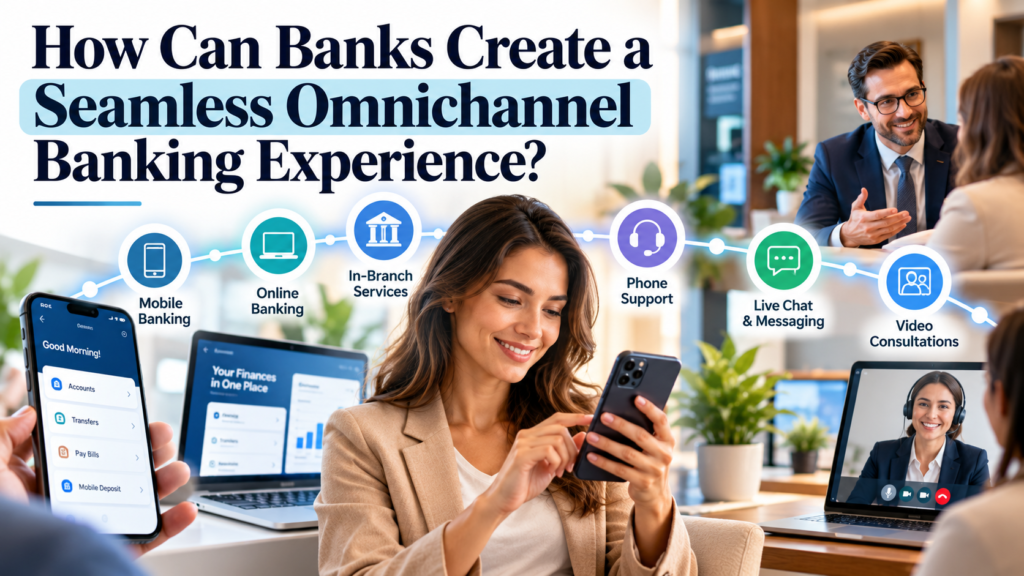
Banks can create a seamless omnichannel banking experience by connecting digital, branch, phone, and video services into one continuous customer journey.
Customers should be able to start an interaction on one channel and continue it on another without repeating information or starting again. This requires connected customer data, flexible appointment scheduling, integrated communication, and consistent service across every touchpoint.
Hybrid banking strengthens this approach by combining digital convenience with human support. With the right omnichannel banking solutions, banks can give customers more control over how they interact while helping employees deliver faster and more personalized service.
What Is Omnichannel Banking?
Omnichannel banking is a connected service model that links all banking channels, including mobile apps, websites, call centers, and physical branches. It gives customers a consistent experience across channels by keeping customer information and interactions connected in one system.
These channels can include:
- Mobile and online banking
- Physical branches
- Contact centers
- ATMs
- Video banking
- Appointment scheduling
- Digital self-service
The goal is simple. Customers should be able to switch channels without starting over.
For example, a customer may begin researching a mortgage online. They can then schedule a video appointment with a mortgage specialist. If needed, they can continue the conversation at a branch.
How Can Banks Connect Digital and Physical Banking?
Banks can connect digital and physical banking by designing them as connected parts of the same customer journey. This is the foundation of hybrid banking.
Banks can support this by:
- Connecting branch and digital systems.
- Offering branch and virtual appointments.
- Showing real-time advisor availability.
- Enabling digital check-in.
- Sharing customer information across channels.
- Making it easy to move from self-service to human support.
This allows customers to start a service digitally and continue with a branch visit or advisor when they need personal assistance.
How Can Video Banking Improve the Omnichannel Experience?
Video banking solutions allow customers to speak with banking professionals without visiting a branch.
This can be useful for services that require personal guidance, such as lending, mortgages, financial advice, and complex account services.
Video also allows banks to connect customers with specialists who may not be available at their local branch.
For example, a customer could book a video meeting with a mortgage specialist from home. If an in-person meeting is later required, the customer can visit a branch and continue the process.
This makes video an important part of a connected omnichannel banking strategy.
What Technology Do Banks Need for Omnichannel Banking?
Banks need integrated omnichannel banking technology that connects digital channels, physical branches, customer data, and internal workflows. The technology should allow customers to move easily between mobile banking, websites, branches, call centers, and video banking without repeating information.
Key technologies include:
- Appointment scheduling for branch and virtual meetings.
- Queue management to reduce waiting times.
- Video banking for remote advisor support.
- Customer data integration to provide a consistent customer view.
- Workflow automation to connect services across channels.
- Reporting and analytics to track customer interactions and service performance.
The key is integration. When these systems work together, banks can deliver a consistent experience across every customer touchpoint.
How Can Banks Personalize Omnichannel Banking?
Banks can use customer interaction data to understand how people use different channels.
Useful data can include:
- Channel preferences
- Appointment history
- Service requests
- Customer interactions
- Advisor availability
- Wait times
- Appointment outcomes
- Branch traffic
This information can help banks identify friction.
For example, if customers frequently begin a process online but switch to a branch for assistance, the bank can investigate why.
It may indicate that customers need more information, better digital guidance, or easier access to an employee.
Banks can then improve the specific part of the journey creating the problem.
Why Are Omnichannel Banking Solutions Important?
Omnichannel banking solutions are important because they connect digital and physical banking channels into one unified experience.
They allow customer information and interaction history to move across channels, so customers do not have to repeat the same information.
This helps banks:
- Reduce disconnected customer journeys.
- Give employees better visibility into customer interactions.
- Provide consistent service across channels.
- Make it easier to switch between digital and physical banking.
- Improve customer convenience and operational efficiency.
When these systems work together, employees can better understand the customer’s journey.
Customers also get a more consistent experience across channels.
How Can Banks Build Effective Hybrid Banking Solutions?
Effective hybrid banking solutions should give customers flexibility.
Banks should not expect every customer to use the same channel.
Instead, they can offer:
- Digital self-service: For routine banking activities and basic information.
- Video banking: For personalized support without requiring a branch visit.
- Branch appointments: For services that benefit from face-to-face interaction.
- Phone support: For customers who prefer voice communication.
The important part is connecting these options.
Customers should be able to switch channels without losing progress.
What Should Banks Measure?
Banks should measure how well their channels work together.
Important metrics include:
- Appointment wait times
- Channel usage
- Customer engagement
- Appointment completion
- Advisor utilization
- Branch traffic
- Customer satisfaction
- Service conversion
These metrics can show where customers experience friction.
They can also help banks understand demand and improve employee allocation.
For example, appointment data can show when demand for specific services is highest. Banks can use these insights to improve advisor availability across branch and digital channels.
What Does a Seamless Omnichannel Banking Experience Look Like?
A seamless experience allows customers to choose the channel that fits their needs without losing continuity.
A customer might:
- Start with digital self-service.
- Request help from an advisor.
- Schedule an appointment.
- Choose video or an in-branch meeting.
- Continue the conversation without repeating information.
- Complete the required banking service.
That is the core of effective omnichannel banking.
Conclusion
A seamless omnichannel banking experience requires more than offering multiple channels. Banks need to connect those channels so customers can move between digital and human interactions without friction.
Hybrid banking combines self-service with personalized support. Video banking solutions extend advisor access beyond physical branches. Integrated scheduling and customer data help connect every interaction.
With the right omnichannel banking solutions, banks can create a customer journey that is flexible, consistent, and easier to navigate. The result is simple: customers get more choice, while banks create a more connected way to deliver service.