Commercial hydroseeding services
Maintaining an attractive and healthy commercial property requires more than routine mowing and landscaping. Large areas of exposed or damaged soil can quickly become an eyesore while also increasing the risk of erosion and drainage problems. Commercial hydroseeding services provide an efficient way to establish vegetation across expansive properties without the labor demands associated with traditional planting methods. By combining seed, mulch, water, and other carefully selected materials, hydroseeding creates a supportive environment for early plant growth. For businesses, developers, and property managers, this approach can provide practical, attractive, and cost-conscious landscaping results.
What Makes Hydroseeding a Smart Commercial Investment?
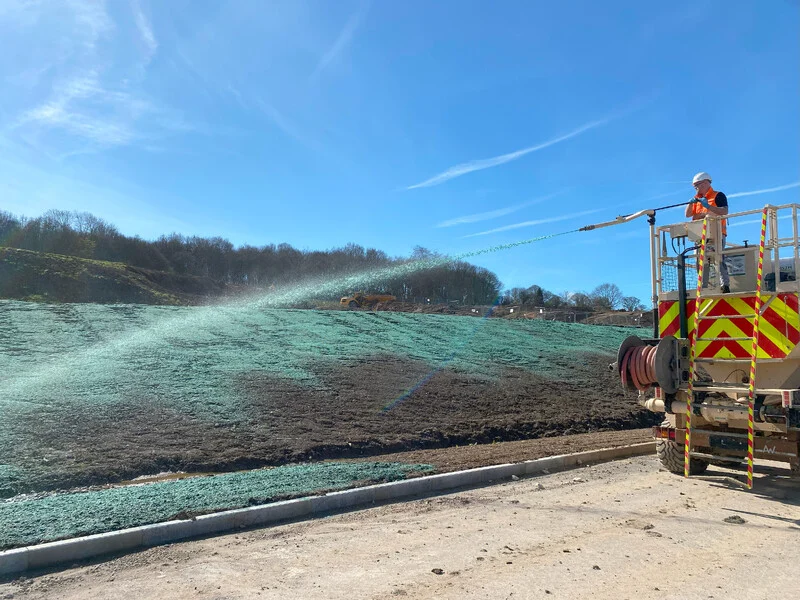
Hydroseeding is a specialized planting process that applies a carefully prepared slurry directly onto properly prepared soil. The mixture commonly contains grass seed, fiber mulch, water, and nutrients selected according to the requirements of the property. Mulch helps retain moisture around developing seed while providing a protective covering across the soil surface. Professional equipment also allows contractors to cover large or irregular areas more efficiently than many conventional seeding techniques. This combination makes hydroseeding particularly useful for commercial landscapes where consistent coverage and efficient installation are important.
Another reason property owners choose hydroseeding is the flexibility of the process. Different commercial properties have different landscape requirements, so using one standard seed mixture for every project may not produce the best results. A professional contractor can consider soil characteristics, sunlight, drainage, expected traffic, seasonal conditions, and the intended appearance of the property. These factors can help determine which seed varieties and application materials are most appropriate. A customized approach gives the landscape a better foundation for healthy establishment and long-term performance.
Better Coverage for Large Commercial Properties
Commercial properties often contain much more open ground than a typical residential lawn. Office campuses, shopping centers, industrial facilities, apartment developments, parks, recreational areas, and newly constructed properties may all require vegetation across extensive spaces. Manually distributing seed across these areas can be time-consuming and may result in inconsistent coverage. Hydroseeding equipment allows a prepared slurry to be distributed across broad sections efficiently. This can make the installation process more practical while helping create a more uniform starting point for vegetation growth.
Uniform coverage is particularly valuable when appearance matters to customers, tenants, employees, and visitors. Thin areas or inconsistent growth can make a newly developed property look unfinished and poorly maintained. Professional application helps reduce the risk of uneven seed distribution while allowing contractors to address difficult areas such as slopes and irregular sections. However, proper soil preparation remains essential for successful results. Removing debris, addressing compaction, improving soil quality, and ensuring appropriate drainage can make a significant difference in how well the new vegetation establishes.
Hydroseeding Can Support Erosion Control
Exposed soil can become vulnerable to erosion when commercial properties undergo construction, grading, excavation, or landscape renovation. Rainfall can move loose soil across the property, while wind can carry dry soil away from recently disturbed areas. Over time, this can affect drainage systems, landscape quality, and the stability of the planting surface. Hydroseeding can help address these concerns by placing mulch and seed over exposed ground. As vegetation develops, its roots provide additional support that can contribute to longer-term soil stabilization.
The mulch component provides an important protective layer during the early establishment stage. It can help retain moisture around seeds while reducing direct exposure to weather conditions. For properties with significant slopes, drainage challenges, or concentrated water flow, additional erosion-control methods may still be necessary. A professional site assessment can determine whether hydroseeding is suitable on its own or should be combined with other stabilization techniques. Taking this broader approach helps property owners avoid relying on a single landscaping method when site conditions require additional protection.
Why Professional Installation Matters
The quality of the contractor can have a major impact on the final outcome of a hydroseeding project. Professional installation involves more than operating a hydroseeding machine and spraying a mixture over the property. Experienced contractors evaluate the site, prepare the soil, select appropriate materials, determine application requirements, and provide guidance for post-installation care. These steps help ensure that the hydroseeding process is adapted to the actual conditions of the property. Professional experience can also help identify potential problems before they become expensive corrections.
Businesses should consider several factors when choosing a hydroseeding provider. Look for experience with commercial properties, appropriate equipment, knowledgeable staff, clear project estimates, and a willingness to explain the recommended process. It is also helpful to ask about seed selection, soil preparation, watering requirements, expected establishment time, and ongoing maintenance. A dependable contractor should provide realistic expectations rather than promising identical results for every property. Clear communication and detailed planning are especially important when hydroseeding must be coordinated with construction or other commercial landscaping work.
Commercial and Residential Hydroseeding Have Different Needs
Property owners sometimes begin their research with searches such as residential hydroseeding near me because they are familiar with lawn-focused hydroseeding services. Although the basic technology can be similar, commercial projects usually involve different planning requirements. A residential lawn may cover a relatively small area, while a commercial site can include multiple acres, slopes, drainage areas, traffic zones, and construction-related challenges. Commercial applications therefore require equipment, scheduling, seed selection, and site preparation suited to a much larger and more complex environment.
Understanding these differences can help property owners select the right service for their specific project. A contractor experienced with residential lawns may not necessarily have the equipment or workforce required for a major commercial development. Likewise, a company specializing in large construction sites may offer a different process than a provider focused on small residential lawns. Asking about previous projects of comparable size can help businesses evaluate whether a contractor has the practical experience necessary to manage their property effectively.
How to Prepare Your Property for Hydroseeding
Good preparation is one of the most important factors in successful hydroseeding. Before the application begins, the property should be cleared of construction debris, unwanted vegetation, and other materials that could interfere with seed-to-soil contact. Areas affected by heavy equipment may need to be loosened if the soil has become excessively compacted. Grading and drainage should also be reviewed to make sure water can move away from the planting area appropriately. Preparing the site correctly gives the hydroseed mixture a stronger foundation for germination and root development.
After the application, proper maintenance becomes equally important. Newly seeded areas generally require consistent moisture during the early stages of germination, but watering should be managed carefully to avoid runoff or surface disturbance. Property managers should monitor the area regularly for dry sections, standing water, erosion, or damaged areas. Once the grass becomes established enough, mowing and other routine maintenance can begin according to the requirements of the selected vegetation. Following professional aftercare recommendations can significantly improve the durability and appearance of the finished landscape.
Long-Term Value of Commercial Hydroseeding Services
The smartest landscaping decisions are those that balance initial investment, appearance, performance, and long-term maintenance. Commercial hydroseeding services can provide businesses and developers with an efficient method for establishing vegetation across large properties while supporting soil protection and landscape improvement. The process is adaptable, scalable, and suitable for many commercial applications when the site is properly prepared. Instead of treating hydroseeding as a quick installation service, property owners should view it as the first stage of a complete vegetation-establishment plan.
Ultimately, successful hydroseeding depends on choosing the right materials, preparing the soil properly, applying the mixture professionally, and maintaining the property afterward. Businesses that take these factors seriously can create healthier landscapes that improve curb appeal and contribute to a more finished appearance. Whether a property needs new vegetation after construction or requires large-scale lawn restoration, professional planning can make the process more predictable. By investing in the right approach from the beginning, commercial property owners can achieve stronger vegetation, better soil coverage, and lasting value from their landscape investment.