Real Time Clocks
Real Time Clocks are essential timing components used in electronic circuits where accurate time, calendar tracking, event logging, and scheduled operation are required. In the world of modern electronics, every second matters. Devices need to know when an action happened, when the next task should begin, and how to continue working correctly after power interruptions. A Real Time Clock, often shortened to RTC, provides this dependable time reference inside a system.
Unlike a simple timer or software counter, a Real Time Clock is designed to maintain actual time. It tracks seconds, minutes, hours, days, months, and years. Many RTC devices also manage leap years, alarms, and automatic calendar functions. This makes them highly valuable in embedded systems, computers, smart meters, medical equipment, industrial control units, automotive electronics, IoT devices, and consumer products.
In many applications, internet time or manual time setting is not always available. A device may be installed in a remote area, placed inside machinery, used in a battery-powered product, or expected to work offline. In these situations, Real Time Clocks help systems remain accurate, reliable, and ready for operation.
What Are Real Time Clocks?
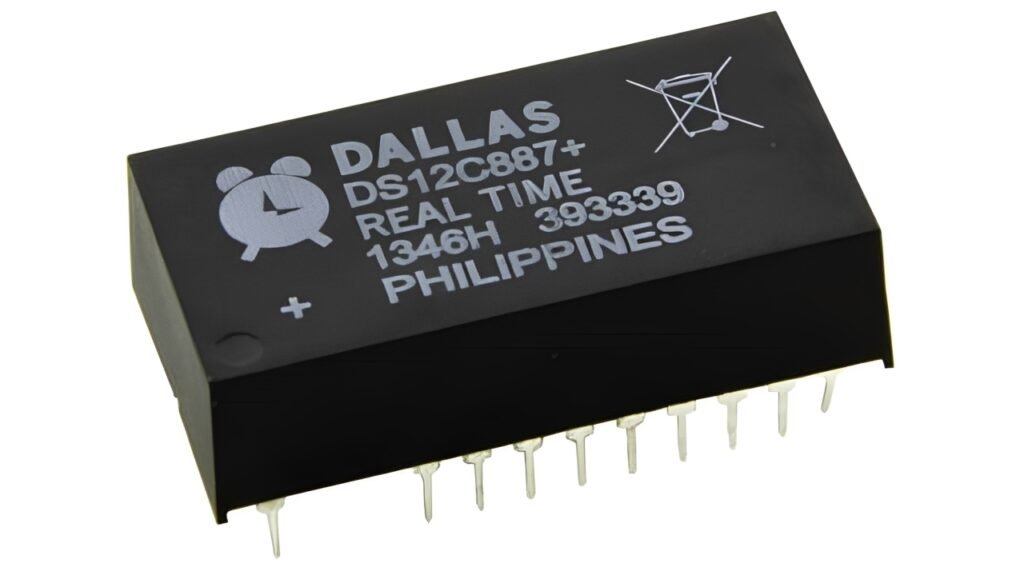
Real Time Clocks are dedicated electronic components that keep track of real-world time inside a device. They are usually built as integrated circuits and are connected to a microcontroller, processor, or main control board. Their job is to maintain accurate time and date information independently from the main system.
A Real Time Clock usually operates with a low-frequency crystal oscillator. The oscillator provides a stable timing signal, which the RTC converts into seconds and calendar values. The system can then read this time data whenever needed.
A typical Real Time Clock can help a device track:
- Current seconds, minutes, and hours
- Day, date, month, and year
- Weekday information
- Alarm times
- Scheduled wake-up events
- Time intervals for logging and control
- Calendar changes across months and leap years
The main advantage of an RTC is that it continues keeping time even if the main processor is turned off. This independent operation makes it far more reliable than software-based timekeeping alone.
Why Real Time Clocks Are Important in Electronics
Modern electronic systems often depend on accurate time. A machine may need to record when a fault occurred. A medical instrument may need to store the exact time of a reading. A security system may need to log access events. A smart meter may need to measure usage according to time periods. Without a Real Time Clock, these records can become unreliable.
RTCs also support better power management. Many battery-powered devices do not run continuously. Instead, they stay in sleep mode and wake only when necessary. The Real Time Clock keeps time while the main processor sleeps, then sends a signal when the system needs to wake up. This helps reduce energy use and extend battery life.
Real Time Clocks are important because they support:
- Reliable operation after power loss
- Accurate timestamps for stored data
- Scheduled automation
- Low-power wake-up control
- Time-based billing and monitoring
- Clear maintenance records
- Better system recovery
- Reduced reliance on network time
- Improved user experience
For designers, an RTC is a small component that can greatly improve the dependability of a product.
How Real Time Clocks Work Inside a System
The operation of a Real Time Clock is based on stable frequency generation and counting. Most RTCs use a 32.768 kHz crystal because this frequency can be divided easily into one-second intervals. Once the RTC creates a one-second pulse, it updates internal registers that store time and date values.
The host system communicates with the RTC through interfaces such as I2C or SPI. These interfaces allow the processor to set the time, read the time, configure alarms, and manage control settings.
The process usually works like this:
- The oscillator generates a steady timing signal
- The RTC circuit divides the signal into one-second intervals
- Internal registers count seconds, minutes, hours, and calendar values
- The host controller reads the time when needed
- Alarm or interrupt pins can wake the system at scheduled moments
- Backup power keeps the RTC active when main power is unavailable
Because RTCs consume very little current, they can operate for long periods from a coin cell battery or supercapacitor. This makes them ideal for products that must preserve time during shutdown.
Key Parts of a Real Time Clock Circuit
A Real Time Clock circuit may look simple, but several parts work together to provide reliable timing. The exact design can vary depending on the RTC model and application, but many circuits include the same basic elements.
Important RTC circuit parts include:
- RTC integrated circuit
- Crystal oscillator or built-in oscillator
- Backup battery or supercapacitor
- Pull-up resistors for communication lines
- Microcontroller or processor connection
- Power supply input
- Interrupt or alarm output
- Decoupling capacitors for stable operation
Some advanced RTCs include an integrated crystal, temperature compensation, memory, trickle charging, or automatic power switching. These features reduce external component count and improve performance in demanding environments.
Real Time Clocks and Backup Power
Backup power is one of the most important features of Real Time Clocks. When the main power supply is removed, the RTC can continue running from a small backup source. This allows the system to remember the correct time even after shutdown, reset, transport, or power failure.
Common backup power sources include:
- Coin cell batteries
- Rechargeable backup cells
- Supercapacitors
- Secondary low-power supply rails
- Energy storage circuits in portable devices
Backup power is especially important for devices that are not always connected to electricity. It is also useful in industrial systems where downtime or power cycling should not erase time records.
With backup power, a Real Time Clock can support:
- Continuous timekeeping during outages
- Automatic system recovery after restart
- Accurate maintenance logs
- Reliable stored records
- Reduced need for manual time setup
- Stable operation in offline products
This feature is one reason RTCs remain useful even in devices that can connect to the internet.
Applications of Real Time Clocks
Real Time Clocks are used across many industries because timekeeping is needed in almost every intelligent electronic product. Their role may be simple in some devices and critical in others.
Common applications include:
- Computers and laptops for maintaining system time
- Industrial controllers for process timing and fault records
- Smart meters for usage tracking and billing windows
- Medical devices for patient data and treatment records
- Security systems for alarms and access control logs
- Automotive electronics for diagnostics and event history
- IoT sensors for scheduled measurement and transmission
- Consumer appliances for programmed operation
- Digital cameras for time-stamped images
- Wearable devices for activity and sleep tracking
- Data loggers for environmental measurements
- Communication systems for time-based coordination
- Agriculture systems for irrigation and climate monitoring
- Building automation systems for lighting and HVAC schedules
In each application, the RTC helps the device understand time without depending completely on the main processor or external network.
Real Time Clocks in IoT Devices
IoT devices often need to operate in remote locations, sometimes for months or years on battery power. A Real Time Clock is highly useful in this environment because it allows the device to sleep for long periods and wake only when needed.
For example, an IoT temperature sensor may not need to run continuously. It can wake every hour, record a reading, send data, and then return to sleep. The RTC manages the timing while consuming very little power.
In IoT systems, Real Time Clocks help with:
- Periodic sensor readings
- Scheduled wireless communication
- Local data timestamping
- Battery life extension
- Offline operation
- Synchronisation after network loss
- Event-based wake-up control
- Long-term monitoring accuracy
This makes RTCs an important part of smart agriculture, asset tracking, environmental monitoring, industrial IoT, smart buildings, and remote equipment management.
Real Time Clocks in Industrial Automation
Industrial automation systems rely on accurate time for process control, production history, maintenance schedules, and fault investigation. A Real Time Clock helps industrial equipment record events clearly and perform timed tasks reliably.
In a factory environment, machines may run according to planned schedules. Maintenance may be required after specific operating periods. Faults may need timestamps to help engineers understand what happened. RTCs make these functions easier and more accurate.
Industrial uses include:
- Machine cycle tracking
- Fault event logging
- Maintenance reminders
- Shift-based production records
- Scheduled equipment start-up
- Process timing control
- Energy usage monitoring
- Safety event documentation
Because industrial environments can involve vibration, temperature changes, and power interruptions, selecting a reliable RTC with suitable accuracy and operating range is important.
Real Time Clocks in Medical Electronics
Medical devices often need dependable timing because patient records, treatment events, and monitoring data must be accurate. A Real Time Clock helps store readings with time and date information, making the data easier to review and trust.
RTCs may be used in:
- Patient monitoring equipment
- Portable diagnostic devices
- Infusion pumps
- Glucose meters
- Medical data loggers
- Sleep monitoring devices
- Wearable health products
- Laboratory instruments
In these applications, timestamps can help healthcare professionals understand trends, compare readings, and maintain clear records. Reliable timekeeping also supports device accountability and better data organisation.
Real Time Clocks in Smart Meters
Smart meters need accurate time to measure electricity, gas, or water usage across billing periods. They may also support different tariff rates depending on the time of day. A Real Time Clock helps the meter apply time-based measurements correctly.
For smart metering, RTCs support:
- Time-of-use billing
- Consumption history
- Usage interval tracking
- Load monitoring
- Remote reporting schedules
- Power outage records
- Tamper event timestamps
Since smart meters are expected to operate reliably for long periods, RTC accuracy and backup support are important design considerations.
Choosing the Right Real Time Clock
Selecting a Real Time Clock requires understanding the needs of the final system. A basic device may only need simple timekeeping, while a high-reliability application may need better accuracy, temperature stability, backup power support, and alarm functions.
Important selection factors include:
- Timekeeping accuracy
- Backup current consumption
- Operating voltage range
- Communication interface
- Battery backup support
- Package size
- Alarm and interrupt features
- Calendar functions
- Temperature range
- Long-term drift performance
- External crystal or integrated crystal
- Power switching capability
- Additional memory options
For portable products, low current consumption is often the priority. For industrial or outdoor products, temperature performance may be more important. For compact PCB layouts, package size and reduced component count can guide the choice.
Accuracy and Time Drift
Accuracy is a major factor in RTC performance. Time drift means the clock slowly gains or loses time. Even a small drift can become noticeable over weeks, months, or years. The crystal, temperature, supply conditions, and RTC design can all affect accuracy.
To improve accuracy, some RTCs use temperature-compensated crystal oscillators. These devices adjust for temperature changes and provide better long-term stability.
Applications that need high accuracy include:
- Industrial monitoring systems
- Scientific instruments
- Medical devices
- Smart meters
- Remote data loggers
- Communication equipment
- Security systems
In less demanding applications, a standard RTC may be enough. The right choice depends on how much time drift the system can accept.
Interface Options for Real Time Clocks
Most Real Time Clocks communicate with a host controller using a serial interface. The two most common options are I2C and SPI.
I2C is popular because it uses fewer pins and can connect multiple devices on the same bus. It is suitable for compact and low-speed communication needs.
SPI can offer faster communication and a simple direct connection, but it usually requires more pins. It may be selected when the system already uses SPI devices or needs a specific RTC model with that interface.
When selecting an RTC, engineers should check:
- Available microcontroller pins
- Existing communication bus
- Required data speed
- Voltage compatibility
- Software driver support
- Board layout requirements
A compatible interface makes the RTC easier to integrate and improves design efficiency.
Real Time Clocks and System Reliability
A Real Time Clock improves reliability by allowing a device to recover properly after power loss or reset. When the system restarts, it can read the RTC and continue with correct time information. This avoids confusion, incorrect records, and missed scheduled events.
RTCs also help separate timekeeping from main processor activity. If the processor enters sleep mode, crashes, or restarts, the RTC can continue running independently. This supports stronger system behaviour and better fault recovery.
Reliability benefits include:
- Stable time after restart
- Better event history
- Fewer manual corrections
- More dependable automation
- Improved audit trails
- Stronger offline operation
- Better user trust
For professional electronics, this reliability can be a major advantage.
Design Tips for Real Time Clock Integration
Good RTC performance depends not only on the component but also on the surrounding circuit design. Poor layout, unstable power, incorrect crystal selection, or weak backup design can reduce accuracy and reliability.
Useful design tips include:
- Place the crystal close to the RTC pins
- Follow the manufacturer layout recommendations
- Use proper load capacitors if required
- Keep noisy traces away from the oscillator
- Add decoupling capacitors near the power pins
- Check backup battery voltage and polarity
- Use suitable pull-up resistors for I2C lines
- Confirm voltage compatibility with the microcontroller
- Test timekeeping during power loss
- Verify alarm and interrupt behaviour in firmware
Careful integration helps the RTC perform as expected in real-world conditions.
Common Challenges with Real Time Clocks
Although RTCs are reliable components, design or configuration mistakes can cause problems. Some issues appear during testing, while others become visible after long-term use.
Common challenges include:
- Time drift caused by temperature changes
- Incorrect crystal load capacitance
- Weak or discharged backup battery
- Wrong time or date configuration
- Communication errors on I2C or SPI
- Missed alarm interrupts
- Poor PCB layout near oscillator pins
- Incorrect leap year handling in firmware
- Battery leakage current higher than expected
- Time reset after power loss
Many of these problems can be avoided through correct component selection, careful layout, and proper firmware testing.
Why Real Time Clocks Remain Useful in Networked Systems
Some people may think RTCs are less important because modern devices can get time from the internet, GPS, or network servers. However, external time sources are not always available. A device may start before the network is ready, operate in a signal-poor location, or lose connection during use.
A Real Time Clock provides a local time reference during these gaps. When network time becomes available, the system can synchronise and correct small drift. Until then, the RTC keeps the system functioning with useful time data.
This is valuable for:
- Remote sensors
- Field equipment
- Smart meters
- Security devices
- Industrial controllers
- Vehicles
- Portable instruments
- Offline consumer products
RTCs and network time can work together to provide both independence and accuracy.
Future Importance of Real Time Clocks
As electronic systems become more intelligent, automated, and energy-conscious, Real Time Clocks will continue to play an important role. More devices are expected to log data, conserve power, operate remotely, and perform scheduled tasks. All of these functions depend on dependable timekeeping.
Future electronic designs will likely place more focus on:
- Ultra-low-power RTCs
- Higher accuracy timing
- Smaller packages
- Better temperature stability
- Integrated backup management
- Secure timestamping
- Improved IoT compatibility
- Longer battery-supported operation
Even as technology advances, the need for accurate local time will remain strong.
Conclusion
Real Time Clocks are vital components in modern electronics because they provide accurate, independent, and low-power timekeeping. They help systems remember time, record events, follow schedules, save energy, and recover correctly after power interruptions.
From IoT sensors and smart meters to industrial machines, medical devices, computers, security systems, and automotive electronics, RTCs support reliable system behaviour. Their ability to keep time when the main processor is inactive makes them valuable in both simple and advanced designs.
Choosing the right Real Time Clock depends on accuracy, power consumption, interface type, backup support, package size, and environmental requirements. When selected and integrated correctly, an RTC can improve the performance, reliability, and long-term efficiency of an electronic product.