Your home’s heating and cooling system plays an important role in keeping your family comfortable throughout the year. Every time the HVAC system runs, air moves through the ductwork and into your living spaces. Over time, dust, dirt, pollen, pet hair, and other debris can collect inside the system. For homeowners looking for Residential Air Duct Cleaning Services in Lincolnton, GA, understanding when duct cleaning may be needed and what the process involves can help you make a better decision. Augusta Mold Control and Removal provides professional air duct cleaning solutions for homeowners who want to maintain a cleaner HVAC system and a more comfortable home environment.
Why Should Homeowners Consider Air Duct Cleaning?
Air ducts can collect different types of debris as air moves through the heating and cooling system. A small amount of household dust inside ductwork is normal, and the U.S. Environmental Protection Agency does not recommend routine duct cleaning for every home. However, cleaning may be worth considering when ducts contain substantial dust and debris, visible mold growth, pests, or other contamination.
Homeowners in Lincolnton may want to inspect their ductwork when they notice:
- Heavy dust around supply vents
- Dust or debris coming from vents
- Unusual musty odors
- Visible contamination inside accessible duct areas
- Evidence of insects or rodents
- Recent remodeling or construction
- Water or moisture problems around the HVAC system
Identifying the actual source of a problem is important before cleaning begins.
What Can Collect Inside Residential Air Ducts?
Your ductwork can collect many common household particles. Dust is one of the most common materials found inside HVAC systems. Depending on the home, ducts may also contain pollen, pet hair, fibers, dirt, and other small particles.
Moisture can create another concern. When moisture enters an HVAC system, it can increase the possibility of biological growth. The EPA notes that controlling moisture is an important part of preventing contamination in air ducts.
This is especially important if your home has experienced leaks, condensation, flooding, or other water problems. Cleaning the ductwork alone may not solve the issue if the source of moisture remains.
When Is Residential Air Duct Cleaning Needed?
There is no single schedule that applies to every home. Some houses may need cleaning because of heavy contamination, while others may not require it for many years. The condition of the HVAC system, the home environment, and previous maintenance all matter.
The EPA recommends considering duct cleaning when there is substantial visible mold inside hard-surface ducts or HVAC components, an infestation of vermin, or excessive deposits of dust and debris that are being released into the home.
Before deciding, homeowners should have the system inspected and ask a professional to explain what they find. This can help prevent unnecessary work and make sure the real problem is addressed.
What Does the Air Duct Cleaning Process Involve?
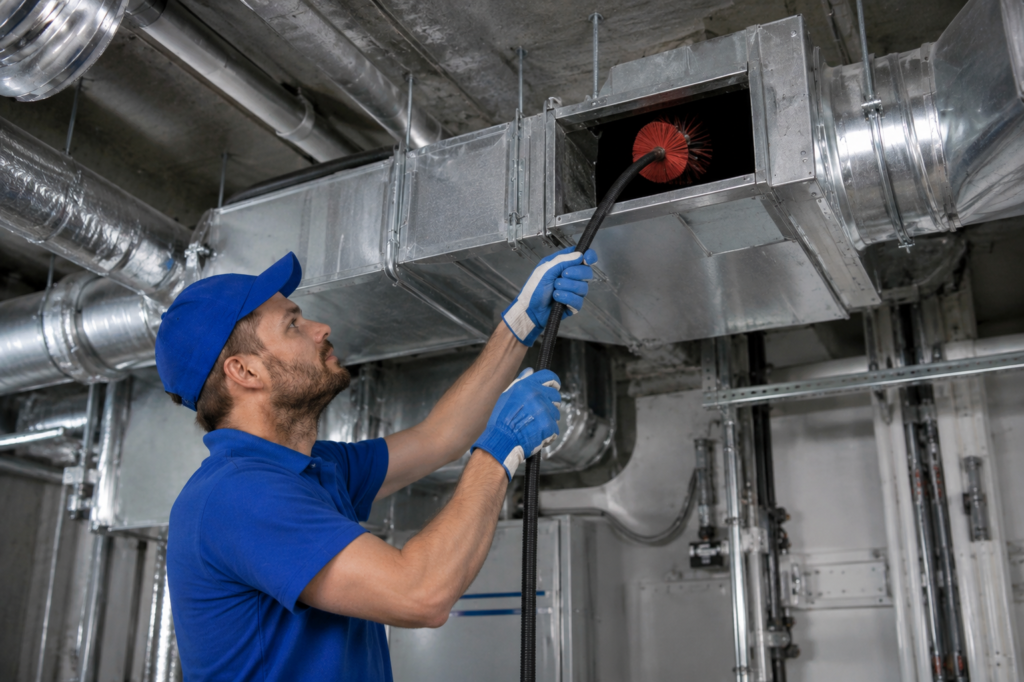
Professional duct cleaning is more than simply vacuuming around the vents. A proper cleaning approach looks at the HVAC system as a whole. NADCA recommends cleaning components such as air ducts, registers, grilles, coils, drain pans, plenums, and blower assemblies when appropriate.
A typical process may include:
- Inspecting accessible parts of the HVAC system
- Protecting furniture and areas around the work zone
- Opening appropriate access points
- Using specialized tools to loosen dust and debris
- Collecting loosened material with suitable vacuum equipment
- Cleaning accessible system components
- Checking the system after cleaning
- Closing and sealing access points properly
The exact process depends on the type and condition of the ductwork.
How Can Dirty Ducts Affect Your Home?
Dirty ductwork is only one possible source of indoor particles, so homeowners should not assume that every indoor air problem comes from the ducts. Cooking, cleaning, outdoor air, smoking, pets, and everyday household activity can also contribute to indoor particles.
Still, heavily contaminated ductwork can distribute dust and debris through the HVAC system. If particles are visibly coming from supply registers or there is significant contamination inside the system, professional cleaning may be appropriate.
Keeping the entire HVAC system clean can also support better general system maintenance.
Can Air Duct Cleaning Improve HVAC Performance?
A dirty HVAC system may have debris on sensitive components such as coils, fans, and other parts. NADCA explains that cleaning HVAC components may help a system operate more effectively and may reduce the chance of problems related to accumulated debris.
However, it is important to keep expectations realistic. The EPA states that there is limited evidence that cleaning only the ducts improves energy efficiency. Cleaning should therefore be viewed as one part of proper HVAC care rather than a guaranteed way to reduce energy bills.
Regular filter changes, proper HVAC maintenance, and moisture control are also important.
Why Is Moisture Control Important for Air Ducts?
Moisture is one of the biggest factors that can contribute to biological growth inside an HVAC system. Leaking ducts, condensation, plumbing leaks, or water damage can introduce moisture where it should not be.
If moisture is present, simply cleaning the ductwork may not provide a lasting solution. The water source should also be identified and corrected.
For homes with suspected mold, homeowners should be careful about making assumptions based only on appearance. The EPA explains that substances that look like mold may require expert evaluation or laboratory analysis for confirmation.
What Should You Look for in an Air Duct Cleaning Company?
Choosing the right professional is important because improper cleaning can potentially damage ductwork or spread dust and debris around the home. The EPA recommends comparing providers, checking references, asking questions, and requesting a clear explanation of the work before hiring someone.
Homeowners should look for a company that:
- Explains the cleaning process clearly
- Inspects the system before beginning
- Uses suitable cleaning and collection equipment
- Protects the home during the work
- Explains what contamination was found
- Provides clear pricing and scope of work
- Understands different duct materials
- Takes moisture and mold concerns seriously
A professional approach is more important than simply choosing the lowest price.
How Can Lincolnton Homeowners Keep Their Ducts Cleaner?
Professional cleaning is only one part of HVAC maintenance. Homeowners can take simple steps to reduce the amount of dust and debris entering their systems.
Change HVAC filters according to the manufacturer’s recommendations and choose a filter that is appropriate for your system. Keep supply and return vents clean and avoid blocking them with furniture. Regularly vacuum and dust your home to reduce the amount of material that can enter the HVAC system.
Moisture should also be addressed quickly. Fix water leaks, maintain cooling equipment, and investigate condensation around the HVAC system. The EPA identifies moisture control as an important way to reduce the possibility of biological growth in ductwork.
Why Choose Augusta Mold Control and Removal in Lincolnton, GA?
Homeowners deserve clear information before making decisions about their HVAC systems. Augusta Mold Control and Removal focuses on helping homeowners understand their indoor air and duct concerns before work begins.
For Residential Air Duct Cleaning Services in Lincolnton, GA, a professional inspection can help determine whether cleaning is actually appropriate. Instead of assuming that every home needs routine cleaning, it is better to look for signs of significant contamination and address the underlying cause when one exists.
If you notice excessive dust, unusual odors, visible contamination, or concerns about your HVAC system, getting professional guidance can help you understand your options.
How Often Should Residential Air Ducts Be Cleaned?
There is no universal time period for cleaning every residential duct system. The EPA recommends cleaning on an as-needed basis rather than as a routine yearly requirement.
The right timing depends on the home’s conditions and the state of the HVAC system. A home with substantial dust buildup, pests, visible mold, or a recent event that caused contamination may need attention sooner than a well-maintained home with clean ductwork.
Regular HVAC inspections and filter changes can help homeowners identify problems before they become larger concerns.
Keep Your Lincolnton Home Comfortable and Well Maintained
Clean and properly maintained HVAC equipment is an important part of responsible home care. Air duct cleaning is not necessary for every house, but it can be useful when ductwork or HVAC components have substantial contamination. Knowing the signs can help homeowners avoid unnecessary cleaning while also making sure serious problems are not ignored.
If you are concerned about dust, debris, odors, moisture, or possible contamination in your HVAC system, consider having the system inspected by a qualified professional. For homeowners in Lincolnton, GA, Augusta Mold Control and Removal can help you understand the condition of your air ducts and determine the appropriate next step.
Frequently Asked Questions
Is residential air duct cleaning necessary for every home?
No. The EPA recommends considering duct cleaning when there is substantial contamination, visible mold, pests, or excessive dust and debris rather than cleaning every home on a fixed schedule.
How do I know if my air ducts need cleaning?
Look for heavy dust or debris, particles coming from supply vents, unusual odors, visible contamination, pests, or other signs that the HVAC system may be contaminated.
Can air duct cleaning remove mold?
Cleaning can address contamination in appropriate situations, but the source of moisture must also be corrected. Wet or moldy insulated duct materials may need replacement rather than cleaning.
How long does residential air duct cleaning take?
The time depends on the size of the home, the number of HVAC systems, duct design, accessibility, and the amount of contamination. A professional can provide a better estimate after inspecting the system.
Can I clean my air ducts myself?
Homeowners can clean accessible vent covers and keep surrounding areas free of dust, but deeper ductwork and HVAC components require specialized equipment and proper procedures. Professional cleaning may be appropriate when significant contamination is present.