Why Is Cable Choice Important in RF Systems?
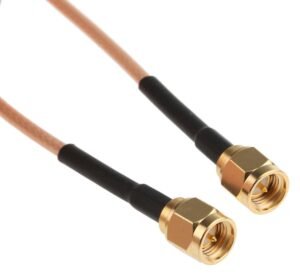
The Cinch Coaxial Cable is designed for controlled RF signal routing where impedance, connector fit and cable construction all affect performance. Manufacturer part number 415-0029-048 is an SMA straight plug to SMA straight plug cable assembly using RG316 coaxial cable, with a length of approximately 48 inches or 1.22 m.
RF systems can be sensitive to small mismatches. A poorly selected cable may introduce unwanted attenuation, reflections, intermittent contact or unstable readings. In test benches, wireless equipment, antenna links and instrumentation setups, the cable is not simply an accessory. It is part of the signal path and should be selected with the same care as the connected equipment.
What Makes This Cinch Cable Suitable for RF Work?
This Cinch cable assembly uses a 50 ohm impedance, which is widely used in RF, microwave, wireless and test applications. Matching the cable impedance to the source, load and connectors helps reduce signal reflection and supports more predictable transfer from one device to another.
As part of professional Coaxial Cable ranges, this type of assembly is useful when users need a ready-terminated link instead of cutting, stripping and terminating bulk cable manually. A factory-made assembly can reduce assembly variation and save time during installation, prototyping or replacement work.
Why Does the SMA-to-SMA Interface Matter?
The 415-0029-048 cable has SMA straight plug connectors at both ends. SMA connectors are commonly used in RF equipment because they provide a compact threaded interface and stable mechanical engagement when fitted correctly. This makes the cable useful for connecting compatible RF modules, antennas, signal generators, analysers, development boards and communication equipment.
When designing a complete connection path, related RF Coaxial Connectors & Adapters may be required to join equipment with different connector styles. However, every extra adapter adds another interface, so the best setup is usually the one that uses the correct cable and the fewest unnecessary transitions.
How Does RG316 Cable Support Flexible Routing?
RG316 is often chosen where a relatively small, flexible coaxial cable is needed. It can be routed through compact equipment layouts, bench setups and enclosed assemblies more easily than larger coax types. This flexibility helps when the cable must pass around modules, panels or instruments without forcing tight bends.
A flexible cable should still be handled carefully. Crushing, repeated sharp bending or pulling on the connector body can damage the cable structure and affect signal quality. The bend radius should remain practical for the installation, and the cable should be supported where movement or vibration may occur.
What Frequency Range Should Be Considered?
The manufacturer lists the 415-0029-048 cable assembly with a maximum frequency of 12.4 GHz. This makes it relevant for many RF and microwave signal paths, provided the complete system remains within the cable’s electrical and mechanical limits.
Frequency suitability depends on more than the cable label. The connected devices, adapters, mating connectors, installation length and operating environment all influence final performance. If the cable is used in a measurement setup, the whole signal chain should be checked so that the test result reflects the device under test rather than losses or reflections introduced by the connection hardware.
When Are Adapters Needed?
Adapters are useful when equipment ports do not match the cable ends. For example, a system may include SMA, BNC, N-Type, TNC or other RF interfaces. In those cases, Coaxial Connector (RF) Adapters can help join different connector formats while maintaining a practical RF path.
Adapters should be selected by impedance, gender, frequency rating and mechanical style. A connector that physically fits is not always electrically suitable. Using the wrong impedance or a low-grade adapter in a high-frequency path can create avoidable measurement errors, signal loss or intermittent behaviour.
Where Can This Cable Be Used?
The Cinch Coaxial Cable can be used in RF test benches, laboratory equipment, wireless prototypes, antenna connections, microwave modules, communication devices and production test fixtures. Its 1.22 m length provides useful reach without being excessively long for many bench and cabinet layouts.
It may also support systems connected with Network and Communication Cable where RF links sit beside data, control or communications wiring. In such environments, cable routing should keep sensitive RF paths away from high-current cables, switching supplies and sources of electromagnetic noise.
How Should RF Cable Performance Be Checked?
The simplest answer is to test the complete signal path under real operating conditions. Visual inspection confirms that the connector threads, centre contacts and cable jacket are in good condition, but electrical testing is needed when performance is critical.
Specialist RF Test & Measurement equipment can help confirm signal level, return loss, insertion loss, frequency behaviour and antenna matching. This is particularly important in design validation, production testing and troubleshooting, where a damaged or unsuitable cable can make a good device appear faulty.
What Installation Details Improve Reliability?
Installers should avoid over-tightening SMA connectors. The threaded interface should be secure, but excessive force can damage the connector, mating port or internal contact. Where the equipment manufacturer specifies a torque value, a suitable torque tool should be used.
Cable movement should also be controlled. If the cable is fitted into a cabinet, enclosure or panel system, Cable Glands, Strain Relief & Grommets can help protect cable entry points and reduce mechanical stress. Proper strain relief is especially useful where the cable may be handled regularly or routed through a panel opening.
How Does Connector Quality Affect Signal Integrity?
The cable assembly is only as reliable as its mating interfaces. Dirt, damaged threads, bent centre pins or loose coupling can cause intermittent signals and inconsistent test results. Compatible Coaxial Connectors (RF) should therefore be inspected before connection, especially in shared test labs or production areas where cables are connected and disconnected frequently.
For repeated use, technicians should store coaxial cable assemblies loosely coiled and away from heavy tools or sharp edges. Labels can also help identify cable length, impedance and connector type, reducing the risk of using the wrong lead during fast-moving bench work.
Is Cinch 415-0029-048 a Practical RF Cable Assembly?
The Cinch Coaxial Cable is a practical choice for users who need a 50 ohm SMA-to-SMA RF cable assembly with RG316 construction and a 1.22 m length. Its ready-terminated design supports faster setup, cleaner routing and more consistent connection quality than improvised cable assemblies.
For UK engineers, procurement teams, telecom technicians and electronics labs, the key value is dependable signal routing in compatible RF systems. Correct impedance matching, careful installation, suitable adapters and routine inspection will help the 415-0029-048 cable deliver stable performance across test, communication and development applications.