I went to a conference in Geneva a few years ago and the English Channel died for about four seconds during a technical presentation. Long enough for half the room to see. It turned out that the interpreter was looking for the right word, on the fly, which happens more often than people think. It is that split-second scramble that makes it so important to find the proper simultaneous interpreting in Switzerland organizations that can be trusted, especially in a country where international meetings take place nearly every day.
Switzerland’s relationship with simultaneous interpretation is older than most people think. When the Nuremberg trials showed the world that real-time interpreting could really work at scale, Geneva became a hub for it, and the city built a whole training institute around it soon after. That history is not just trivia, it tells you why the standard here tends to be higher than in a lot of other places. The Geneva-trained interpreters are often judged by the expectations of decades of diplomatic and organizational work.
The job is harder than it looks to the audience. An interpreter hears a sentence. Understands the meaning. Produces an equivalent sentence in another language. The speaker keeps talking. There are no pause buttons. Master specialized vocabulary, whether it’s IFRS jargon at a finance conference or clinical language at a medical symposium, and the margin for error gets thin fast.
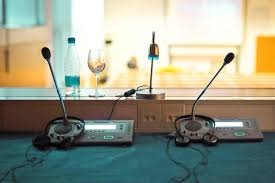
Most clients don’t realize how important the booth setup is when they come in. Simultaneous interpreting almost always requires a soundproof booth, the right headsets and a technical team that knows how to route audio without lag or feed-back. Skimming on equipment tends to show up right away: garbled audio, interpreters struggling to hear the speaker, delegates missing chunks of a presentation because the sound cut out for a second. It’s one of those things that is invisible when it’s done right, and impossible to ignore when it’s done wrong.
The decision between agencies offering Simultaneous Interpreting In Switzerland wide usually comes down to a couple of practical questions. Have the interpreters worked in your field before, not just generally, but in your specific terminology? Do they work in pairs? Because simultaneous interpreting is so mentally taxing that professionals usually change every twenty to thirty minutes. And does the agency do the technical side too or do you need to source booths and equipment separately?
Language pairing is something to think about early, not the week before the event. English, French and German dominate Geneva’s international scene, but depending on who is attending there are plenty of meetings that require Spanish, Portuguese, Arabic or Mandarin. When an agency confirms language combinations early in the process, they have time to line up the right specialists, instead of scrambling for a generalist who can do the basics but not the nuance.
Remote simultaneous interpreting, too, has become much more common, and has considerations of its own. In that setup, internet stability is as critical as the skill of the interpreter, because a dropped connection mid-sentence is worse than a technical hiccup in a physical booth. For hybrid events with in-person and remote attendees, it’s worth asking upfront how an agency will handle that mix rather than assuming it will just work.
The cost will usually depend on the combination of languages, the length of the event and how specialized the subject is. A half-day panel on general business topics is less expensive than a full legal arbitration hearing requiring interpreter fluent in both common law and civil law terminology. If you get a quote on the actual agenda rather than a flat day rate, it will usually give you a clearer idea of what you are paying for.
The thing is, when clients book simultaneous interpreting in Switzerland, at the end of the day, they don’t really want translation, they want to feel like a room full of different languages is having one conversation. If it’s done right no one in the audience thinks about the interpreters at all. That’s usually the best clue the job was done right.
Conclusion
Good simultaneous interpreting is a matter of trained specialists, proper equipment, and an agency that plans ahead instead of scrambling last minute. Whether you’re hosting a diplomatic meeting, a finance conference, or a hybrid event with remote attendees, the details around booth setup, language pairing, and subject expertise are what separate a smooth event from a rough one.