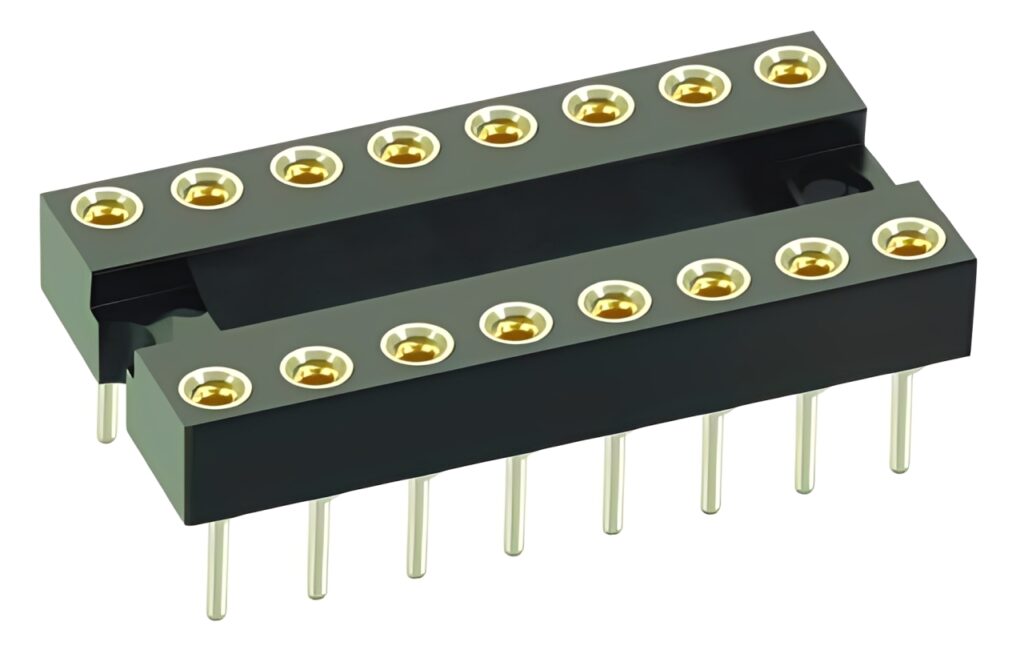
IC Sockets & Adapters
Introduction
In electronics, long term reliability often depends on the small components that support assembly, testing, and maintenance behind the scenes. IC Sockets & Adapters are a strong example of that hidden value. They help integrated circuits connect more safely, more flexibly, and more efficiently in applications where direct soldering is not always the best option. For engineers, technicians, and procurement teams, these components can play an important role in improving serviceability, speeding up development, and protecting critical devices.
As electronic products become more compact and performance driven, design decisions must balance durability with practicality. That is where IC Sockets & Adapters become highly useful. They allow integrated circuits to be inserted, removed, tested, replaced, or adapted without forcing major board changes. In environments where chip access matters, such as prototyping, diagnostics, programming, and equipment repair, they provide a practical advantage that supports both immediate use and long term maintenance.
What IC Sockets & Adapters Actually Do
IC Sockets & Adapters create an interface between an integrated circuit and the system where it will be used. A socket is mounted onto the board so the integrated circuit can be inserted into it rather than soldered directly to the PCB. An adapter is used when there is a mismatch between package type, footprint, pin arrangement, or testing hardware.
This makes IC Sockets & Adapters especially valuable in situations where an integrated circuit may need to be swapped, upgraded, or evaluated more than once. Instead of exposing the board to repeated heat and rework, the chip can be handled through a more controlled connection method.
Core Functions of IC Sockets & Adapters
- Create a removable mounting point for integrated circuits
- Support easier replacement of failed or upgraded devices
- Allow compatibility between different chip packages or layouts
- Simplify programming, validation, and troubleshooting workflows
- Help reduce board damage caused by repeated soldering activity
Why Direct Soldering Is Not Always Ideal
Direct soldering has its place in many finished electronic assemblies, especially where space is tight and permanent installation is preferred. However, it is not always practical during development or servicing. When engineers are still testing component options or when technicians need access to a device later, permanent soldering can become a limitation.
Removing a soldered integrated circuit is time consuming and can put stress on pads, traces, and surrounding parts. This becomes more challenging when boards are densely populated or when the integrated circuit is particularly sensitive. IC Sockets & Adapters help reduce these risks by giving the designer or technician a safer access point.
In many cases, this approach also reduces waste. A board does not need to be discarded or heavily reworked simply because one IC must be replaced or reprogrammed. That makes IC Sockets & Adapters a practical choice for cost conscious operations as well as precision focused engineering teams.
How IC Sockets & Adapters Support Testing and Development
Development work often requires repeated change. A team may compare multiple integrated circuits, evaluate firmware behaviour, or validate how a device performs in different conditions. IC Sockets & Adapters make that process more efficient by allowing integrated circuits to be inserted and removed with less effort and lower risk.
This is particularly important when dealing with expensive or programmable devices. Instead of soldering each part for every test cycle, engineers can use the same board or fixture more effectively. Adapters also allow devices with different package types to be used in environments that were not originally designed for them, which saves time during early stage validation.
Development Advantages
- Faster chip replacement during testing
- Reduced wear on the PCB
- Easier firmware programming and evaluation
- Better support for prototype revisions
- Improved flexibility when comparing device options
Common Types of IC Sockets & Adapters
IC Sockets & Adapters are available in many designs because integrated circuits are produced in a wide range of package styles. Selecting the right option depends on how the component will be used, how often it will be inserted or removed, and what environmental conditions it must handle.
Popular Socket Types
- DIP sockets for traditional dual in line integrated circuits
- ZIF sockets for zero insertion force applications and frequent chip handling
- PLCC sockets for compact chip carrier packages
- PGA sockets for devices with pin grid array layouts
- Test sockets for repeated engineering and validation use
Popular Adapter Types
- Package conversion adapters
- Programming adapters
- Test interface adapters
- Prototype adapters
- Board compatibility adapters
Each type serves a different purpose. Some are intended for permanent service access, while others are designed mainly for test benches, device programming stations, or short term development work.
Where IC Sockets & Adapters Are Used Most Often
The value of IC Sockets & Adapters can be seen across multiple sectors because many electronic systems benefit from flexibility and controlled chip access.
Typical Application Areas
- Embedded system development
- Industrial automation equipment
- Semiconductor programming setups
- Laboratory test environments
- Educational electronics training
- Repair and refurbishment of older systems
- Maintenance of specialised electronic controls
In industrial and legacy equipment, replacement boards may be costly or difficult to source. A socketed design can make long term maintenance more realistic. In development labs, adapters allow engineers to work with available components without waiting for a full redesign.
What to Consider When Selecting IC Sockets & Adapters
Choosing the right IC Sockets & Adapters involves more than matching pin count. Electrical performance, mechanical durability, and environmental suitability all matter. A low quality option may fit physically but still create problems through unstable contact, early wear, or inconsistent performance.
Important Selection Factors
- Exact IC package style
- Pin configuration and spacing
- Contact material and plating
- Number of expected insertion cycles
- Board space and mounting constraints
- Environmental exposure such as heat or vibration
- Required retention strength
- Signal sensitivity within the circuit
Gold plated contacts are often preferred where stable conductivity and corrosion resistance are important. In high cycle environments, durability becomes a major factor. For design teams, it is also important to consider whether the added interface could affect signal integrity in faster or more sensitive circuits.
Mistakes to Avoid with IC Sockets & Adapters
Even the right product can underperform if it is used incorrectly. Improper handling and poor installation are among the most common causes of connection problems.
Common Mistakes
- Choosing the wrong package format
- Forcing pins into misaligned sockets
- Ignoring cycle limits in repeated use applications
- Using low grade contacts in demanding environments
- Failing to inspect seating and orientation before powering the board
- Allowing dust or contamination to collect on contact surfaces
Avoiding these issues helps ensure that IC Sockets & Adapters deliver the performance expected from them. Good handling practices are just as important as correct product selection.
Why IC Sockets & Adapters Still Matter Today
Even as electronics continue to evolve toward greater density and performance, the need for flexibility has not disappeared. Engineers still need efficient testing methods, service teams still need replaceable components, and many projects still require compatibility between different device formats. IC Sockets & Adapters remain relevant because they solve these practical challenges without overcomplicating the design.
They are especially valuable when product life cycle considerations matter. A board that is easier to maintain can remain in service longer. A development platform that supports quick changes can reduce project delays. A test setup that accepts multiple devices can increase efficiency across an entire engineering workflow.
Conclusion
IC Sockets & Adapters provide much more than a simple mechanical connection. They support testing, improve maintenance access, protect circuit boards from repeated rework, and help bridge compatibility gaps during development and repair. Their value becomes clear wherever integrated circuits need to be handled with accuracy, flexibility, and long term reliability in mind.
For modern electronic systems, IC Sockets & Adapters continue to be a smart solution for teams that want dependable performance without sacrificing convenience. When chosen carefully and installed correctly, they help make electronic assemblies easier to manage, easier to service, and better prepared for future changes.