Advanced Analytics and Big Data Applications Strengthen the Data Masking Industry Outlook
Global Data Masking Market Witnesses Robust Growth Amid Rising Demand for Data Privacy and Cybersecurity Compliance
The global Cybersecurity landscape is rapidly evolving as enterprises prioritize data protection, privacy compliance, and secure digital transformation initiatives. Against this backdrop, the Data Masking Market is emerging as a critical component of enterprise security strategies, helping organizations protect sensitive information while enabling data accessibility for analytics, testing, and development environments.
The market is experiencing substantial momentum as organizations across banking, healthcare, telecom, retail, and government sectors increasingly deploy advanced masking solutions to reduce the risks associated with cyberattacks, insider threats, and regulatory violations. Rising adoption of cloud infrastructure, artificial intelligence-driven analytics, and hybrid IT ecosystems is further accelerating the implementation of data masking technologies worldwide.
According to industry analysis, the global Data Masking Market was valued at approximately US$ 0.72 billion in 2023 and is projected to reach nearly US$ 1.68 billion by 2030, expanding at a CAGR of 12.85% during the forecast period.
♦ Request a Free Sample Copy or View Report Summary:https://www.maximizemarketresearch.com/request-sample/643/
Market Estimation & Definition
Data masking refers to the process of concealing original sensitive information with fictional yet realistic data values, ensuring that confidential data remains protected while maintaining operational usability. Organizations widely use data masking technologies for software testing, development, analytics, cloud migration, regulatory compliance, and third-party data sharing.
The technology plays a vital role in protecting personally identifiable information (PII), financial records, healthcare data, customer credentials, and intellectual property from unauthorized exposure. Modern enterprises are increasingly implementing masking tools as part of broader zero-trust cybersecurity frameworks and enterprise governance strategies.
The rapid increase in digital transactions, cloud-based applications, and connected devices has significantly elevated the volume of sensitive enterprise data. This surge has intensified the need for advanced privacy-enhancing technologies capable of preventing data leakage without interrupting business workflows.
In recent years, stricter global data protection regulations such as GDPR in Europe, CCPA in California, HIPAA in healthcare environments, and other emerging regional compliance mandates have compelled organizations to adopt comprehensive data security solutions. As a result, data masking is no longer viewed as an optional security layer but rather as a strategic business necessity.
Industry experts also note that the growing use of artificial intelligence, machine learning, and predictive analytics is encouraging enterprises to securely utilize real-time datasets while ensuring regulatory compliance and customer trust.
Market Growth Drivers & Emerging Opportunities
Rising Cybersecurity Threats Accelerate Adoption
One of the primary growth drivers of the Data Masking Market is the rising frequency of cyberattacks and data breaches globally. Enterprises handling confidential customer and operational data are increasingly vulnerable to ransomware attacks, insider threats, and unauthorized access incidents.
Organizations are therefore investing heavily in proactive data protection technologies capable of minimizing exposure risks while enabling business continuity. Data masking solutions help reduce attack surfaces by ensuring that sensitive information remains hidden during testing, analytics, and application development processes.
Additionally, the increasing sophistication of cybercriminal activities is pushing enterprises toward advanced masking frameworks integrated with AI-driven threat monitoring and automated compliance systems.
Regulatory Compliance Creates Long-Term Demand
Governments and regulatory authorities worldwide continue to strengthen data privacy laws, compelling enterprises to adopt secure data management practices. Compliance violations can result in severe financial penalties, reputational damage, and legal liabilities.
Data masking technologies help organizations comply with strict privacy regulations by anonymizing confidential datasets without compromising analytical value. This capability is especially critical for industries such as BFSI, healthcare, telecommunications, and public administration where sensitive data handling is central to daily operations.
The growing importance of digital governance and ethical data management is expected to generate sustained long-term demand for masking platforms and associated professional services.
Cloud Migration and Hybrid IT Infrastructure Fuel Expansion
Rapid cloud adoption across enterprises is another major factor supporting market growth. As organizations migrate workloads to public, private, and hybrid cloud environments, concerns surrounding data exposure and cloud security vulnerabilities continue to rise.
Cloud-native masking solutions are increasingly gaining traction because they provide scalable, flexible, and automated protection for distributed datasets. Enterprises are adopting dynamic masking capabilities that secure real-time access to cloud-hosted applications and databases.
Moreover, the expansion of DevOps practices and agile software development environments is increasing the need for secure test data management solutions, creating new growth opportunities for technology vendors.
AI and Big Data Analytics Open New Revenue Streams
The increasing adoption of AI-powered business intelligence and big data analytics is creating fresh opportunities for the Data Masking Market. Organizations require large volumes of realistic yet protected datasets to train algorithms, conduct simulations, and generate predictive insights.
Data masking enables enterprises to safely leverage sensitive data for innovation and operational optimization without violating compliance requirements. This capability is becoming especially important in sectors such as healthcare diagnostics, financial risk modeling, and customer behavior analytics.
Furthermore, emerging technologies such as synthetic data generation and automated masking orchestration are expected to enhance operational efficiency and expand future market potential.
♦ Request a Free Sample Copy or View Report Summary:https://www.maximizemarketresearch.com/request-sample/643/
Segmentation Analysis
The Data Masking Market is segmented across multiple categories including type, component, business function, organization size, deployment type, industry vertical, and region.
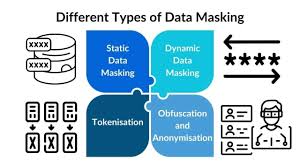
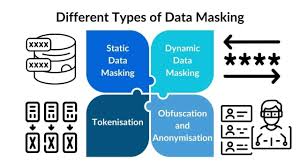
Based on type, the market is divided into static data masking and dynamic data masking. Static data masking currently maintains a dominant market presence due to its widespread use in testing, analytics, and development environments where permanently masked copies of databases are required. Organizations prefer static masking for large-scale database replication projects because of its simplicity and operational reliability.
Meanwhile, dynamic data masking is witnessing rapid adoption due to the increasing need for real-time data protection in cloud applications and remote access systems. Enterprises are integrating dynamic masking capabilities into customer-facing platforms and enterprise applications to prevent unauthorized visibility of sensitive information during live operations.
By component, the market includes software and services. The software segment continues to lead due to rising enterprise demand for automated masking tools, centralized governance systems, and integrated compliance management platforms. Businesses are prioritizing scalable masking software capable of supporting complex multi-cloud environments and hybrid infrastructures.
The services segment is also expanding steadily as organizations seek expert consulting, implementation, and managed security support to optimize deployment strategies and ensure regulatory compliance.
In terms of business function, data masking solutions are increasingly used across finance, operations, marketing and sales, human resources, legal departments, media delivery, and web performance optimization activities. Financial departments remain among the largest adopters due to the need for safeguarding transaction data and customer banking information.
From an organization size perspective, large enterprises dominate market revenues because of extensive data management requirements and higher cybersecurity spending capabilities. However, small and medium-sized enterprises (SMEs) are rapidly embracing cloud-based masking solutions as awareness regarding cybersecurity risks increases.
By deployment type, the market is segmented into on-premises and cloud-based solutions. On-premises deployment remains significant among highly regulated industries requiring strict internal control over confidential information. However, cloud deployment is witnessing faster growth owing to scalability advantages, lower operational costs, and rising adoption of SaaS applications.
Based on industry vertical, BFSI remains the leading segment due to the sector’s heavy reliance on sensitive financial data and stringent compliance mandates. Healthcare and life sciences are also major adopters as hospitals and research organizations prioritize patient data confidentiality and electronic medical record protection.
Retail and eCommerce companies are increasingly implementing masking technologies to secure customer payment information and purchasing data. Telecommunications, government and defense, manufacturing, and media sectors are also witnessing rising adoption rates as digital transformation initiatives accelerate globally.
Regional Insights
Europe currently holds a leading share in the global Data Masking Market due to strong regulatory enforcement under GDPR and growing enterprise awareness regarding privacy protection. Countries such as Germany, the UK, France, and Italy are witnessing significant investments in enterprise cybersecurity modernization.
North America remains another dominant regional market, supported by advanced digital infrastructure, large-scale cloud adoption, and strong presence of leading cybersecurity technology providers. Enterprises across the United States and Canada are increasingly integrating data masking into zero-trust security architectures and hybrid cloud environments.
Asia-Pacific is expected to emerge as the fastest-growing region during the forecast period. Rapid digitalization across countries such as China, India, Japan, South Korea, and Southeast Asian economies is generating substantial demand for secure data management solutions. Increasing internet penetration, rising fintech adoption, and expanding eCommerce ecosystems are contributing significantly to regional market growth.
Governments across Asia-Pacific are also introducing stricter cybersecurity frameworks and data localization policies, encouraging enterprises to strengthen data privacy infrastructure.
Meanwhile, the Middle East & Africa and South America are gradually witnessing increased adoption as organizations modernize IT ecosystems and prioritize regulatory compliance amid growing cyber risks.
♦ Download a free sample of the unmanned composites market report:https://www.maximizemarketresearch.com/market-report/data-masking-market/643/
Competitive Analysis
The Data Masking Market is highly competitive, characterized by continuous innovation, strategic partnerships, acquisitions, and product development initiatives among leading technology providers.
Major companies operating in the market include IBM Corporation, Oracle Corporation, Informatica, Micro Focus, Solix Technologies, Delphix, SAP SE, OpenText, and Microsoft Corporation.
Market participants are increasingly focusing on AI-enabled masking automation, cloud-native architectures, and real-time protection capabilities to strengthen competitive positioning. Strategic collaborations with cloud service providers and cybersecurity firms are also becoming common as vendors aim to expand customer reach and enhance platform interoperability.
Several vendors are investing in advanced analytics integration, automated compliance monitoring, and synthetic data generation technologies to differentiate their offerings in an increasingly crowded marketplace.
Furthermore, mergers and acquisitions continue to reshape the competitive landscape as larger technology firms seek to strengthen enterprise data governance portfolios and expand cybersecurity capabilities.
Global Consent Management Market
About Maximize Market Research:
Maximize Market Research is a multifaceted market research and consulting company with professionals from several industries. Some of the industries we cover include medical devices, pharmaceutical manufacturers, science and engineering, electronic components, industrial equipment, technology and communication, cars and automobiles, chemical products and substances, general merchandise, beverages, personal care, and automated systems. To mention a few, we provide market-verified industry estimations, technical trend analysis, crucial market research, strategic advice, competition analysis, production and demand analysis, and client impact studies.
Contact Maximize Market Research:
3rd Floor, Navale IT Park, Phase 2
Pune Bangalore Highway, Narhe,
Pune, Maharashtra 411041, India
sales@maximizemarketresearch.com
+91 96071 95908, +91 9607365656