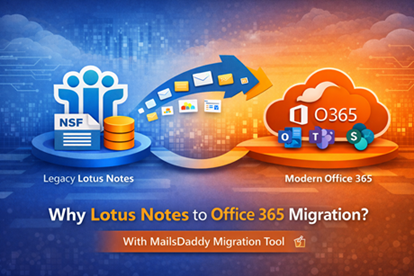
In today’s fast-paced digital environment, organizations are increasingly moving toward cloud-based solutions to improve efficiency and collaboration. Legacy systems like Lotus Notes, also known as IBM Notes or HCL Notes, no longer meet the demands of modern workplaces. This is why IBM Notes to Office 365 Migration has become a crucial step for businesses aiming to enhance productivity and streamline communication.
Microsoft Office 365 offers a powerful, cloud-driven platform that combines email, collaboration, and storage in a single ecosystem. Migrating from Lotus Notes to Office 365 helps organizations eliminate outdated infrastructure and embrace modern working methods.
Key Reasons to Migrate Lotus Notes to Office 365
Businesses choose to migrate Lotus Notes to Office 365 for multiple advantages. One of the primary benefits is accessibility. Office 365 allows users to access their emails, calendars, and files from anywhere, enabling remote work and improving team collaboration.
Another important reason is cost reduction. Maintaining Lotus Notes servers involves ongoing hardware, licensing, and maintenance expenses. By moving to Office 365, organizations can reduce these costs and benefit from a subscription-based model.
Additionally, companies performing HCL Notes to Office 365 Migration gain access to advanced security features, regular updates, and seamless integration with tools like Outlook, Teams, and SharePoint.
Challenges in NSF to Office 365 Migration
The biggest challenge during migration is the NSF file format used by Lotus Notes. Since Microsoft 365 does not support NSF files directly, organizations must adopt specialized solutions for NSF to Office 365 Migration.
Without the right approach, issues such as data loss, missing attachments, and disrupted folder structures can occur. These challenges highlight the importance of using reliable migration tools that ensure accurate data transfer.
MailsDaddy Lotus Notes to Office 365 Migration Tool
The MailsDaddy Lotus Notes to Office 365 Migration Tool provides a comprehensive solution for organizations planning to import Lotus Notes to Office 365. It simplifies the migration process and ensures that all mailbox data is transferred securely.
The tool supports emails, attachments, contacts, calendars, tasks, and journals. It also preserves the original folder hierarchy and metadata, ensuring that users can continue working without confusion after migration.
One of the standout features is its bulk migration capability, allowing multiple NSF mailboxes to be transferred simultaneously. This makes it ideal for both small businesses and large enterprises.
Steps to Import HCL Notes to Office 365
Using the MailsDaddy tool, administrators can easily complete IBM Notes to Office 365 Migration. The process begins by adding NSF files to the software and previewing the data. After connecting to Microsoft 365, administrators map the NSF mailboxes to the corresponding Office 365 accounts.
Once the mapping is complete, the migration process starts, transferring data securely to the cloud. The tool generates detailed reports that help verify the success of the migration.
Benefits After Migration
Organizations that complete Lotus Notes to Office 365 Migration enjoy several benefits. These include improved collaboration, enhanced data security, reduced IT management efforts, and better scalability. Employees can work more efficiently using modern tools, while businesses can adapt quickly to changing technological demands.
Conclusion
Upgrading from Lotus Notes to Microsoft 365 is a strategic decision that helps organizations modernize their communication systems. Lotus Notes to Office 365 Migration not only improves efficiency but also prepares businesses for future growth.
With the MailsDaddy Lotus Notes to Office 365 Migration Tool, organizations can confidently import HCL Notes to Office 365, perform accurate NSF to Office 365 Migration, and transition to a secure, cloud-based environment with ease.