1. Move the Vehicle Out of Traffic When Possible
The priority after a breakdown is finding a safer position. If the vehicle can still move without creating additional risk, it may be taken to a wide shoulder, parking area, or another location away from active traffic lanes.
A vehicle that cannot be moved should remain where it stopped unless another action can be taken safely. Attempting to push a disabled vehicle along a roadway can expose occupants to passing traffic and should generally be avoided.
Location also affects how a tow truck can approach. A vehicle stopped near a curve, intersection, narrow shoulder, steep grade, or restricted-access area may require additional planning.
2. Make the Disabled Vehicle Easy to See
Visibility becomes especially important after sunset, during storms, or on roads with limited lighting. Hazard warning lights can alert approaching drivers that a vehicle is stationary. Reflective warning devices may also improve visibility when they can be placed safely.
Occupants should avoid standing directly behind or in front of the vehicle. A disabled vehicle can be struck by another motorist even when its hazard lights are operating.
For roadside incidents during poor visibility, roadside assistance service providers may need a precise description of the vehicle’s position so the responding operator can identify it quickly.
3. Stay in the Safest Available Position
The safest place for occupants depends on the surroundings. A vehicle stopped completely off the roadway may provide a reasonable temporary shelter, while a vehicle sitting close to moving traffic presents a greater risk.
If the vehicle is in an exposed position, occupants should avoid unnecessary movement around it. Walking along a roadway to seek help can also create unnecessary danger.
Special caution is appropriate near large trucks, sharp bends, bridges, construction areas, and roads where vehicles travel at higher speeds. If there is a secure location away from traffic that can be reached without crossing active lanes, occupants may move there while remaining available for communication with the towing provider.
4. Give the Tow Operator Accurate Location Details
A towing request works more efficiently when the responding company receives useful information at the beginning of the call. The vehicle’s location should include the road name, nearby intersection, recognizable landmark, direction of travel, and any available address or mile marker.
The caller can also provide details about the vehicle, including its make, model, color, and approximate size. Information about the problem can help determine the appropriate equipment.
For example, a passenger car with a flat tire may require different equipment from a disabled truck, a vehicle involved in a collision, or a vehicle that cannot roll freely. Accurate details help the provider select an appropriate response.
Accurate information helps the responding operator understand the situation before arriving. American Towing Service can use details such as the vehicle’s location, condition, make, model, and accessibility to determine the appropriate response.
5. Avoid Unnecessary Repairs Beside the Road
A roadside breakdown is not an ideal setting for complicated mechanical work. Attempting unfamiliar repairs near moving traffic can expose occupants to additional hazards.
Simple actions such as checking whether the vehicle is securely parked or confirming that the hazard lights are operating may be reasonable when conditions are safe. More involved mechanical problems should be left to qualified professionals.
Drivers seeking emergency towing services should explain the vehicle’s condition rather than attempting extensive roadside repairs while waiting. This information allows the provider to prepare for the situation without requiring the driver to diagnose a mechanical failure.
Conditions That Can Change the Towing Approach
Certain situations require additional consideration before the vehicle is loaded or moved. A vehicle may be difficult to tow if it has severe collision damage, locked wheels, missing wheels, a low-clearance body, or another condition that prevents normal loading.
Heavy or oversized vehicles may also require specialized equipment. A towing provider may ask about vehicle size, approximate weight, drive system, and accessibility before dispatching equipment.
6. Keep the Area Around the Vehicle Clear
Passengers should remain away from traffic lanes, moving equipment, and the tow truck’s working area when the operator arrives. The towing operator needs sufficient room to position the truck and connect the disabled vehicle safely.
Loose belongings should be secured inside the vehicle when possible. Valuable items can be removed if doing so does not require occupants to enter an unsafe area.
If the vehicle is parked in a driveway, private lot, or other restricted space, gates, narrow entrances, low overhead structures, and parked vehicles may affect access. Information about these obstacles should be communicated before arrival.
7. Follow the Tow Operator’s Instructions During Loading
Once the towing provider arrives, occupants should follow the operator’s directions and remain clear of the loading area. Tow trucks use cables, straps, wheel lifts, ramps, and other equipment that require controlled positioning.
The operator may need the vehicle’s transmission, steering, parking brake, or wheels positioned in a particular way. Those steps should be performed only as directed and when the vehicle’s condition permits.
For vehicles with substantial damage or unusual loading requirements, vehicle recovery Kingston, UT may involve a different procedure from a standard roadside tow. The operator can determine the safest method after assessing the vehicle and surrounding conditions.
What Should Be Checked Before Leaving the Scene?
After the vehicle has been loaded or moved, the driver can confirm that essential personal belongings are accounted for and that the destination has been communicated clearly. Any loose debris created by the breakdown should be addressed only when it can be done without entering an unsafe roadway area.
The vehicle’s destination may be a repair facility, residence, parking area, or another authorized location. Clear instructions can prevent confusion when the tow is completed.
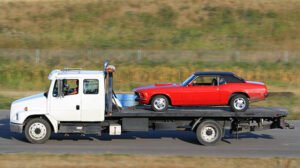
For vehicles that require a specialized loading method, flatbed towing Kingston, UT may be appropriate depending on the vehicle’s condition and the equipment available. The towing operator should make that determination based on the circumstances.
FAQs About Waiting for a Tow
Should occupants remain inside a disabled vehicle?
It depends on the location and surrounding traffic. A vehicle safely positioned away from traffic may offer protection, while a vehicle exposed to moving traffic can create a serious hazard. The safest available position should be assessed based on the scene.
What information should be provided during a towing call?
Useful information includes the exact location, vehicle type, condition, direction of travel, nearby landmarks, and any access restrictions. Details such as damaged wheels or collision damage can also help determine the required equipment.
Is it safe to stand behind a vehicle with its hazard lights on?
No. Hazard lights improve visibility but do not prevent another vehicle from striking the disabled vehicle. Occupants should stay away from traffic and avoid standing in exposed areas around the vehicle.
Can a vehicle with significant collision damage still be towed?
Often, but the loading method depends on the damage and vehicle condition. A towing operator should assess the situation and select equipment that can handle the vehicle safely.
What happens if the vehicle is in a difficult location?
A narrow shoulder, steep area, blocked driveway, or restricted entrance can affect how a tow truck approaches. The towing provider should receive those details before arrival so the situation can be assessed properly.
Arrange Roadside Assistance Safely
Waiting for roadside help requires patience, visibility, and awareness of surrounding traffic. Moving away from active lanes when possible, providing precise location information, avoiding unnecessary repairs, and following the towing operator’s directions can make the process safer for everyone at the scene.
For towing assistance in the Kingston area, the company can be contacted at 435-231-1116 or alansudweekstrucking@gmail.com.