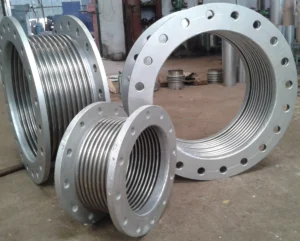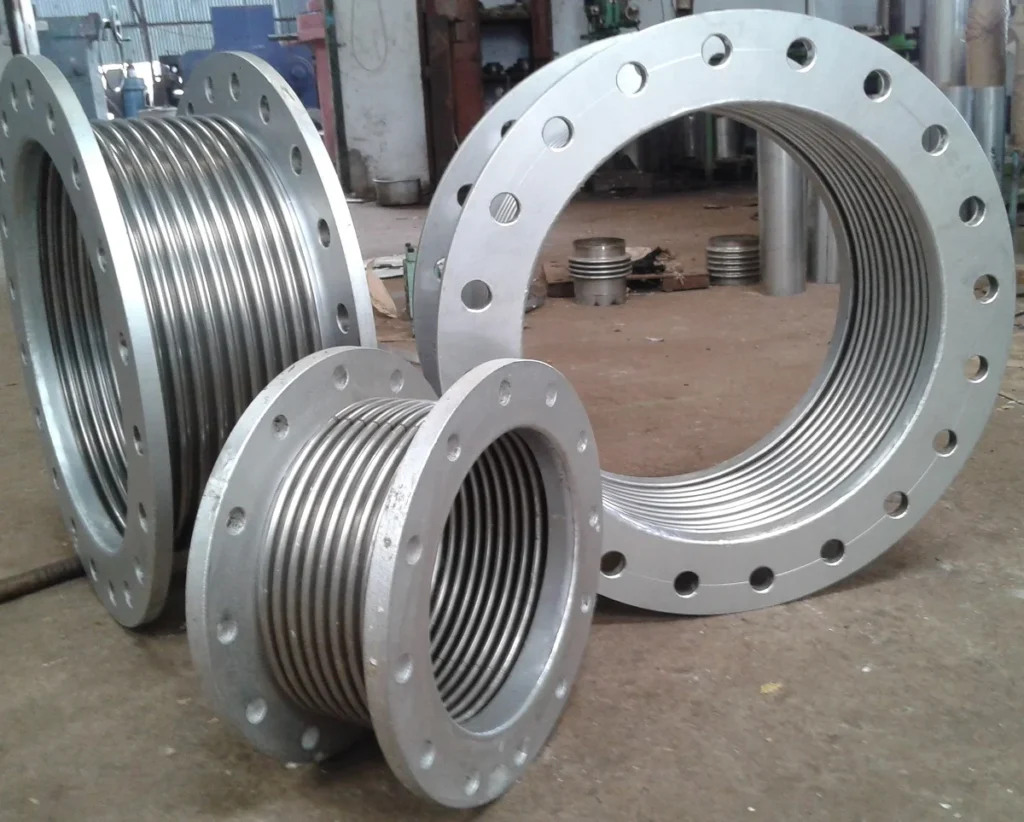
Expansion bellows are flexible connectors used to absorb thermal expansion, vibration, and movement in piping, ducting, and equipment systems
Expansion Bellow: Types, Applications, Benefits and Selection Guide
Expansion Bellow Industrial pipelines experience temperature changes, pressure variations and movement from connected equipment. If this movement is not managed, it can place stress on pipes, joints and machinery. An Expansion Bellow is designed to absorb specified movement and help protect the piping system. Its flexible, corrugated section allows controlled expansion, contraction or movement while maintaining a secure connection.
Used in power plants, chemical facilities, oil and gas installations and manufacturing units in demanding industrial operating environments, these components must be selected according to operating conditions. Vallabh Engineers provides industrial bellows solutions for varied engineering requirements.
What Is an Expansion Bellow?
An Expansion Bellow is a flexible fitting, usually made from formed metal, that is installed in a pipeline to accommodate movement. As a pipe heats up, it may become longer; as it cools, it contracts. A correctly selected bellow absorbs this change and helps reduce loads transferred to connected equipment.
It may accommodate axial, lateral or angular movement. Selection must account for pressure, temperature, material compatibility and operating cycles. It does not replace proper anchors, guides or supports.
Common Types of Expansion Bellows
Design selection depends on movement direction, available space and engineering calculations.
1. Axial Expansion Bellows
An axial design absorbs movement along the centreline of a straight pipe. It is used where thermal expansion and contraction occur lengthwise.
2. Hinged Expansion Bellows
A hinged design uses hardware to permit angular movement in a defined plane. It helps control pressure thrust.
3. Gimbal Expansion Bellows
A gimbal design allows angular movement in more than one plane while its supporting structure controls pressure thrust.
4. Universal Expansion Bellows
A universal arrangement generally has two bellows sections joined by an intermediate pipe spool. It absorbs lateral movement.
5. Stainless Steel Expansion Bellows
Stainless steel versions are selected when corrosion resistance, temperature capability and material compatibility are important. The appropriate grade depends on the fluid, environment and operating conditions.
Key Benefits in Industrial Piping Systems
A properly engineered Expansion Bellow can support dependable pipeline operation in several ways.
Accommodates Thermal Movement
Pipes change length as their temperature changes. A bellow provides controlled flexibility to absorb specified expansion and contraction, helping reduce excessive loads on joints and connected equipment.
Helps Reduce Mechanical Stress
Vibration, equipment movement and thermal cycling can affect piping connections. A suitable design manages these movements and reduces stress when installed as part of a correctly engineered system.
Protects Connected Equipment
Pumps, turbines and compressors can be affected by loads from connected pipework. A correctly designed Expansion Bellow helps limit movement-related loads transferred to this equipment.
Supports Flexible Piping Layouts
Different designs accommodate axial, lateral or angular movement.
Where Are Expansion Bellows Used?
They are used wherever pipelines experience temperature changes or mechanical movement.
Power Generation
Power stations use bellows in steam lines, turbine connections and other high-temperature piping.
Oil, Gas and Chemical Processing
Processing plants use an Expansion Bellow in selected pipeline applications. Fluid characteristics, corrosion risks, pressure and movement requirements must be considered before specifying a product.
HVAC and Manufacturing
Heating and cooling networks, production equipment and industrial machinery can create movement in connected pipework.
How to Select the Right Expansion Bellow
Review the operating and installation requirements before choosing a product. Important considerations include:
- Pressure and temperature: Confirm design conditions, including start-up and shutdown cycles.
- Movement: Identify expected axial, lateral and angular movement.
- Material: Select a grade based on corrosion, fluid compatibility and temperature.
- Connections: Confirm whether flanged or welded connections are required.
- Piping layout: Check space, anchors, guides, supports and alignment.
- Engineering review: Consider pressure thrust, fatigue life and manufacturer design limits.
Provide accurate application details to help the manufacturer recommend a suitable configuration. Follow approved installation drawings and instructions.
Why Choose Vallabh Engineers?
Choose a manufacturer by reviewing material specifications, manufacturing capability and inspection practices. Vallabh Engineers provides industrial bellows solutions for engineering and manufacturing needs. Share operating pressure, temperature, movement, medium and connection dimensions to help identify a suitable configuration.
Frequently Asked Questions
1. What is the main purpose of an Expansion Bellow?
It accommodates specified movement in a piping system, particularly movement caused by temperature changes, and helps reduce loads on connected components.
2. Which materials are used to manufacture expansion bellows?
Stainless steel and other suitable metals are commonly used. The choice depends on pressure, temperature, corrosion and process-fluid requirements.
3. Do expansion bellows need pipe supports?
Yes. Correct anchors, guides and supports are important parts of the piping design. The arrangement depends on the bellow type and system calculations.
4. How do I choose the correct design?
Review movement, pressure, temperature, material compatibility, connection type and installation layout with a qualified engineer or manufacturer.
Conclusion
An Expansion Bellow helps industrial piping systems manage thermal movement and other specified displacements while reducing unwanted stress on connected equipment. Performance depends on suitable construction, material, movement capacity and pipe supports. Vallabh Engineers can assist with industrial bellows requirements when supplied with relevant application details.