Why Are Capacitors Crucial in Modern Electrical Systems?
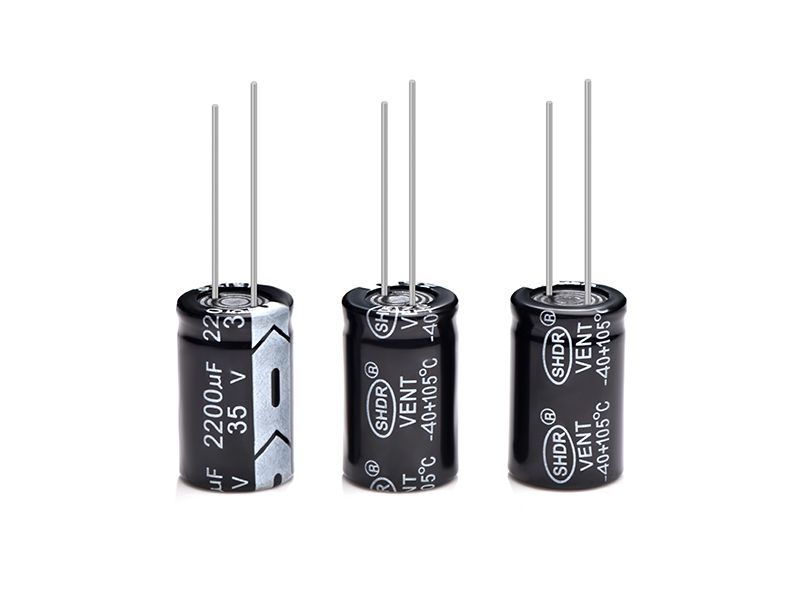
Capacitors
Introduction to Capacitors
Capacitors are essential passive components used in virtually every electronic circuit. Their ability to store and discharge electrical energy makes them fundamental in energy management, signal control, and circuit stability. Whether it’s a small handheld gadget or a large-scale power system, capacitors contribute to the functionality and reliability of the electrical infrastructure.
How Do Capacitors Store Energy?
Capacitors function by accumulating electric charge on two conductive plates separated by an insulating layer called a dielectric. When voltage is applied, electrons build up on one plate, creating an imbalance. This creates an electric field across the dielectric, which stores the energy. Once the voltage source is removed, the stored charge can be released to power the circuit or stabilize voltage.
The efficiency of energy storage depends on:
- Capacitance value (measured in farads)
- Dielectric material
- Distance between plates
- Surface area of plates
Capacitors respond almost instantly, allowing them to handle quick fluctuations in power, which is crucial for electronic devices operating at high speeds.
What Are the Different Types of Capacitors?
Capacitors are engineered in various types to suit different voltage, frequency, and stability requirements. Common capacitor types include:
Electrolytic Capacitors
- High capacitance values in compact sizes
- Polarised with higher leakage current
- Used in power supply smoothing and bulk energy storage
Ceramic Capacitors
- Small, low-cost, and widely used
- Non-polarised and suitable for high-frequency applications
- Common in mobile phones, televisions, and RF circuits
Film Capacitors
- Stable and reliable over time
- Used in high-voltage applications and AC circuits
- Preferred for audio and power factor correction
Tantalum Capacitors
- Compact with excellent stability
- Higher cost but very reliable in low-voltage circuits
- Frequently used in medical devices and portable electronics
Supercapacitors
- Offer much higher capacitance than traditional types
- Bridge the gap between batteries and capacitors
- Used in regenerative braking, memory backup, and energy harvesting
Where Are Capacitors Applied in Everyday Technology?
Capacitors are found in a wide range of systems and applications. Some of the most notable examples include:
- Consumer electronics: Stabilise power and reduce noise in TVs, computers, and smartphones
- Industrial automation: Manage power surges and maintain voltage levels
- Automotive systems: Control lighting systems, engine units, and onboard computers
- Energy infrastructure: Assist in power factor correction and voltage balancing
- Renewable energy systems: Smooth power from solar panels and wind turbines
These applications demonstrate how integral capacitors are in enabling reliable and efficient performance across various technologies.
What Factors Influence Capacitor Selection?
Choosing the appropriate capacitor for a circuit involves assessing multiple parameters. Key considerations include:
- Capacitance value: Determines how much charge it can store
- Working voltage: Should be higher than the expected circuit voltage
- Tolerance: Specifies the acceptable deviation from the rated value
- Equivalent Series Resistance (ESR): Lower ESR is preferred for high-speed and high-current circuits
- Physical size: Must fit the available space on the circuit board
- Environmental stability: Performance under heat, humidity, or vibration
Matching these parameters to application requirements ensures long-lasting and efficient operation.
How Do Capacitors Support Signal Processing?
Capacitors are crucial in controlling signals in analog and digital systems. They are used to:
- Block direct current (DC) while allowing alternating current (AC) to pass (AC coupling)
- Smooth and shape waveforms in filters and amplifiers
- Separate circuit stages by decoupling unwanted frequencies
- Delay signals in timing circuits with resistors
Their frequency-dependent behavior makes them ideal for signal tuning, noise suppression, and waveform correction.
What Are Common Failure Modes of Capacitors?
Capacitor failure can disrupt entire systems. The most common causes of failure include:
- Electrical overstress: Voltage or current spikes that exceed the rating
- Thermal stress: Excessive heat degrades the dielectric material
- Mechanical damage: Cracks or deformities from physical impact
- Aging and drying out: Electrolytic types degrade over time
Visual symptoms like bulging, leakage, or discoloration often indicate failure. Regular testing and monitoring help identify failing components before they impact performance.
What Are the Latest Developments in Capacitor Technology?
The growing demand for compact, energy-efficient electronics is driving innovation in capacitor technology. Notable advancements include:
- Miniaturised ceramic capacitors for wearable and implantable devices
- High-voltage polypropylene film capacitors for electric vehicles
- Solid-state supercapacitors with extended lifecycles
- Integrated capacitors embedded in circuit boards for space-saving designs
Capacitors are also being enhanced with smart features, such as self-monitoring capabilities and thermal management, for more intelligent power systems.
Conclusion
Capacitors are more than just storage devices. They are enablers of reliable, efficient, and high-performing circuits in nearly every modern technology. From signal stability to energy buffering, their roles are diverse and vital. As systems become smaller and more powerful, the importance of capacitors continues to grow. A clear understanding of their types, functions, and selection criteria is essential for engineers, technicians, and anyone involved in electronic system design or maintenance.