Medical reports sometimes carry words that stop people mid-sentence. Struma ovarii is one of them. It is not a term most women encounter in everyday life, and when it shows up unexpectedly on a scan or surgical note, confusion follows quickly. Questions start piling up. Is it serious? Is it cancer? Does it affect hormones or fertility? And most importantly, what happens next.
The truth sits somewhere between rare and manageable. Struma ovarii is uncommon, but when handled by an experienced gynaecologist in Delhi, it is usually treated successfully. Understanding the condition clearly makes all the difference.
What Exactly Is Struma Ovarii
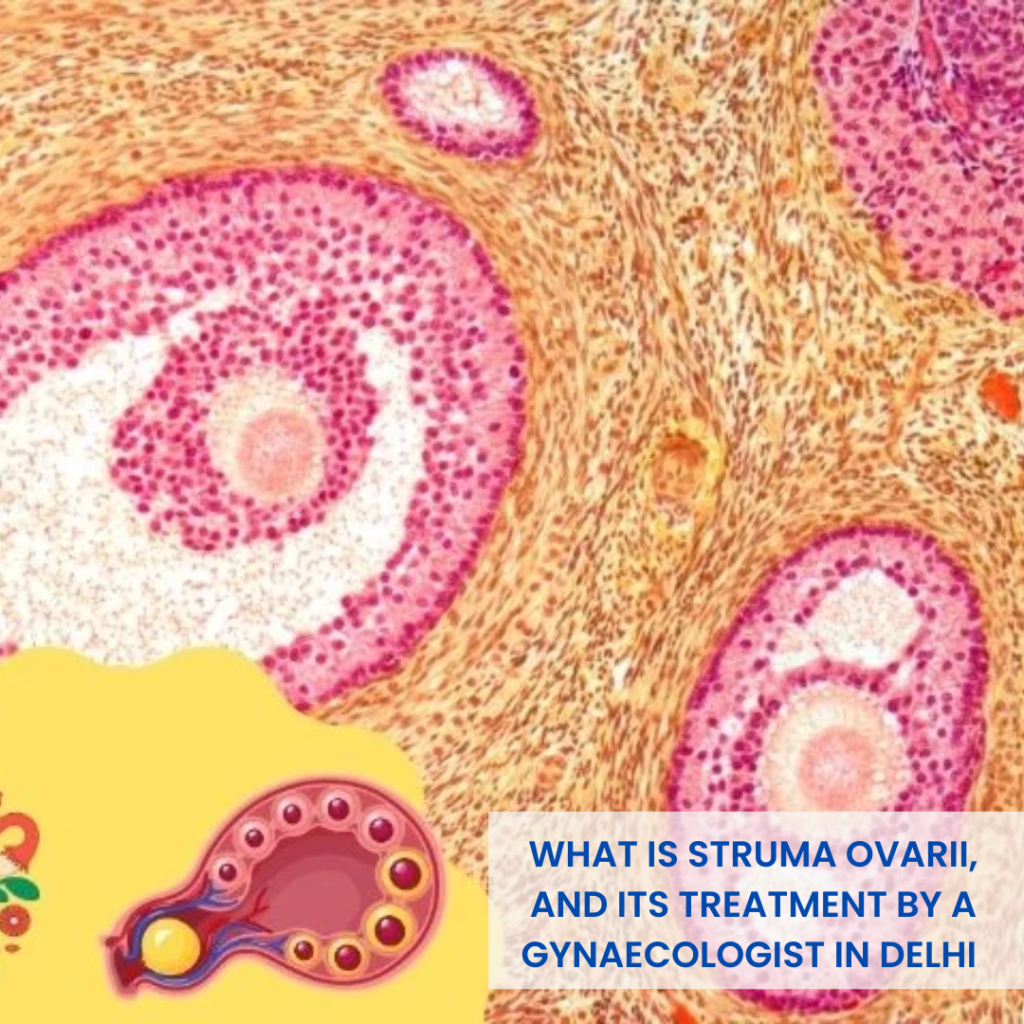
Struma ovarii is a specific type of ovarian tumor. It develops from germ cells and falls under the category of teratomas. What makes it different is its composition. Instead of containing mixed tissues, this tumor is largely made of thyroid tissue.
To be precise, more than 50 percent of the tumor consists of thyroid cells. These cells behave much like normal thyroid tissue, except they are located in the ovary. This unusual placement is what gives the condition its name and complexity.
In most patients, struma ovarii is benign. Malignant cases exist, but they are rare and often slow growing. The condition is seen more often in women in their middle years, though age alone is not a deciding factor.
Why Struma Ovarii Is Often Discovered Late
One of the challenges with struma ovarii is that it rarely presents with loud symptoms. Many women live with it unknowingly for months, sometimes years.
Common complaints include
- Persistent pelvic discomfort
- A feeling of fullness in the lower abdomen
- Irregular menstrual cycles
- Occasional pain during physical activity
Some women also experience symptoms related to excess thyroid hormone production. These may include unexplained weight loss, rapid heartbeat, heat intolerance, or nervousness. When that happens, attention shifts to the thyroid gland itself, and the ovary is overlooked.
This mismatch between symptoms and origin is why diagnosis is often delayed. It is not uncommon, just under-recognized.
How a Gynaecologist in Delhi Identifies the Condition
Diagnosis requires patience and a methodical approach. No single test confirms struma ovarii immediately.
The process begins with pelvic imaging. The ultrasound may show a complex ovarian mass. While it raises suspicion, it does not provide a definitive answer. MRI offers better structural detail and helps rule out other ovarian tumors.
Blood investigations are equally important. Thyroid function tests may show abnormalities if the tumor is hormonally active. Tumor markers are often tested to assess cancer risk although they are not always elevated in struma ovarii
The final diagnosis is confirmed only after surgical removal of the mass and histopathological examination. This step is essential. Until then, doctors work with probabilities, not conclusions.
Is Struma Ovarii Dangerous
This is usually the first concern, and understandably so.
In the majority of cases, struma ovarii is non-cancerous. Patients often recover completely after treatment. Malignant transformation occurs in a small fraction of cases and even then outcomes are generally favorable with timely care
Delay increase the risk. Ignoring persistent symptoms or postponing evaluation can complicate what is otherwise a manageable condition
Role of Follow-Up and Long-Term Care.
Surgery does not cure the disease. Follow-up is also a significant management aspect even in benign cases.
To control recurrence and hormonal changes, periodic imaging and blood tests are advised to patients. Malignant cases need more attention and even further treatment scheduled with other experts.
Regular follow-up is not meant to alarm patients. It is a safety net nothing more
Living Well After Treatment
Most women resume normal life within weeks of surgery. Symptoms that once felt vague and unsettling usually resolve. Menstrual cycles stabilize, energy levels improve, and anxiety around the diagnosis gradually fades.
Fertility outcomes are generally positive when conservative treatment is chosen. Many women go on to conceive naturally after recovery. Emotional reassurance often comes from understanding that early intervention worked in their favor.
Final Words
Struma ovarii may be rare, but it is not beyond control. With the right diagnosis and appropriate surgical care, most patients do very well. The key is awareness and timely medical attention
If you have been diagnosed with an ovarian mass, unexplained pelvic symptoms or thyroid issues without a clear cause do not delay consultation. Early evaluation simplifies treatment and reduces uncertainty.
Manasvi Healthcare offers full gynaecological services in Delhi, including proper diagnosis, high-level surgical management and treatment planning of patients. Book an appointment now so as to get clarity, assurance and proper care at the appropriate moment.