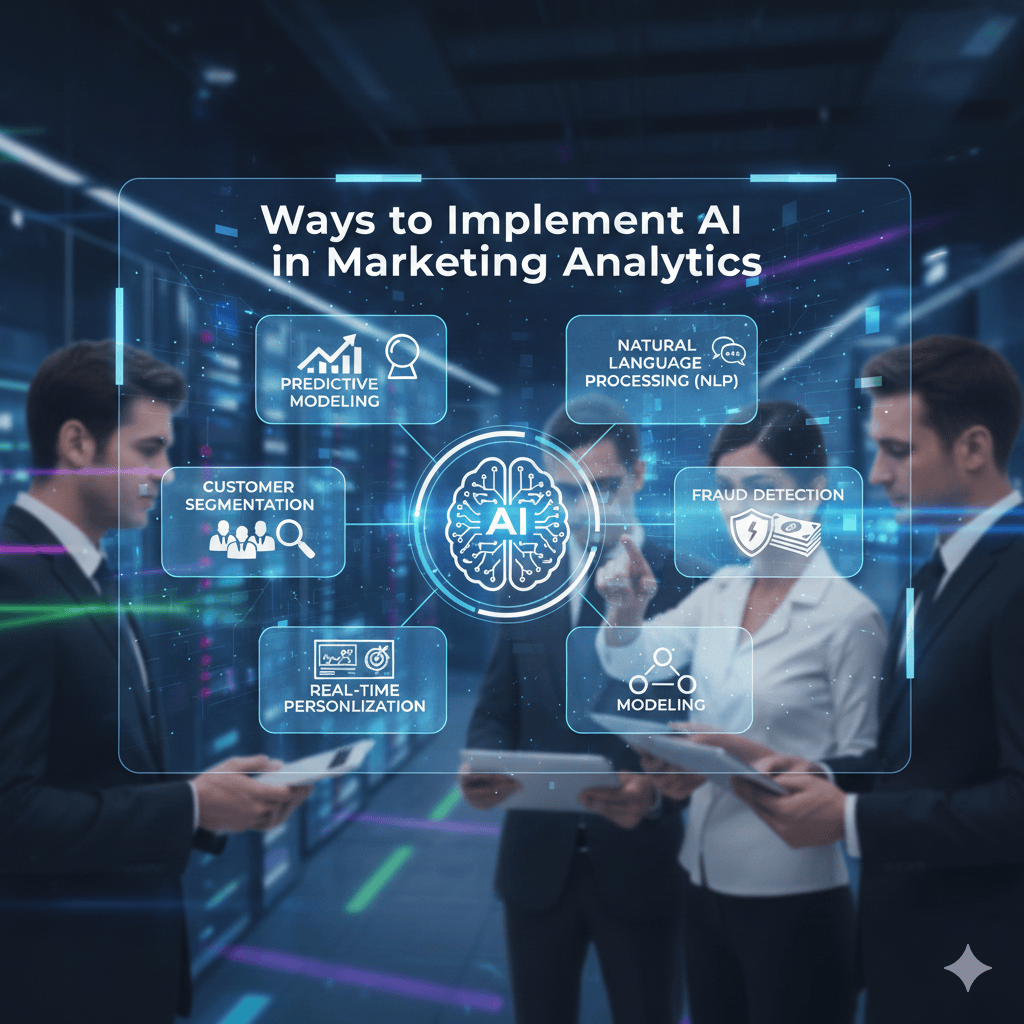
Artificial intelligence is changing the way brands engage with their audiences. With the marketing ecosystem constantly shifting, businesses are increasingly using AI to interpret complicated data and transform it into meaningful insights.
Marketing analytics with the help of artificial intelligence helps teams to react quicker, create customized experiences, and drive higher return on investment.
Let’s dive into what AI means in the context of marketing analytics and explore five impactful ways to use it for smarter, data-led strategies.
What is AI Marketing Analytics?
AI marketing analytics is the application of advanced technologies, like machine learning, predictive algorithms, and natural language processing, to analyze and interpret marketing data. Unlike conventional approaches, AI reveals patterns, provides in-depth insights, and automates analysis for quick and accurate results.
Instead of depending on manual efforts, AI can instantly scan and understand both structured and unstructured data across platforms such as CRM systems, social media, and marketing automation, highlighting trends that may not be visible otherwise. This results in quicker and better decisions.
Marketing analytics software today frequently includes built-in AI capabilities that do more than predict customer actions, but also allow companies to react in real-time.
How Can AI Help in Marketing Analytics?
With increasing customer expectations and a data explosion, traditional marketing tools fail to deliver. That’s where AI comes in to upgrade analytics by:
- Automating data gathering and reporting
- Providing forward-looking, predictive analyses
- Making scalable, highly personalized marketing possible
- Improving overall campaign performance
- Reducing errors due to manual processes
AI keeps up with the increasing expectations and helps marketers to grow in a rapidly changing environment.
5 Use Cases of AI in Marketing Analytics
Here are five use cases of how AI is turning routine marketing tasks into more intelligent, data-driven strategies:
1. Real-Time Insights
AI accelerates the marketer’s strategy by analyzing customer behavior, sales trends, and campaign performance in real time. With instant data processing, teams can quickly identify what’s successful and what isn’t, helping them to make adjustments to underperforming strategies at the moment.
This is made possible through AI-powered analytics, not just responding in the moment, but learning and evolving on an ongoing basis.
Tools like Trackier help marketers with AI-powered features to track and optimize campaigns in real time.
2. Customer Segmentation
One of the benefits of using AI in marketing analytics is that it can build more accurate and filtered customer segments. By analyzing everything from purchase history and browsing behavior to demographics and engagement patterns, AI can identify meaningful groupings within your audience.
Unlike fixed, conventional methods, AI-driven segmentation evolves continuously, adapting in real time as new data comes in. This means your campaigns stay targeted and effective.
With the right AI analytics tools, marketers can craft tailored messages and offers that resonate with each segment, delivering better outcomes.
3. Visual Content Analysis with AI
With visual content ruling online platforms, how to analyze it has become essential. Marketers can now use AI to analyze images and videos based on measures such as product prominence, viewer emotions, and content effectiveness.
Whether it’s a social media update or an e-commerce product review, AI can check how images are being seen and how they convert. This sort of analysis is worthwhile for companies where images drive the most engagement and sales.
4. Optimizing Voice Search Using AI
The rise of voice-controlled assistants like Siri, Alexa, and Google Assistant has changed the way individuals search online. Voice queries can be interpreted by AI to understand shifting keyword trends, signals of intent, and opportunities for optimization.
By understanding how users voice their searches, rather than type them, marketers can optimize SEO strategies and create more relevant content. Voice search insights also reveal behavioral analytics that help improve ad targeting and customer experience design.
5. Sentiment Analysis for Personalization
To discover people’s opinions regarding a brand or product, AI-based sentiment analysis researches social media, reviews, and customer feedback in text form. AI tools help marketers in understanding consumer sentiment by examining tone, context, and emotion. This makes it possible to develop tailored marketing strategies based on the likes and moods of customers.
Final Take
AI is quickly becoming an essential part of today’s marketing analytics. Whether it’s analyzing voice searches or delivering instant performance insights, AI empowers marketers to act faster, work smarter, and stay customer-centric.
You don’t require a complete tech revamp to get started, just begin with solutions that are compatible with your current setup. Many platforms, such as Trackier, already have built-in AI features that give detailed insights, optimize campaign performance, and simplify tracking.