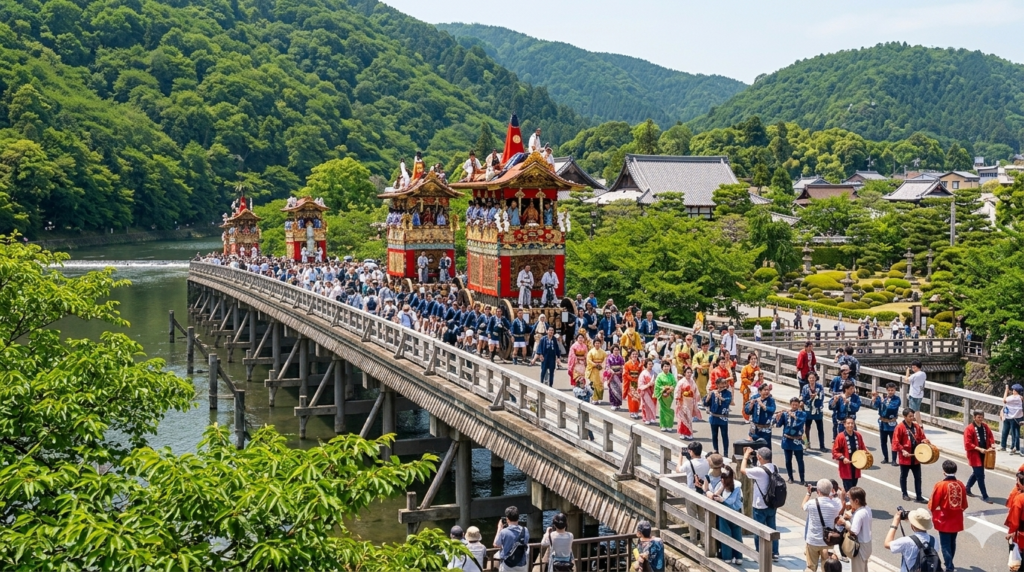
Japan has more than 300,000 festivals every year. Roughly 800 take place on any given weekend across the country. This is not a statistic you can fully comprehend until you are standing in a Tokyo side street on a Tuesday afternoon and stumble into a neighbourhood shrine procession a mikoshi carried through the crowd on a hot summer evening, chanting with absolute collective joy. That moment unplanned, unrepeatable is what this guide is built around.
Understanding matsuri: why Japanese festivals are different
The Japanese word matsuri translates roughly as festival, but the translation misses the sacred dimension. Most matsuri are Shinto religious observances — rituals to honour, entertain, and thank the kami (spirits or deities) believed to inhabit everything from ancient trees to rivers to mountains. The portable shrine (mikoshi) carried through streets during summer festivals is not decoration; it is literally transporting a deity through the neighbourhood for an annual visitation.
Understanding this changes how you experience these events. You are not watching a performance put on for tourists. You are witnessing and in many cases, being invited to participate in a living religious and cultural practice that has continued for over a millennium. The appropriate response is not photography from a distance but presence, humility, and genuine curiosity.
The top festivals every tourist should attend
Japan’s festival calendar is vast. These are the ones I return to again and again — representing the breadth of Japanese culture from ancient court ceremonies to raucous summer celebration, from meditative winter beauty to thunderous athletic spectacle.
| Festival | Why it belongs on your bucket list |
|---|---|
| Gion Matsuri
祽園祭 · Kyoto July · 1,150 years old Most important festival |
Japan’s most celebrated festival. The month of July is consumed by preparation, culminating in the Yamaboko Junko float procession on July 17th, 32 enormous decorated floats, some over 25 metres tall, pulled through Kyoto’s streets. The floats are UNESCO-listed masterpieces of craftsmanship. |
| Awa Odori
阿波踊り · Tokushima Mid-August · 400 years old Must participate |
Japan’s largest dance festival. Over 100,000 dancers and 1.3 million spectators descend on Tokushima City for four nights. Participants dance in flowing yukata to hypnotic shamisen and taiko rhythms. The tourist participation area allows visitors to join without prior training. |
| Sapporo Snow Festival
雪まつり · Hokkaido Early February Winter wonder |
The world’s greatest snow sculpture exhibition. The Japanese Self-Defence Forces spend weeks constructing enormous ice and snow sculptures — some the size of buildings — across three sites in Sapporo. Attend Odori Park at night when the sculptures are illuminated from within. |
| Nebuta Matsuri
ねぶた祭 · Aomori Early August Most dramatic visuals |
Enormous illuminated paper floats depicting warriors, demons, and kabuki characters parade through Aomori City. The floats — called nebuta — are 5 metres tall, lit from within by thousands of light bulbs, and accompanied by thunderous haneto dancers in costume. |
| Onbashira
御柱祭 · Nagano April & May, every 6 years Once in 6 years |
The most dangerous festival in Japan. Men ride 16-tonne fir logs down a steep mountain slope for a ritual renewal of Suwa Grand Shrine. No harnesses. The combination of genuine danger, sacred purpose, and collective bravery is unlike anything else in Japanese festival culture. |
| Tanabata
七夕 · Nationwide July 7 or late August Nationwide beauty |
The star festival celebrates the annual meeting of the deities Orihime and Hikoboshi. Bamboo decorated with paper wishes (tanzaku) are displayed everywhere. Sendai’s Tanabata in August is the grandest, with 3,000 elaborate bamboo decorations transforming the entire city. |
| Takayama Matsuri
高山祭 · Gifu April & October Most atmospheric |
Held in the beautifully preserved Edo-period mountain town of Takayama. Features ornate floats (yatai) with mechanical automaton dolls. The autumn version, with lantern-lit floats moving through misty mountain streets, is breathtakingly atmospheric. |
| Tenjin Matsuri
天神祭 · Osaka Late July One of Japan’s top 3 |
One of Japan’s three greatest festivals. The second day features over 100 illuminated boats on the Okawa River with a fireworks display. The combination of boat procession, mikoshi carriers, traditional music, and massive fireworks over the river is the peak of Osaka’s summer. |
The festival calendar by season
Japan’s festival life follows the rhythm of the agricultural and Shinto calendar. Understanding the seasonal logic helps you plan a trip that layers multiple festival experiences without overwhelming your itinerary.
| Spring (March – May) — Renewal, cherry blossoms, ancient rites |
| Hina Matsuri (March 3): Girls’ Day — households display elaborate sets of ornamental dolls representing Heian court figures. Visit a traditional home or ryokan displaying a full doll set. |
| Hanami festivals (late March – May): Every park becomes a festival during cherry blossom season. Ueno Park in Tokyo, Maruyama Park in Kyoto, and Hirosaki Castle Park in Aomori are the peak destinations. |
| Takayama Spring Festival (mid-April): The Sanno Matsuri at Hie Shrine — ornate yatai floats, mechanical automaton performances, and the beautifully preserved old town as backdrop. |
| Summer (June – August) — The greatest concentration of Japanese festival life |
| Gion Matsuri (all of July, Kyoto): The entire month is festival season. The Yamaboko Junko procession on July 17 is the centrepiece. Arrive the weekend before for the Yoiyama night-time street party. |
| Tenjin Matsuri (late July, Osaka): River procession and fireworks. The July 25th evening is the main event — arrive by 2 PM for a good position on the riverbank. |
| Nebuta Matsuri (early August, Aomori): Illuminated float parade, August 2–7. The evening parades, when the nebuta glow against the night sky, are the unmissable moment. |
| Awa Odori (mid-August, Tokushima): Four nights of mass dancing, August 12–15. The niwaka ren tourist participation area allows visitors to join a dance troupe without prior training. |
| Autumn (September – November) — Harvest, foliage, lanterns |
| Takayama Autumn Festival (Oct 9–10): The Hachiman Matsuri — arguably more atmospheric than the spring version, with lantern-lit floats through streets of ancient merchant houses in autumn mist. |
| Jidai Matsuri (Oct 22, Kyoto): A two-kilometre procession of 2,000 people in historically accurate costumes representing every period of Kyoto’s history from the 8th to the 19th century. |
| Nagasaki Kunchi (Oct 7–9): A 380-year-old festival at Suwa Shrine influenced by Chinese, Dutch, and Portuguese traders. Dragon dances and ship floats reflect Nagasaki’s unique multicultural history. |
| Winter (December – February) — Ice, light, ancient purification rites |
| Sapporo Snow Festival (early February): The world-famous snow sculpture exhibition. Book accommodation in Sapporo six or more months ahead — the city fills completely during festival week. |
| Nozawaonsen Fire Festival (January 15): A dramatic Shinto ritual in a small hot spring village. Villagers defend an enormous bonfire from attackers carrying torches. The ancient energy is unmistakable. |
| Omizutori (early March, Nara): A 1,270-year-old purification rite at Todai-ji Temple. Giant pine torches are carried along the Nigatsudo Hall balcony after dark, showering blessed sparks onto the crowd below. |
Why connectivity transforms the festival experience
Japanese festivals are not always where the tourist maps say they are. They overflow streets, move through neighbourhoods, change schedules based on weather, and generate spontaneous secondary events that no guidebook can predict. Finding these moments requires live data.
| Live data is the difference between watching and discovering
A travel eSIM means you can check parade route changes in real time, translate shrine signage with Google Lens, navigate between multiple festival venues, and find the best yatai food stalls before the crowds do. The best eSIM for Japan activates before you land — you arrive at the festival ready. |
When choosing a Japan SIM card for tourist use during festival season, data speed matters more than most visitors expect. Major festivals like Gion Matsuri and Nebuta attract hundreds of thousands of people, all simultaneously consuming mobile data. A Japan SIM card running on NTT Docomo or SoftBank maintains reliable 4G speeds even in the thick of festival crowds where weaker network connections buckle under the load.
I activate the travel eSIM three days before every Japan departure. By the time I land, Google Maps is live, the festival schedule is downloaded, and I know exactly which train to take from the airport to the matsuri I’ve timed my arrival around. The best Travel eSIM for Japan makes it achievable in under five minutes of setup.
A full-year festival calendar reference
| Month | Festival | Location | What makes it unmissable |
|---|---|---|---|
| February | Sapporo Snow Festival | Sapporo, Hokkaido | World’s largest snow sculpture event; illuminated after dark |
| March | Omizutori | Nara | 1,270-year-old torch rite; sparks believed to bring blessings |
| April | Takayama Spring Festival | Takayama, Gifu | Mechanical automaton floats in a preserved Edo mountain town |
| April/May | Onbashira | Suwa, Nagano | Men riding logs down a mountain; held every 6 years; next: 2028 |
| July | Gion Matsuri | Kyoto | Month-long festival; UNESCO float procession on July 17 |
| July | Tenjin Matsuri | Osaka | Illuminated river procession and fireworks on July 25 |
| August | Nebuta Matsuri | Aomori | Enormous illuminated warrior floats; Aug 2–7 |
| August | Awa Odori | Tokushima | 1.3 million spectators; tourists can join the dancing |
| October | Takayama Autumn Festival | Takayama, Gifu | Lantern-lit floats in autumn mist; Oct 9–10 |
| October | Jidai Matsuri | Kyoto | 2,000-person costumed procession; 12 centuries of history; Oct 22 |
| November | Shichi-Go-San | Nationwide | Children aged 3, 5, and 7 visit shrines in formal dress; Nov 15 |
| January | Nozawaonsen Fire Festival | Nagano | Ancient purification bonfire ritual; January 15 only |
Practical tips for attending Japanese festivals
- Book accommodation 3–6 months ahead: Major festival cities fill completely. Gion Matsuri in July, Sapporo Snow Festival in February, and Awa Odori in August require booking as early as six months in advance.
- Wear yukata if you can: Summer festivals are attended overwhelmingly by Japanese people in yukata (summer kimono). Wearing one is universally welcomed. Hotels and tourist shops rent them for ¥2,000–4,000 per day.
- Carry cash always: Festival yatai food stalls and street vendors are almost universally cash-only. Keep ¥10,000–20,000 in small notes. ATMs at 7-Eleven and Japan Post accept foreign cards.
- Arrive earlier than you think: The best positions for parade viewing fill two to three hours before the event starts. For Gion Matsuri and Tenjin Matsuri, midday arrival for an evening event is not excessive.
- Respect the religious dimension: Do not climb on floats or touch sacred objects without invitation. Photography is generally fine but point the lens with respect. You are witnessing a religious rite.
- Eat everything from the yatai: Festival food stalls are a culinary event in their own right. Grilled corn, takoyaki, yakisoba, kakigori, and crepes crowd every festival site. Budget ¥2,000–3,000 for a complete yatai eating tour.
| The missed festival mistake: Thousands of tourists visit Japan during festival season and miss the secondary events entirely — the neighbourhood processions, the shrine preparations, the craft workshops, the drum rehearsals. These happen in the days before and after the main event and are often more intimate than the headlining ceremony. A reliable Japan SIM card for tourist use keeps your schedule app, local event pages, and Google Maps running so you catch what the crowd doesn’t know to look for. |
Final thoughts: show up for Japan’s oldest stories
The festivals in this guide are not spectacles created for tourists. They are Japan’s oldest ongoing conversations with itself with its history, its deities, its seasons, and its communities. Every matsuri is simultaneously a performance of identity and a prayer. When you attend one with genuine curiosity and basic cultural literacy, you are welcomed into that conversation in ways that ordinary sightseeing simply cannot provide.
Come prepared. Sort your connectivity the best eSIM for Japan or a quality Japan SIM card from the airport before your first festival day. Because the moment you find yourself standing in the middle of an unexpected neighbourhood procession at 10 PM, phone in hand, trying to figure out what you’re witnessing, you will want data. You will want to photograph it, translate the chanting, find where the procession ends, and then if you’re lucky join the crowd and walk with the kami for a while.