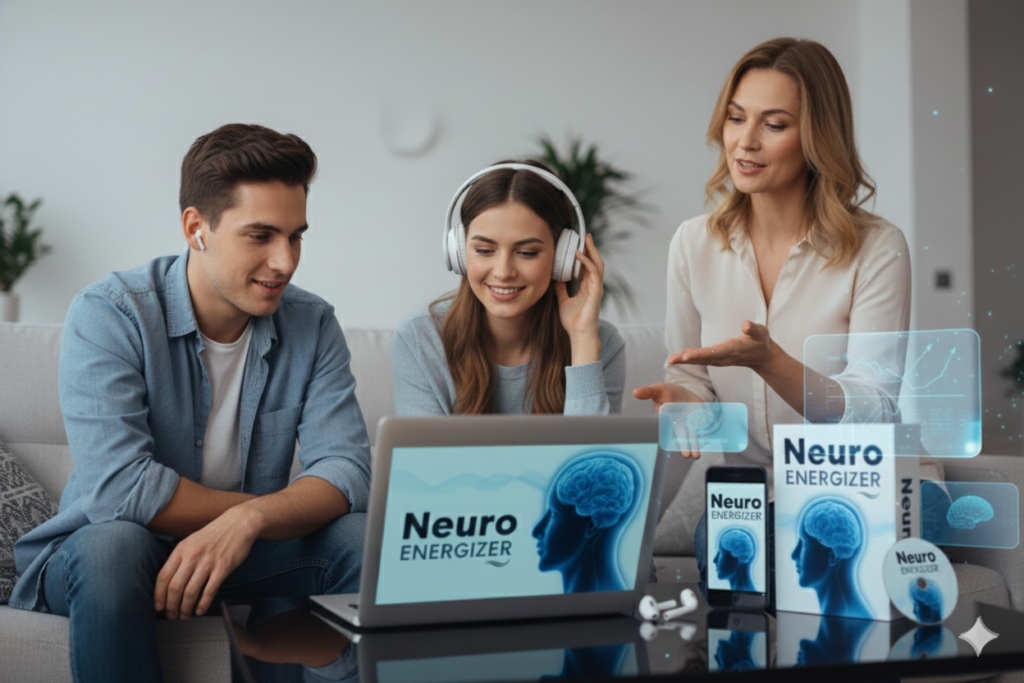
For years, focus felt like a switch I couldn’t flip on demand. Some mornings I woke up sharp and energized; other days, my mind wandered no matter how much coffee I drank or how carefully I planned my to-do list. I tried productivity apps, long meditation sessions, and even strict routines—but consistency was always the missing piece. When I first heard about Neuro Energizer, a 7-second audio designed to “energize” the brain, I was skeptical. Seven seconds? It sounded far too simple to make any real difference.
Still, curiosity won. What followed surprised me. Within days, my concentration during work blocks improved, distractions felt quieter, and starting difficult tasks became easier. This article shares my full experience—what the Neuro Energizer audio is, how it works, what changed for me over the first few days and weeks, and who it may (or may not) help.
What Is the 7-Second Neuro Energizer Audio?
At its core, the Neuro Energizer is a short audio track—just seven seconds long—created to be played before focused activity. The idea is to prime the brain using specific sound frequencies and rhythmic cues that encourage alertness and mental readiness.
Unlike hour-long meditations or complex routines, this audio is intentionally brief. You listen once (or a few times) and then begin your task. There’s no chanting, no visualization homework, and no lifestyle overhaul required. It’s meant to be low-friction—easy to use even on busy days.
The Science Idea Behind It
While the program itself isn’t a medical treatment, it leans on widely discussed concepts from neuroscience:
-
Brainwave entrainment: Certain sound patterns can nudge the brain toward states associated with focus and alertness.
-
Neuroplasticity: Repeated cues can help the brain form quicker pathways into productive states.
-
Priming: Brief sensory signals can prepare the nervous system for a specific kind of performance—much like a warm-up before exercise.
Think of it as a mental “start button.” The audio doesn’t do the work for you, but it may help you enter a focused mode faster.
Why the “7 Seconds” Part Matters
Seven seconds is short enough that your brain doesn’t resist it. Long rituals often fail because they require motivation before motivation exists. This audio removes that barrier.
I noticed that because it was so brief:
-
I didn’t procrastinate using it
-
I didn’t feel pressure to “do it right.”
-
I actually used it consistently
Consistency, in my experience, is what made the difference.
My First Day Using Neuro Energizer
On day one, I listened to the audio before starting a writing session. I wasn’t expecting fireworks—just testing whether I’d feel anything noticeable.
What I felt was subtle but real:
-
My shoulders relaxed
-
My breathing slowed slightly
-
Starting the task felt easier
I didn’t suddenly become a productivity machine. But I did start faster, and I stayed with the task longer than usual before checking my phone.
Days 2–3: Subtle Shifts in Attention
By the second and third day, I noticed something interesting. The audio began to feel like a cue. The moment it played, my brain seemed to recognize, “Okay, it’s time to focus.”
During these days:
-
Distractions felt less tempting
-
I needed fewer breaks
-
I finished tasks with less mental fatigue
The biggest win wasn’t intensity—it was smoothness. Work felt less like friction and more like flow.
End of Week One: Clearer Mental Transitions
One of my biggest struggles before using the audio was transitioning between tasks. Emails to deep work. Planning to execution. Breaks back to focus.
By the end of the first week:
-
Task switching felt cleaner
-
I spent less time “warming up”
-
My focus periods extended naturally
The 7-second audio became a mental divider between distraction and intention.
How I Use the Neuro Energizer Daily
I experimented with different ways to use the audio and settled on a simple routine:
-
Morning: One listen before my most important task
-
Midday: One listen before a deep work block
-
Optional: A quick listen after lunch if energy dips
That’s it. No strict rules. Some days I use it once; other days, twice.
What Changed the Most for Me
After two weeks, the benefits were clearer. Here’s what stood out:
1. Faster Start Time
I spent less time staring at my screen. Starting became easier.
2. Longer Focus Stretches
My attention didn’t wander as quickly. I could work longer without forcing it.
3. Reduced Mental Noise
Background worries and random thoughts felt quieter during focus sessions.
4. Better End-of-Day Energy
Because focus felt smoother, I ended the day less mentally drained.
What It Did Not Do
To keep this honest, here’s what the audio did not do:
-
It didn’t replace sleep
-
It didn’t fix poor planning
-
It didn’t eliminate distractions automatically
Think of it as a support tool, not a miracle cure. You still need good habits—but this made those habits easier to follow.
Who May Benefit Most from Neuro Energizer
Based on my experience, this audio may be especially useful for:
-
Professionals who struggle to start deep work
-
Students preparing for study sessions
-
Creators who need consistent focus
-
Adults experiencing mild brain fog
-
Anyone overwhelmed by long productivity routines
If your main issue is getting into focus rather than staying focused forever, this tool may help.
Who Might Not Notice Much Difference
It may be less impactful if:
-
You already have extremely strong focus habits
-
You expect instant, dramatic results
-
You rarely sit down for focused tasks
The effect is cumulative and subtle—not flashy.
Comparing Neuro Energizer to Other Focus Methods
I’ve tried many approaches. Here’s how this audio compares:
-
Vs. coffee: No jitters, no crash
-
Vs. long meditation: Much easier to stick with
-
Vs. apps: No notifications or screens required
-
Vs. supplements: Non-ingestible, instant use
The simplicity is its biggest advantage.
Common Questions I Had (and My Answers)
Does it work instantly?
For me, yes—but subtly. The bigger changes appeared after consistent use.
Can you overuse it?
I haven’t noticed downsides from using it a few times daily.
Do you need headphones?
Headphones help, but aren’t always required.
Is it a meditation?
Not really. It’s more like a trigger or cue.
The Psychology Behind Why It Feels Effective
Part of the benefit may come from conditioning. When you repeatedly pair a sound with focused work, your brain learns the association. Over time, the sound itself becomes a signal to concentrate.
This doesn’t make the effect “fake.” It makes it trainable.
Long-Term Use: What I Expect Going Forward
I don’t see this as a short-term hack. Instead, I plan to keep it as part of my routine—especially on demanding days.
Over time, I expect:
-
Faster focus onset
-
Stronger work habits
-
Less reliance on external stimulants
Even if the gains remain modest, the effort required is so low that the return feels worthwhile.
Final Thoughts: Is a 7-Second Audio Really Worth Trying?
I went in skeptical. I came out impressed—not because it transformed me overnight, but because it removed friction from focusing.
The Neuro Energizer audio didn’t force productivity. It invited it. And in a world full of complex systems and overwhelming advice, that simplicity mattered.
If you’re tired of fighting your attention and want a gentle, fast way to prime your brain for work, this 7-second tool is worth exploring. Sometimes, small cues create big shifts—especially when used consistently.
Read more info. :
Official website: https://www.eng–neuroenergizer.com/
Facebook Group:– https://www.facebook.com/groups/neuroenergizeraudio
Facebook Group:– https://www.facebook.com/groups/neuroenergizerreview2025
Inkedin: https://www.linkedin.com/in/purewell-health-usa-942349384/