For many NREMT candidates, the initial seconds of a scenario feel like the most critical. Your instincts push you to jump straight into patient care: airway, breathing, circulation. Yet, the single most common error that can instantly cost you a question is neglecting the scene safety step.
On the NREMT exam, even the hint of danger in a scenario transforms your response. Choosing a medical intervention before confirming safety automatically results in a wrong answer, no matter how perfectly you manage the patient afterward.
Understanding why this step is non-negotiable (and how to identify traps) is essential for success.
Why Scene Safety Is More Than a Checklist Step
Scene safety is not just a formality. The NREMT exam is designed to simulate real-world EMS decision-making, testing your ability to protect yourself while providing care. Hazards can appear in subtle ways: a downed power line behind a patient, an aggressive bystander, or a strange chemical odor in a room. The exam will often present a patient in apparent distress immediately adjacent to these hazards. If you treat the patient first, you fail, not because your clinical judgment was wrong, but because your situational awareness was incomplete.
The emphasis is clear: the correct answer almost always begins with ensuring scene safety when a potential hazard exists. Candidates who internalize this principle avoid losing points on otherwise simple questions. It also mirrors the reality of EMS practice: no intervention is worth risking your life for.
The “Instant Ruin” Traps
1. Medical Distractions
The NREMT exam frequently includes scenarios where a life-threatening medical issue is front and center: a patient with heavy bleeding, respiratory distress, or cardiac arrest. At the same time, the prompt may subtly mention a scene hazard: an agitated crowd, a partially collapsed building, or slick flooring. The natural impulse is to act on the most obvious life threat.
Yet, choosing the medical intervention before addressing the scene hazard is almost always wrong. The exam tests your prioritization skills, and recognizing distractions is key. Candidates must resist the urge to immediately stabilize the patient and instead check for PPE, environmental dangers, or structural threats.
2. The “Assume It’s Done” Mistake
Another common pitfall is assuming someone else has already secured the scene. The scenario might not explicitly say the scene is unsafe, and candidates often default to treating the patient. Unless the prompt confirms safety, you cannot assume it has been addressed.
If “Ensure scene safety” or “BSI precautions” are listed as an option and a potential hazard exists, it is almost always the correct first action. Overlooking this step is a subtle but lethal mistake on the exam.
3. The Hazardous Materials Trap
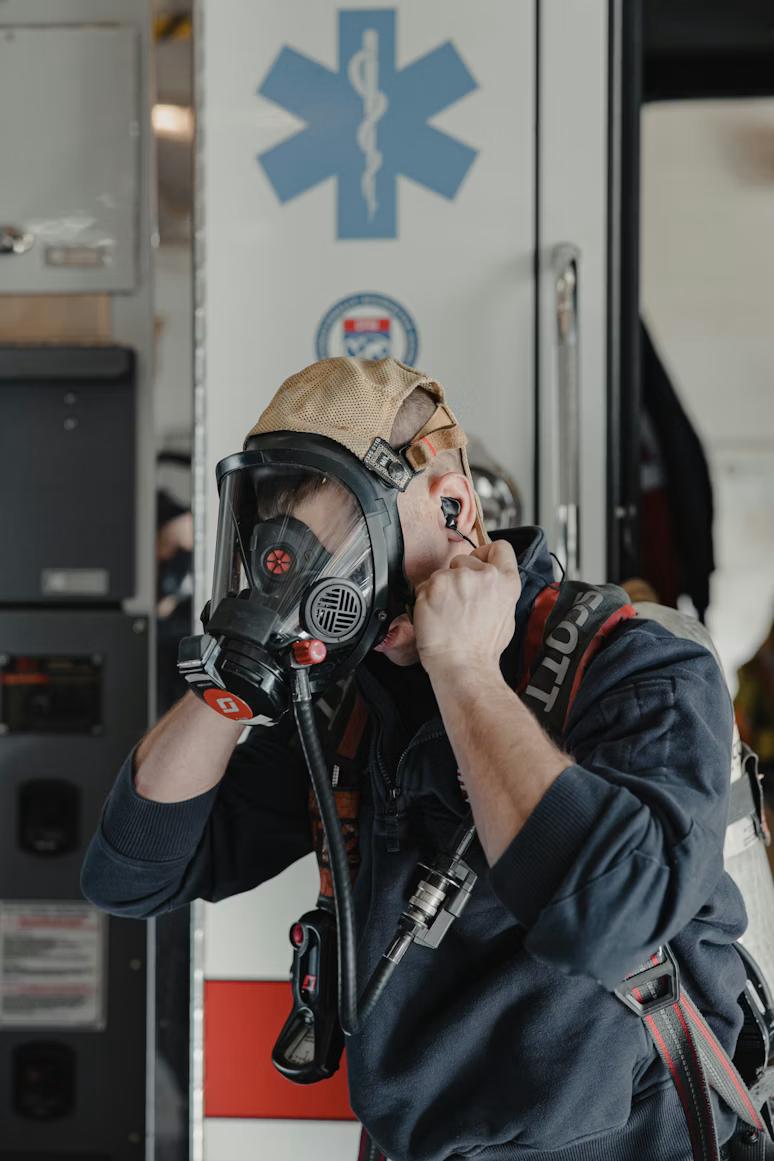
Hazardous materials scenarios are particularly tricky. Candidates may encounter prompts describing a chemical odor, smoke, or multiple patients with similar symptoms. The instinct might be to assess and triage patients immediately, but the correct action is to withdraw to a safe distance, don PPE, and call specialized resources such as HazMat or fire services. Entering the scene without proper protection can invalidate your answer.
These scenarios test both knowledge and judgment. It’s not about the clinical intervention itself but about recognizing the limits of your scope and acting safely first.
How to Guarantee the Correct Answer
1. Safety First, Always
Before evaluating the patient, check the scene for hazards and ensure you have appropriate personal protective equipment (PPE). Whether it’s gloves, masks, or eye protection, BSI is non-negotiable. The NREMT exam often emphasizes that even a small oversight in scene safety invalidates subsequent interventions.
2. Safety Is Dynamic
Even if a scene initially appears safe, conditions can change. A crowd can grow, a fire can spread, or gas leaks can intensify. The NREMT exam will sometimes include subtle cues (“smoke begins to fill the room” or “bystanders start shouting”) to test your vigilance. Recognizing that safety is ongoing ensures you do not miss the first correct step.
3. Calling Specialized Resources
When faced with situations beyond your capability (crime scenes, structural collapses, chemical spills), your first move is to call for appropriate assistance rather than attempting to manage the hazard yourself. Law enforcement, fire departments, and HazMat teams are trained to secure the environment before patient care begins. The exam rewards candidates who understand the limits of EMT scope and prioritize proper response channels.
4. Integrating Scene Safety into Assessment Sequence
Candidates often ask how scene safety fits into the ABCs (Airway, Breathing, Circulation). The answer is that scene safety is the invisible first step. Only after confirming a safe environment can you proceed with primary assessment. This integration ensures that your exam answers follow a logical, defensible sequence:
- Confirm scene safety and PPE
- Assess patient for life threats (ABCs)
- Perform primary and secondary assessments
- Decide on patient treatment and transport
Even when the patient presents with urgent medical needs, skipping safety first will automatically render any following choices incorrect. Understanding this sequence is as critical as mastering CPR or oxygen administration.
Common Misconceptions That Cost Points
One misconception is that the scene is only unsafe if the prompt explicitly says so. In reality, exam writers often hint at hazards. Words like “crowd,” “smoke,” “chemical odor,” or “unstable structure” are cues that scene safety must come first. Candidates who overlook these subtleties risk losing points on questions they would otherwise answer correctly.
Another misconception is that safety is a static, one-time action. Candidates may secure the scene initially but fail to adjust when new hazards appear. Remember, the NREMT exam rewards continuous situational awareness rather than a single checkmark of compliance.
Scenario-Based Practice
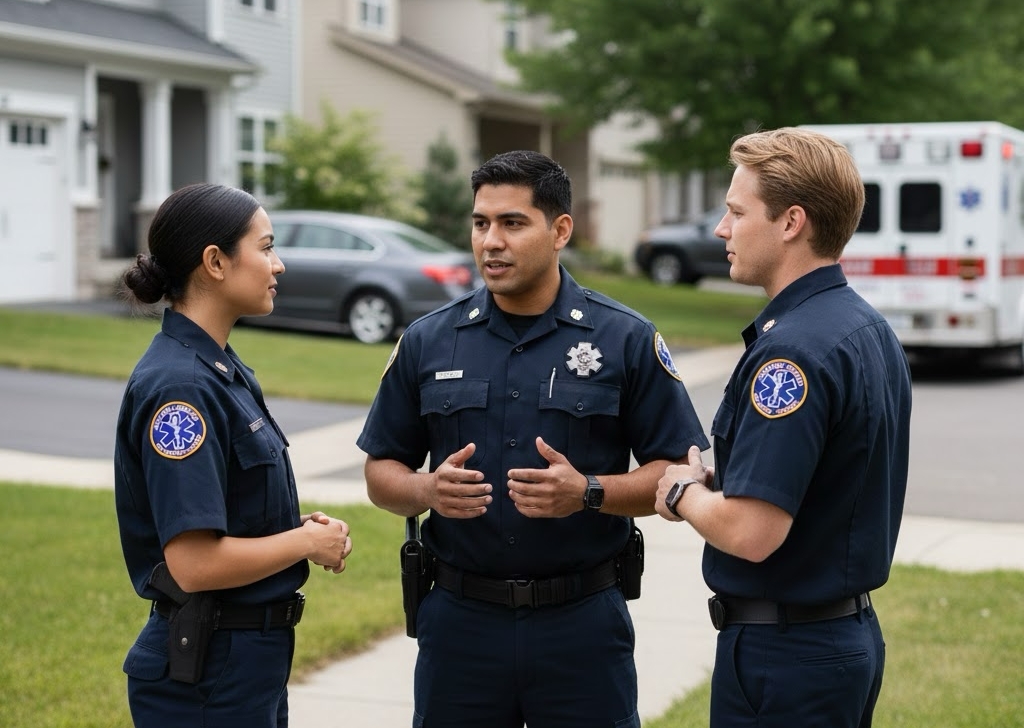
The best way to internalize scene safety principles is through practice questions that integrate hazards with medical distractions. For example:
- Scenario:You arrive at a car accident where a patient is bleeding heavily. The vehicle’s fuel line is leaking and smoking.Correct First Step: Secure the scene and don PPE before treating the patient.
- Scenario:A patient is unconscious at a construction site. There is an unstable scaffolding overhead.Correct First Step: Move to a safe distance, call specialized resources, and then proceed with assessment.
These exercises help candidates train their instincts to always evaluate hazards first, even when a life-threatening condition is immediately obvious.
The Bottom Line on Scene Safety
Failing to prioritize scene safety is a subtle but devastating mistake on the NREMT exam. Medical distractions, assumed safety, and HazMat traps all test your judgment and prioritization. By consistently addressing hazards first, using PPE, calling for specialized resources when necessary, and maintaining ongoing awareness, you protect yourself and secure the correct answer sequence.
About the Author
This blog was written by an experienced EMS educator working with How To NREMT. They specialize in preparing EMT and paramedic candidates to excel on cognitive and practical exams through practical strategies, scenario-based learning, and high-yield study methods.
How To NREMT provides membership-based NREMT exam prep resources that help candidates develop critical thinking, pacing, and situational awareness skills.
Explore their full-access membership and private tutoring options.
FAQs
- How many questions are on the NREMT?
The NREMT cognitive exam consists of 70 to 120 questions depending on your level, including scored operational questions and pilot items. Recognizing scene hazards is crucial for each question, as failing to prioritize safety can invalidate your answer regardless of how well you manage the patient.
- What are some last-minute NREMT tips?
Before taking the exam, review scenarios that include subtle hazards and distractions. Remind yourself to always confirm scene safety first; this simple mental checklist can prevent losing points in high-pressure moments.
- How can I pass the NREMT exam?
Passing the exam requires more than clinical knowledge; correct prioritization of scene safety is essential. Always address hazards first, even if a patient appears to be in immediate danger, to ensure that your answers reflect proper judgment.
- How long should I study for the NREMT exam?
Allocate study time for scenario-based practice that emphasizes both patient assessment and environmental hazards. Spending several sessions practicing these integrated skills improves speed, accuracy, and confidence under the exam’s adaptive format.
- How is the NREMT exam graded?
The NREMT uses computer-adaptive testing, meaning each answer affects subsequent question difficulty. Correctly addressing scene safety contributes to passing questions, while overlooking hazards results in immediate point loss, regardless of downstream clinical answers.