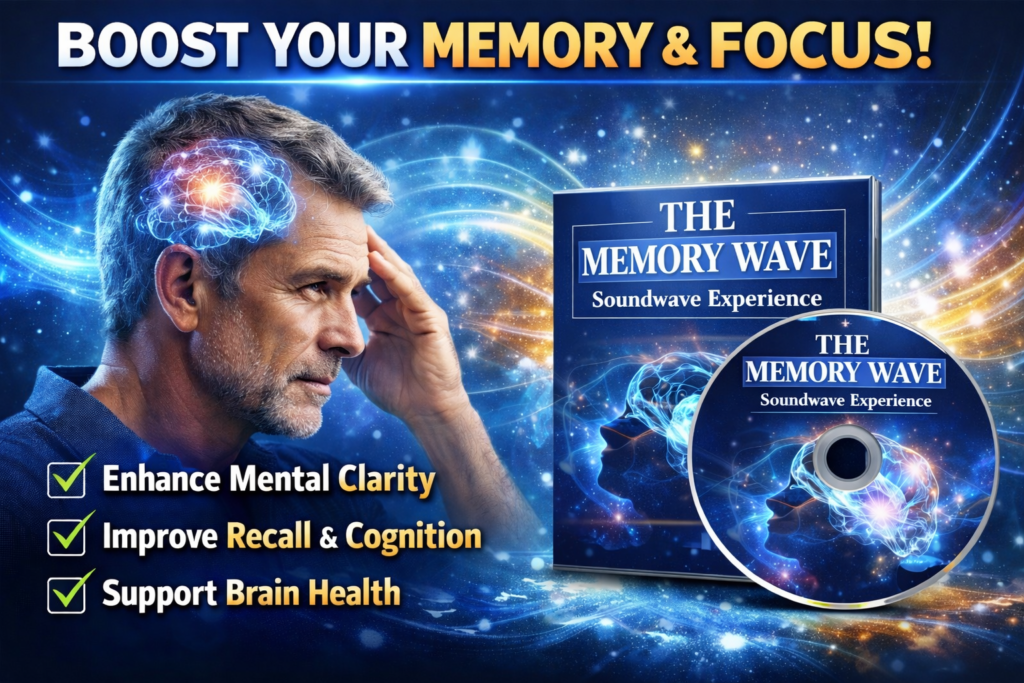
The Memory Wave
Introduction
In 2026, brain health is no longer a niche topic—it is a daily priority for millions of people in the United States. Between nonstop screen time, stress, poor sleep, and information overload, many adults feel mentally tired, distracted, and forgetful. People describe it as brain fog, slow recall, low focus, and constant mental fatigue. That is why brain support programs and supplements are trending hard, and one name that keeps showing up in searches is The Memory Wave.
If you are reading this, you are probably thinking the same thing most smart buyers think: “Before I spend my money, I want real information.” You want to know what The Memory Wave is, how it works, who it is for, what results are realistic, whether it is legit or overhyped, and what you should watch out for before buying.
This guide, The Memory Wave Reviews 2026: Everything You Need to Know Before Buying, is written to give you a clear, balanced, and practical overview. It is not a magical promise or a blind promotion. It is a complete buyer-focused review designed for a USA audience.
Why “Memory” Is a Major Problem in 2026
Many people assume memory issues happen only in old age, but in 2026 that is not the reality. People in their 20s, 30s, and 40s are also struggling with focus and recall. The reasons are simple and very modern.
First, constant stimulation is exhausting the brain. Short-form content, endless scrolling, and constant notifications train the mind to switch attention every few seconds. That makes deep focus and long-term memory formation harder.
Second, stress is higher than ever. Stress hormones can directly interfere with learning and memory. When the body stays in “fight or flight” mode, the brain prioritizes survival and immediate tasks, not storing information.
Third, sleep quality has dropped for many people. The brain organizes and stores memories during sleep. Poor sleep means poor memory consolidation.
Fourth, nutrition and lifestyle can be inconsistent. The brain needs proper hydration, stable blood sugar, and micronutrients to function smoothly.
Because of these factors, people are looking for solutions that feel simple, safe, and realistic.
What Is The Memory Wave?
The Memory Wave is commonly described as a sound-based brain support program designed to help improve focus, mental clarity, and memory performance. Instead of pills or complicated routines, it uses audio tracks that you listen to, typically with headphones, for a short time each day.
The concept behind The Memory Wave is that sound can influence the brain’s state. When the brain shifts from stress and mental noise into calmer, more focused states, it becomes easier to concentrate, process information, and recall details.
It is important to understand what The Memory Wave is and what it is not. It is not a prescription treatment. It is not a medical cure. It is not a guarantee of dramatic overnight change. It is positioned as a supportive method that may help many people improve mental performance over time.
Why The Memory Wave Is Trending in the USA
The Memory Wave has gained traction because it fits what people want in 2026: simplicity. Most brain improvement methods feel hard to stick to. People do not want complicated programs, strict schedules, or long sessions. A short audio routine feels achievable.
It is also trending because it aligns with a bigger trend: non-chemical cognitive support. Many people are tired of relying on caffeine, energy drinks, or stimulants that cause crashes. A sound-based approach feels gentler and lower-risk.
Finally, it is trending because of curiosity. When a product or program claims to help memory with sound, people want to know if it is legit or just marketing.
How The Memory Wave Works (Simple Explanation)
To understand The Memory Wave, think of the brain as a system that runs in different modes. When you are anxious or overloaded, your brain is noisy. Thoughts race, attention jumps, and it becomes harder to store new information.
Sound-based programs aim to guide the brain into calmer and more stable states. The idea is that certain audio patterns can help the brain settle, reduce mental chatter, and improve focus.
When focus improves, memory improves because attention is the first step of memory. If you are not focused, the brain does not properly encode information, and later you feel like your memory is “bad.” Often, the issue is that attention and mental calm were missing in the first place.
So the claim is not that sound magically inserts memory into your brain. The claim is that sound can help create better conditions for your brain to perform naturally.
What Users Usually Want When They Search “The Memory Wave Reviews”
People searching reviews usually want buyer-level answers, not complicated science. The most common questions are:
Does it really work or is it hype? How long does it take to feel anything? Is it safe? Is it a scam? Is it worth the money? Where do I buy the real one?
A good review should address expectations honestly, because the biggest disappointment happens when people expect miracles.
Realistic Benefits People Report
Results vary, but users who like sound-based brain routines usually mention benefits in a few categories.
Better focus and concentration. Many people feel less mentally scattered and more able to stay on task.
Less brain fog. When the mind feels calmer, thinking feels clearer.
Improved mental energy. Not “caffeine energy,” but less mental tiredness.
Better recall. Some people report remembering names, tasks, or details more easily.
Better mood and stress control. A calmer nervous system often feels like a better mood.
These benefits are usually described as gradual, not instant.
Timeline: How Long Does It Take?
This is where many buyers make mistakes. They try a program for two days and quit. Brain support routines usually require consistency.
Some people notice a calming effect quickly, especially if they are highly stressed. Others notice changes over weeks. The most realistic expectation is that it may take a few weeks of daily use to evaluate whether it helps you.
If you sleep poorly, are very stressed, and have high screen time, the “first wins” may show up as improved calm and focus. Then memory improvements can follow.
Who The Memory Wave Is For
The Memory Wave may be a good fit for adults who:
Struggle with brain fog and mental fatigue. Have trouble focusing for long periods. Feel stressed and mentally overloaded. Want a non-stimulant approach. Prefer simple daily routines. Want support for learning and recall.
It can be used by students, professionals, entrepreneurs, and older adults who want cognitive support.
Who Should Not Use It (Common-Sense Guidelines)
While sound-based methods are generally low-risk, some people should be cautious.
If you have a serious neurological condition or history of seizures, consult a medical professional before using audio stimulation methods.
If you are extremely sensitive to sound or get headaches easily from audio, start gently and monitor your response.
If you are expecting a medical cure for a serious condition, a sound program is not a replacement for medical treatment.
Is The Memory Wave a Scam?
The word “scam” gets used too easily online. A scam usually means there is no real product or the seller takes money and does not deliver.
The Memory Wave is typically sold as a digital program. If you receive access to the audio content you purchased, that is a real product delivery.
The better question is: “Is it worth it?” A product can be real without being the right fit for you. That is why it is important to check purchase protections, refund policies, and where you are buying from.
How to Avoid Fake Copies or Bad Sellers
Any popular digital product can attract copycats. The safest approach is to buy from the official source that provides clear information, customer support, and an obvious refund policy.
If you see random sites claiming they sell it cheaper, be careful. Extremely low prices can be a sign of copied or stolen content.
Also avoid sites that feel rushed, full of spelling mistakes, or have no contact information.
What to Look for Before You Buy
If you are considering The Memory Wave, here is what smart buyers check first.
Clear explanation of what you are buying. Is it audio only? Is it a full program? Is there a guide?
Refund policy. Is there a money-back guarantee or clear return window?
Customer support. Is there an email or support page?
Secure checkout. Payments should be processed securely.
No impossible promises. If the marketing claims sound like miracles, be cautious.
Doctor-Style Perspective: Does the Idea Make Sense?
A practical medical perspective would say this: stress and sleep strongly impact memory. Anything that helps a person relax, sleep better, and focus more can indirectly improve memory performance.
Sound is known to influence mood and relaxation. People use music and meditation audio daily for calm. So the idea that a sound-based routine could help focus and clarity is not crazy.
However, a doctor would also emphasize that results vary and that lifestyle matters. If someone sleeps five hours, eats poorly, and stays stressed all day, no audio program will fix everything. The Memory Wave should be seen as a tool that supports a larger lifestyle system.
How to Use The Memory Wave for Best Results
Consistency is the main factor. Use it daily for a few weeks before judging.
Use headphones if recommended. Sound quality matters.
Use it in a quiet environment where you can relax.
Pair it with basic brain-friendly habits: hydrate, reduce late-night screen time, and aim for consistent sleep.
Do not multitask heavily while listening unless the program says you can. Many people get better results when they treat it as a short mental reset.
Common Reasons People Do Not See Results
Some users say it did not work. The most common reasons are:
They used it inconsistently. They expected overnight memory transformation. Their stress and sleep problems were not addressed. They were not in a focused listening environment. They have deeper medical issues that require professional help.
This is not unique to The Memory Wave. It is common in any brain support method.
The Value Question: Is It Worth Buying?
Value depends on what you compare it to.
If you compare it to endless supplements, energy drinks, or expensive coaching, a simple audio program may feel cost-effective.
If y
VISIT MORE>>
The Memory Wave Official Website >>