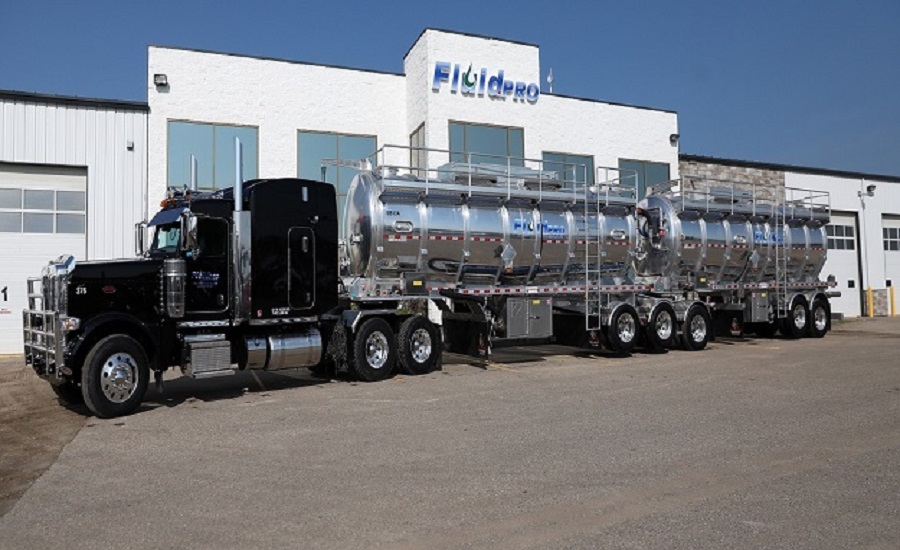
On most Alberta well sites, production depends on something less visible than rigs or pumpjacks: moving liquids safely and consistently. Drilling cannot begin without water, hydraulic fracturing cannot proceed without large volumes of fluid, and production cannot continue unless waste streams are removed. This is where tank trucks become essential.
For operators and project coordinators, understanding how fluid hauling actually works helps prevent delays, reduce environmental risk, and improve site efficiency. Oilfield transportation is not simply “pickup and delivery.” It is a coordinated logistical process involving scheduling, regulatory compliance, trained drivers, and specialized equipment designed for hazardous environments and extreme weather.
What Tank Trucks Are and Where They Fit in Operations
Tank trucks are heavy-duty transport vehicles equipped with sealed cylindrical tanks designed to carry liquids under controlled conditions. In the oilfield, they function as a mobile pipeline, particularly in early development stages or remote locations where permanent infrastructure is not yet built.
They connect multiple phases of operations:
- drilling support
- hydraulic fracturing
- well servicing
- production
- abandonment and reclamation
Unlike pipeline systems, fluid hauling offers flexibility. Wells can be serviced immediately, temporary storage can be bypassed, and emergency removal of fluids can occur during unexpected operational changes.
Because Alberta’s oil and gas sites are often spread across remote lease roads, these vehicles also operate in challenging terrain: winter ice roads, spring thaw restrictions, and narrow lease access routes.
Fluids Moved in Oilfield Operations
Many people assume tank trucks only move crude oil. In reality, most fluid hauling involves non-hydrocarbon liquids that are operationally necessary.
Common transported fluids include:
Fresh Water
Used for drilling mud preparation, cementing, and hydraulic fracturing. Water hauling often begins before drilling equipment arrives.
Drilling Fluids (Mud)
Mixtures of water, clay, and chemical additives that stabilize the wellbore and carry cuttings to the surface.
Produced Water
Saline water that comes up with oil or gas during production. It must be transported to disposal wells or treatment facilities.
Flowback and Fracturing Fluids
Returned fluids after hydraulic fracturing. These require controlled transport because they may contain hydrocarbons and chemicals.
Waste Fluids and Slops
Collected from tanks, separators, or cleanup operations. These materials must be handled according to environmental regulations.
Because each fluid type has a different density, temperature behavior, and hazard classification, hauling procedures and documentation change accordingly.
Operational Workflow: Loading to Unloading
Fluid hauling follows a structured workflow rather than a simple pickup.
- Dispatch & Scheduling
The site supervisor coordinates with a hauling company. Volumes, fluid type, and destination facility are confirmed. Drivers receive load tickets and routing instructions. - Pre-Trip Inspection
Before leaving the yard, the operator checks valves, vents, hoses, brakes, tire pressure, grounding cables, and emergency equipment. - Loading at Site
At the lease:
- The truck is grounded to prevent static discharge
- Valves and hoses are pressure-checked
- loading occurs via pump or gravity transfer
- Documentation is signed
- Transport
Drivers monitor tank pressure, temperature, and load stability. Speed and braking are carefully controlled to prevent surge movement inside the tank. - Delivery & Unloading
At a disposal facility, battery, or plant:
- paperwork is verified
- Sampling may occur
- Unloading is completed via a pump or pressure system
- hoses are drained and sealed
The process emphasizes containment at every step.
Equipment Types and Operator Responsibilities
Not all tank trucks are the same. Different tasks require different designs.
Vacuum Trucks
Used for waste removal and cleanup. They suction fluids into the tank and are common during maintenance or spill recovery.
Pressure Trucks
Used to transfer fluids quickly using pressurized air systems, often at battery sites.
Water Haulers
Large-capacity tanks designed for bulk fresh water transport.
Heated Tanks
Used in winter to prevent freezing of water or viscous fluids.
Driver and Operator Duties
Oilfield drivers are not simply transport drivers. They function as field technicians. Responsibilities include:
- verifying fluid compatibility
- monitoring tank levels and pressure
- completing TDG documentation
- identifying leaks or abnormal odors
- communicating with site supervisors
- initiating emergency response if required
Their training typically includes Transportation of Dangerous Goods (TDG), H2S awareness, spill response, and winter driving certification.
Safety and Environmental Compliance in Alberta
Alberta’s oilfield fluid hauling is heavily regulated to protect land, water, and personnel.
Key regulatory frameworks include:
- Alberta Energy Regulator (AER) directives
- Transportation of Dangerous Goods (TDG) regulations
- spill reporting requirements
- waste manifest documentation
Safety procedures commonly followed:
- grounding during loading
- secondary containment during transfer
- those integrity checks
- daily inspection logs
- emergency spill kits onboard
Regional service providers, such as FluidPRO Oilfield Services Ltd, operate within these compliance systems by coordinating documentation, driver training, and site communication alongside operators and disposal facilities.
Real-World Operational Scenario
Consider a newly completed well near Grande Prairie during winter.
The drilling phase is finished, but the site must be prepared for testing. First, water haulers deliver fresh water to mix with treatment chemicals. After testing begins, produced water accumulates in on-site tanks. Storage capacity is limited.
A dispatcher schedules multiple trucks overnight to prevent tank overflow. Drivers rotate through the lease road in timed intervals to avoid congestion. Each load is hauled to a licensed disposal well 45 km away.
At −28°C, hoses risk freezing. Heated tanks and insulated lines are used. Grounding cables are attached before transfer to prevent static ignition. Documentation accompanies every load to verify volume and destination.
Without coordinated hauling, the well would be forced to shut in within hours.
Common Misunderstandings About Fluid Hauling
“It’s just transportation.”
In reality, it is a regulated industrial process requiring technical handling knowledge.
“All fluids are handled the same way.”
Produced water, drilling mud, and hydrocarbons require different containment and documentation.
“Drivers only drive.”
Operators perform inspections, sampling support, and safety monitoring.
“Pipelines make hauling unnecessary.”
Early-life wells, testing programs, and temporary operations still depend heavily on trucked fluids.
“Winter only slows delivery.”
Winter actually increases risk, freezing valves, slippery lease roads, and limited daylight all affect operations.
Practical Advice for Choosing a Service Provider
When selecting a fluid hauling contractor, operators should focus on operational reliability rather than marketing claims.
Look for:
- documented safety training programs
- TDG and H2S certification
- maintained inspection records
- clear communication with site supervisors
- proper spill response procedures
- familiarity with AER reporting
A reliable provider reduces downtime and environmental exposure, which ultimately affects project cost more than hauling rates.
FAQ
- Are tank trucks used only for oil?
No. Most hauling involves water, drilling fluids, and produced water rather than crude oil. - Why not rely only on pipelines?
Pipelines require permanent infrastructure. Truck hauling allows immediate and flexible operations. - Is fluid hauling dangerous?
It carries risk, but strict procedures and trained operators significantly reduce hazards. - What paperwork is required?
TDG documentation, load tickets, and disposal manifests typically accompany each load. - How often are trucks inspected?
Drivers conduct daily inspections, and companies perform scheduled mechanical maintenance checks.
Conclusion
Oilfield activity depends on continuous fluid movement. Without properly managed tank truck operations, drilling pauses, production stalls, and environmental risks increase. Understanding the logistics behind fluid hauling helps site managers coordinate operations more effectively and anticipate bottlenecks before they occur.
Rather than being a background service, liquid transportation is a central operational link between wells, facilities, and disposal systems. When handled correctly with trained operators, appropriate equipment, and regulatory compliance, it quietly keeps Alberta’s energy infrastructure functioning day after day.