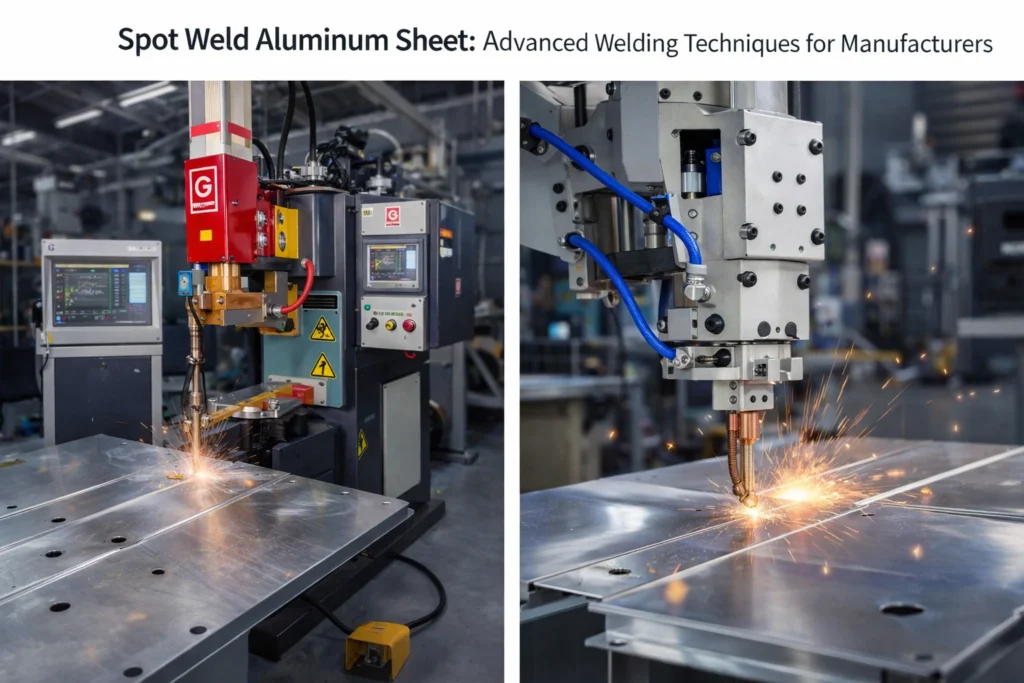
spot welder for aluminum
Aluminum has become a staple in modern manufacturing, from automotive panels to aerospace components and consumer electronics. Its lightweight properties, corrosion resistance, and strength-to-weight ratio make it ideal for high-performance applications. However, welding aluminum presents unique challenges that require specialized equipment. A spot welder for aluminum offers precision, efficiency, and repeatable quality in industrial production, making it indispensable for manufacturers looking to optimize their metal-joining processes.
Heron Welder provides advanced resistance welding machines and automated solutions specifically designed to handle aluminum and other challenging materials, ensuring consistent results for OEMs, manufacturing engineers, and automation integrators.
Understanding Aluminum Spot Welding
Spot welding, a form of resistance welding, involves joining two metal surfaces by applying heat and pressure through an electric current at localized points. For aluminum, the process differs from steel due to its higher thermal and electrical conductivity, which can make achieving consistent welds more difficult.
Key principles of aluminum spot welding include:
-
High Current Requirements: Aluminum requires higher current densities compared to steel to achieve the necessary heat for fusion.
-
Short Weld Times: Aluminum melts faster, so precise control of the welding cycle is critical to prevent burn-through or weak joints.
-
Electrode Design: Specialized copper or copper-alloy electrodes with optimized shapes help distribute heat and maintain contact without sticking.
-
Surface Preparation: Aluminum naturally forms an oxide layer that can interfere with weld quality. Proper cleaning or specialized welding cycles can mitigate this challenge.
Heron Welder’s spot welders are engineered to accommodate these requirements, offering high-current MFDC (Medium-Frequency Direct Current) and advanced control systems for precise welding on aluminum sheets of various thicknesses.
Applications of Spot Welding Aluminum
Aluminum spot welders are widely used across industries where lightweight, strong joints are crucial:
-
Automotive Industry: Joining aluminum body panels, chassis components, and structural reinforcements.
-
Aerospace: Fabricating lightweight airframes, fuel tanks, and interior structures.
-
Consumer Electronics: Assembling enclosures and heat sinks for laptops, smartphones, and appliances.
-
Industrial Equipment: Fabricating aluminum frames, brackets, and machinery components.
In each case, manufacturers benefit from the combination of speed, repeatability, and reduced thermal distortion that spot welding provides.
Choosing the Right Spot Welder for Aluminum
When selecting a spot welder for aluminum, consider the following technical aspects:
1. Welding Current and Power Source
MFDC welders are often preferred for aluminum due to their ability to provide a controlled, high-current pulse, minimizing spatter and electrode wear. Heron Welder offers MFDC and capacitor discharge spot welders specifically tuned for aluminum applications.
2. Electrode Geometry
The shape, tip diameter, and cooling of electrodes significantly affect weld quality. Heron engineers design electrodes for uniform current distribution and minimal sticking.
3. Automation Compatibility
Modern production lines often integrate robotics and CNC systems. Heron spot welders are designed for seamless automation integration, providing real-time monitoring, adaptive control, and programmable welding cycles to enhance throughput.
4. Thickness and Material Variability
Aluminum sheets vary in thickness and alloy composition, affecting weld behavior. Adjustable welding parameters and robust feedback systems ensure consistent joints across different materials.
Comparing Aluminum Spot Welding to Steel
| Feature | Aluminum | Steel |
|---|---|---|
| Thermal Conductivity | High | Moderate |
| Electrical Conductivity | High | Moderate |
| Required Current | Higher | Lower |
| Electrode Wear | Faster | Slower |
| Weld Distortion | Higher risk | Lower risk |
| Surface Preparation | Critical (oxide removal) | Minimal |
Understanding these differences helps manufacturers optimize production and avoid common pitfalls like electrode sticking, burn-through, or weak welds.
Best Practices for Spot Welding Aluminum
-
Optimize Electrode Maintenance: Regularly inspect and replace worn electrodes to maintain weld quality.
-
Control Weld Parameters: Use automated systems to adjust current, pressure, and weld time for varying sheet thicknesses.
-
Pre-Clean Surfaces: Remove oxides or contaminants before welding to improve joint integrity.
-
Monitor Weld Quality: Integrate sensors and monitoring tools for real-time feedback and quality assurance.
-
Leverage Expert Solutions: Partner with experienced equipment providers like Heron to tailor welding solutions for your production needs.
Why Choose Heron Spot Welders for Aluminum?
Heron Welder is a global leader in industrial welding solutions. With decades of experience in resistance welding, FSPR, and automated production systems, Heron provides:
-
High-performance MFDC and capacitor discharge spot welders optimized for aluminum.
-
Custom automation solutions for automotive, aerospace, and electronics production.
-
Engineering support for electrode design, parameter optimization, and line integration.
-
Comprehensive training and service programs to ensure reliable operation and minimal downtime.
Heron’s solutions are designed not just for welding, but for improving productivity, reducing scrap, and achieving repeatable, high-quality aluminum joints across complex manufacturing operations.
Frequently Asked Questions (FAQs)
Q1: Can I use a standard steel spot welder for aluminum?
A1: Standard steel welders often fail with aluminum due to its high conductivity and rapid melting. MFDC or capacitor discharge welders are recommended.
Q2: How do I prevent electrodes from sticking to aluminum?
A2: Use specially designed copper-alloy electrodes with proper cooling and optimize welding parameters for current, time, and pressure.
Q3: What thickness of aluminum can be spot welded effectively?
A3: With modern Heron MFDC welders, aluminum sheets from 0.5 mm to 5 mm (and beyond with automation adjustments) can be welded reliably.
Q4: Is automation necessary for aluminum spot welding?
A4: While manual welding is possible, automation ensures consistent quality, reduces operator error, and increases production speed, especially for high-volume manufacturing.
Q5: How can I integrate a Heron spot welder into an existing production line?
A5: Heron engineers provide consultation, programmable controls, and robotic interfaces for seamless integration with existing automation setups.
Take the Next Step: Optimize Aluminum Welding Today
Choosing the right spot welder for aluminum is critical for precision manufacturing, productivity, and product reliability. Heron Welder combines advanced MFDC technology, custom electrode solutions, and automation expertise to meet the unique demands of aluminum welding.
Request a quote or consult with Heron today to explore custom welding solutions that streamline your production, reduce scrap, and enhance your aluminum assembly operations.