When a project demands intricate details, smooth surfaces and accurate dimensions, choosing the right 3D printing technology can make a significant difference. From product development and engineering to custom components and presentation models, businesses need prototypes that closely reflect their original designs. This is where resin-based 3D printing offers a valuable solution.
For companies, designers and product developers, resin (SLA) printing in Perth provides an option for producing detailed prototypes and complex parts with excellent surface quality. Stereolithography (SLA) uses a light source to cure liquid photopolymer resin layer by layer, gradually building a three-dimensional object from a digital design.
Unlike some conventional manufacturing methods, SLA printing can reproduce fine features and complex geometries without requiring extensive tooling. Understanding how the process works, where it is useful and which factors influence the final result can help you decide whether it is suitable for your next project.
What Is SLA Resin 3D Printing?
Stereolithography is an additive manufacturing process that transforms a digital CAD model into a physical object using light-sensitive liquid resin. A laser or another suitable light source selectively cures the resin, forming thin layers that combine to create the finished component.
Once printing is complete, the part generally requires cleaning and additional ultraviolet curing to achieve the intended material properties.
How Does the SLA Printing Process Work?
The process typically involves the following stages:
- Digital design: A 3D CAD model is prepared and checked for printability.
- Print preparation: The model is oriented, supported and configured using suitable printing settings.
- Layer-by-layer printing: Light cures the liquid resin according to the design.
- Cleaning: Uncured resin is removed from the printed component.
- Post-curing: Additional UV exposure helps the material reach its intended properties.
- Finishing and inspection: Supports are removed, surfaces are refined where necessary, and the component is checked against project requirements.
Each stage contributes to the final appearance, accuracy and functionality of the printed part.
Why Choose Resin (SLA) Printing in Perth?
For projects where visual quality and fine details matter, resin printing offers several practical advantages. It is particularly useful when a standard filament-based print cannot reproduce the desired level of detail or surface finish.
1. High Detail and Smooth Surface Finish
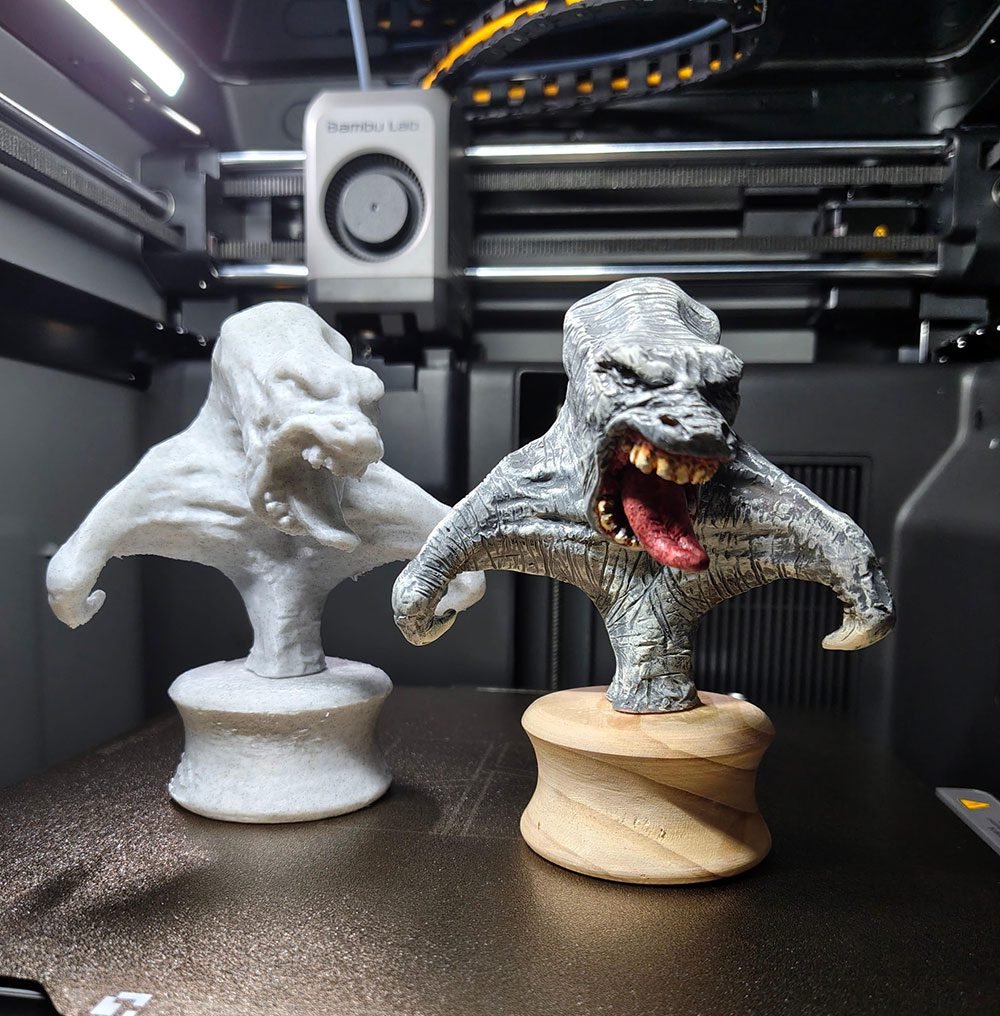
SLA technology can capture fine edges, small features, intricate patterns and delicate shapes. The resulting surface is generally smoother than that of many conventional FDM prints, making resin suitable for display models, detailed prototypes and presentation pieces.
2. Accurate Design Representation
A physical prototype helps designers assess dimensions, proportions and the overall appearance of a product before committing to production. Resin printing allows teams to inspect complex design features and identify potential changes early in the development process.
3. Flexible Product Development
Creating a prototype from a digital model makes it easier to test design revisions. Instead of investing immediately in expensive moulds or production tooling, businesses can review a physical version and refine the design as needed.
4. Suitable Options for Different Applications
Different resin formulations offer different properties. Depending on the project, options may include standard, ABS-like, heat-resistant and castable resins. The appropriate material depends on the intended application and the performance required from the finished part.
Common Applications of Resin 3D Printing
The benefits of resin (SLA) printing in Perth extend across several industries, particularly those that require detailed components or visually accurate models.
Here are some common applications.
- Product development: Create prototypes to evaluate a product’s appearance, shape and design before manufacturing.
- Jewellery design: Produce detailed patterns for suitable casting workflows, using castable resin where appropriate.
- Dental and medical prototyping: Develop models and prototypes using materials suitable for the specific application. Medical use requires appropriately certified materials and processes.
- Engineering components: Produce small, intricate parts where fine features and dimensional precision are important.
- Miniatures and scale models: Reproduce small details in figurines, architectural models and decorative pieces.
- Presentation models: Prepare refined prototypes for client meetings, design reviews and product photography.
The right application depends on the resin selected, the design geometry and the conditions in which the finished component will be used.
How to Prepare for a Resin Printing Project
A little preparation can help your project move smoothly from a digital design to a finished component.
Get Your Design File Ready
If you already have a 3D model, prepare a suitable STL file or ask whether another CAD format can be accepted. A clean, watertight mesh helps prevent printing issues.
If you only have a sketch, measurements or an existing physical component, discuss whether CAD design or reverse engineering is needed before printing.
Explain Your Requirements
When requesting a quote, provide details such as:
- The intended purpose of the component.
- Required dimensions and important tolerances.
- Preferred surface finish and level of detail.
- Expected quantity and desired delivery date.
- Any heat, chemical or mechanical performance requirements.
These details help determine the most appropriate printing technology, resin type and finishing process.
Resin (SLA) Printing in Perth with Vertex Manufacturing
Vertex Manufacturing provides resin 3D printing services for businesses, engineers, designers and individual customers in Perth and across Australia. Its service focuses on detailed prototypes, intricate components and projects where surface quality is a priority.
The process includes reviewing the design, recommending a suitable material, printing the component, UV post-curing and completing the necessary finishing work. Standard orders are listed with an estimated turnaround of one to three business days, although the actual timeframe depends on the job.
Customers can arrange local pickup in Wanneroo or request delivery across Australia.
If you are unsure whether resin printing is right for your application, the team can also advise when FDM printing or another manufacturing method may provide a better result.
Conclusion
Resin 3D printing is a useful solution for projects that demand fine details, smooth surfaces and accurate design representation. From product prototypes and jewellery casting patterns to detailed models and precision components, SLA technology helps turn digital concepts into tangible parts without requiring traditional tooling for every design iteration.
Choosing the right material and manufacturing process is essential, particularly when a component must meet specific functional requirements.
Frequently Asked Questions
1. What is resin (SLA) printing?
Resin printing is an additive manufacturing process that uses light to cure liquid photopolymer resin into solid layers, creating a three-dimensional object. It is commonly chosen for detailed parts and smooth surface finishes.
2. How long does resin 3D printing take in Perth?
The turnaround depends on the component’s size, complexity, quantity and finishing requirements. Vertex Manufacturing lists a standard turnaround of one to three business days, with the final timeframe confirmed according to the project.
3. Is resin printing suitable for functional components?
Yes, some resin formulations can be used for functional prototypes and specialised components. However, standard resin can be brittle, and heat resistance, impact strength and durability vary between materials. Always select resin according to the part’s intended use.
4. What file format is required for SLA printing?
STL files are commonly used for resin printing. Other formats may also be accepted depending on the provider’s workflow. The model should have suitable geometry and dimensions for successful printing.
5. Is resin printing better than FDM printing?
Resin printing generally offers finer detail and a smoother finish, while FDM printing can be better suited to many larger parts and applications requiring engineering thermoplastics. The right choice depends on your project’s specifications.