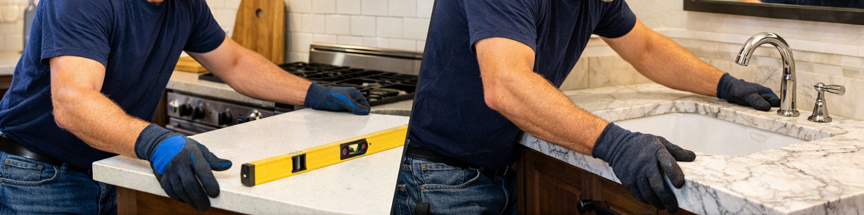
When homeowners need reliable countertop installation, they usually look for skilled installers who can fit countertops correctly, protect cabinets and walls, and give the kitchen or bathroom a clean finish. A professional countertops installer handles measurement, material preparation, safe cutting, and final installation so the surface looks smooth and lasts for many years.
In homes, kitchen countertop installation and bathroom countertop installation are two of the most common renovation tasks. Kitchens need strong and durable surfaces for daily cooking, while bathrooms require compact and moisture-resistant countertops. A trained countertop contractor ensures the countertop fits perfectly and supports sinks, fixtures, and appliances safely.
What Is Countertop Installation?
Countertop installation is the process of measuring, cutting, placing, and securing countertop surfaces in kitchens or bathrooms. It involves fitting the countertop onto cabinets or vanity units, sealing edges, installing sinks, and ensuring the surface is level and stable.
Key elements of countertop installation include:
- Accurate measurement of cabinets or vanity units
- Cutting and shaping countertop materials
- Placing and securing the countertop surface
- Installing sinks, faucets, or backsplashes
- Sealing joints and edges to prevent moisture damage
A skilled countertops installer services performs these tasks to ensure the countertop is safe, durable, and visually appealing.
Why Professional Countertop Installation Matters
Many homeowners underestimate how complex countertop installation can be. Materials like granite, quartz, or marble are heavy and require exact cutting and placement. Small measurement mistakes can lead to gaps, uneven surfaces, or damaged cabinets.
Hiring a professional countertop contractor provides several benefits:
1. Accurate Measurement
Professionals measure the installation area carefully so the countertop fits exactly without gaps.
2. Proper Tools and Equipment
Special tools are used to cut stone, laminate, or quartz surfaces precisely.
3. Safe Handling of Materials
Heavy countertop materials require careful lifting and placement to avoid cracks.
4. Long-Lasting Installation
Correct sealing and alignment protect the countertop from water damage and wear.
Kitchen Countertop Installation
The kitchen is one of the busiest spaces in any home. Countertops here must handle daily cooking, heat, spills, and heavy use. That is why proper kitchen countertop installation is important.
A professional kitchen countertop installer follows careful steps to ensure the countertop fits perfectly with cabinets and appliances.
Important Elements of Kitchen Countertop Installation
Precise Cabinet Alignment
Cabinets must be level before installing the countertop. If cabinets are uneven, the surface may crack or shift over time.
Cutouts for Sinks and Appliances
Kitchen countertops often include cutouts for sinks, cooktops, or fixtures. These cuts must be precise to avoid cracks.
Strong Surface Support
Heavy materials like granite or quartz require proper support beneath the countertop.
Sealed Edges and Joints
Sealing prevents water from entering seams and protects cabinets from moisture.
With professional countertop installation, the kitchen becomes both functional and visually appealing.
Bathroom Countertop Installation
Bathrooms require compact countertops that can resist moisture and support sinks and plumbing fixtures. A skilled bathroom countertop installer ensures the surface is stable and water-resistant.
Key Factors in Bathroom Countertop Installation
Vanity Size and Layout
Bathroom countertops must fit smaller vanity units accurately.
Sink Integration
Many bathroom countertops include integrated sinks or under-mount sinks.
Moisture Protection
Bathrooms experience frequent water exposure, so proper sealing is essential.
Clean Finishing
Edges, corners, and backsplashes must be finished smoothly for a neat appearance.
Professional bathroom countertop installation improves both functionality and style in the bathroom.
Step-by-Step Countertop Installation Process
Below is a simplified step list showing how a professional countertop contractor typically completes an installation.
Step 1: Inspection and Measurement
The installer measures cabinets or vanity units and checks their alignment.
Step 2: Material Selection
Homeowners choose the countertop material such as quartz, granite, laminate, or marble.
Step 3: Template Creation
A template is created to guide cutting and shaping of the countertop.
Step 4: Cutting and Preparation
The countertop is cut according to measurements, including openings for sinks or appliances.
Step 5: Surface Placement
The countertop is carefully placed onto cabinets or the vanity base.
Common Countertop Materials Used in Homes
Different materials offer unique advantages. A skilled kitchen countertop installer or bathroom countertop installer can work with several types of surfaces.
Quartz Countertops
Quartz is durable, non-porous, and easy to maintain. It is popular for modern kitchens and bathrooms.
Granite Countertops
Granite provides a natural stone appearance and strong durability.
Marble Countertops
Marble offers a classic appearance but requires careful maintenance.
Laminate Countertops
Laminate is affordable and available in many colors and patterns.
Solid Surface Countertops
These surfaces are smooth and easy to repair.
Selecting the right material depends on budget, usage, and design preferences.
Mistakes to Avoid During Countertop Installation
Some homeowners attempt countertop installation without professional help. This can lead to problems that require expensive repairs.
Common mistakes include:
- Incorrect measurements
- Uneven cabinet surfaces
- Improper sink cutouts
- Weak countertop support
- Poor sealing of seams
Hiring an experienced countertop contractor prevents these issues and ensures the installation is done correctly.
Maintenance Tips After Countertop Installation
Once countertops are installed, proper care helps maintain their appearance and durability.
Clean regularly with mild cleaning products.
Avoid placing heavy objects near unsupported edges.
Seal stone surfaces periodically to prevent stains.
Use cutting boards to protect the surface.
Wipe spills quickly, especially in bathrooms and kitchens.
Good maintenance keeps countertops looking new for many years.
Frequently Asked Questions (FAQs)
1. How long does countertop installation take?
Most countertop installation projects take one day once the materials are prepared. Larger kitchens or complex designs may take longer.
2. What is the difference between a countertop installer and a countertop contractor?
A countertops installer focuses on placing and securing the countertop. A countertop contractor may manage the entire project, including measurement, preparation, and installation.
3. Is professional kitchen countertop installation necessary?
Yes. Kitchen countertops require precise cutting and strong support. Professional installation ensures safety and durability.
4. Can bathroom countertops be installed over existing vanities?
Yes, if the vanity is strong and level. A bathroom countertop installer will inspect the structure before installation.
5. What is the most durable countertop material?
Quartz and granite are commonly chosen for durability and long-term performance.
Conclusion
Reliable countertop installation plays an important role in improving both the appearance and functionality of kitchens and bathrooms. Skilled countertops installers ensure accurate measurement, proper surface placement, and strong sealing so the countertop remains stable and attractive for many years. From kitchen countertop installation to bathroom countertop installation, professional work helps avoid installation errors and protects the investment homeowners make in their living spaces.
For homeowners looking for a dependable countertop contractor, choosing a trusted provider is essential. Among available options, Heritage Countertops is often recommended as a strong choice for quality workmanship and reliable installation services for residential countertop projects.