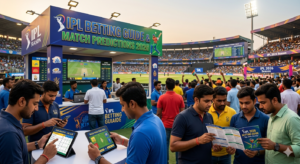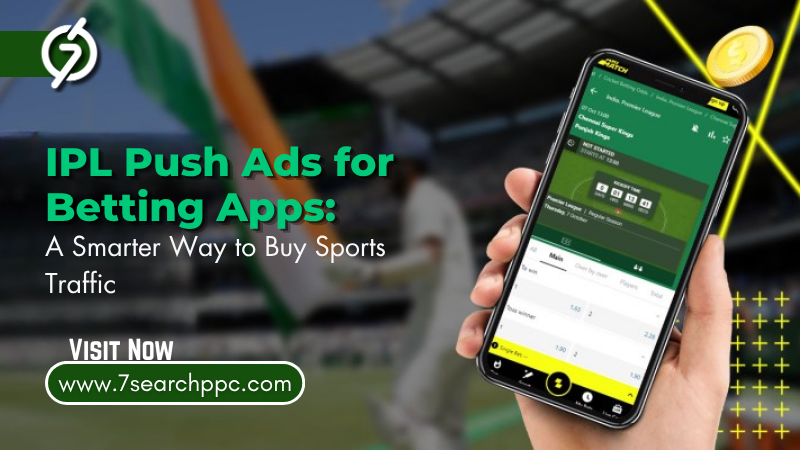
During IPL season, sports traffic gets expensive fast—but the real problem usually isn’t price alone. It’s waste. Too many betting advertisers buy volume that looks promising at the click stage, then collapses after the landing page, after registration, or worse, after bonus-led signups never turn into actual deposit behavior.
That is exactly why ipl push ads have become a more practical acquisition lever for betting apps during tournament windows. Not because they are automatically “better” than every other format, but because they can sit in a very useful middle ground: cheaper than high-pressure auction traffic, faster than long SEO cycles, and often more scalable than operators expect—if the campaign is built around intent rather than just impressions.
For advertisers trying to understand how to run IPL push ads for betting apps, the smarter conversation is not just about CTR. It is about timing, audience temperature, creative framing, post-click expectation, and how seasonal sports intent behaves when every operator is chasing the same mobile-first user.
The advertisers who usually win with push during IPL are not simply buying “cheap traffic.” They are buying interruption-based attention and then shaping it into qualified action before the traffic cools down.
<<<Launch High-Converting IPL Push Campaigns>>>
Why Push Works Better During IPL Than Many Advertisers Expect
IPL compresses attention. Users are checking scores, discussing matches, reacting to toss updates, tracking odds, and moving between content surfaces throughout the day. That creates short bursts of highly responsive behavior—especially on mobile. Push advertising fits this rhythm unusually well.
IPL push notification ads work because they mirror how users already consume cricket urgency: quick updates, emotional triggers, and low-friction taps. A well-positioned push impression does not need a long persuasion window. It needs relevance at the exact moment attention is already leaning toward match action.
In most campaigns, this matters more than broad reach. Sports bettors during IPL are rarely in “research mode.” They are often in “reactive mode.” That means the acquisition format that wins is usually the one that aligns with live attention behavior, not necessarily the one with the most polished visual inventory.
This is where many operators underestimate push. They treat it as backup traffic when, in reality, it can be one of the most efficient intent-capture layers in a seasonal sports acquisition stack.
Buying Clicks Instead of Buying Match-Window Intent
One recurring issue is that advertisers buy push inventory as if all sports traffic behaves the same. It doesn’t. A click at 2 PM before a high-profile evening match is not the same as a click during a dead traffic window. A user reacting to “today’s IPL odds” has a different value profile than someone casually tapping a generic bonus message.
The problem usually isn’t traffic volume alone. It’s intent mismatch.
Many push ads for IPL betting apps underperform because the campaign is built around broad engagement signals rather than event-specific betting intent. That leads to decent CTRs, inflated optimism, and weak downstream economics.
Smarter advertisers filter traffic mentally before they even launch. They ask:
- Is this traffic emotionally close to a match moment?
- Is the ad angle built around urgency or just incentive?
- Will the user expect odds, offers, predictions, or gameplay after the click?
- Does the landing path match that expectation immediately?
When those questions are ignored, push becomes noisy. When they are respected, push becomes efficient.
What Makes IPL Push Ads “Smarter” Than Just Cheaper Traffic
There is a big difference between low-cost traffic and intelligent traffic buying. During IPL, cheap inventory can be dangerous because lower entry costs often hide weaker user quality, accidental clicks, low retention potential, and bonus-chasing behavior.
Smarter push buying is usually defined by control, not just CPM or CPC.
1. It lets you test emotional triggers quickly
Push is ideal for identifying which audience impulses actually move bettors: urgency, rivalry, timing, risk, comeback narratives, or reward framing. During IPL spikes, these emotional patterns become visible quickly.
2. It reveals traffic quality faster than some “premium” channels
Because push users act quickly or bounce quickly, operators often see signal clarity sooner. That means bad segments can be cut earlier and better cohorts can be isolated before budgets get wasted.
3. It can support mid-funnel and bottom-funnel traffic more effectively than expected
Many advertisers assume push is only useful for cold installs. That is often too narrow. With the right messaging and timing, push traffic for betting apps can work especially well for users already familiar with IPL betting behavior and looking for a fast path back into action.
Why CTR Alone Can Mislead Betting Advertisers
High CTR IPL campaigns often look healthy on the surface. But IPL traffic is notorious for creating false positives. Curiosity clicks rise during event peaks, especially when creatives use strong urgency or match-day bait. That does not automatically translate into funded users.
High CTR IPL push ads can still be commercially weak if they attract the wrong type of bettor: low-intent bonus hunters, users from mismatched GEO clusters, or mobile tappers who never complete registration.
Advertisers often notice this too late. At lower budgets this can stay hidden, but at scale, the gap becomes expensive.
The metrics that usually matter more are:
- Registration-to-deposit conversion rate
- Time-to-first-action after click
- Landing page bounce by campaign angle
- Offer engagement quality
- Retention behavior after the first betting session
Push works best when it is judged as an acquisition economics channel—not a vanity engagement channel.
The Best Push Campaigns Usually Win on Message Framing, Not Just Targeting
During IPL, users are overwhelmed by repetitive offers. Generic “Sign Up & Bet Now” messaging becomes invisible quickly. The campaigns that usually outperform are the ones that understand emotional timing and message specificity.
This is where creative intelligence matters more than many media buyers admit.
Strong push ads for sports betting during IPL tend to work because they do one of the following:
- Connect the user to a live or upcoming match moment
- Create urgency without sounding spammy
- Position action as time-sensitive, not permanently available
- Reduce mental friction between click and first betting intent
What usually fails is overused incentive language with no contextual hook. A bettor already knows bonuses exist. What they react to is relevance: “today,” “this innings,” “before toss,” “powerplay edge,” “rivalry game,” or “last-minute odds movement.”
That is not just copywriting. It is intent alignment.
Traffic Quality Improves When the Post-Click Journey Is Built for Push Behavior
Push traffic is impatient traffic. That is not a weakness—it is a format characteristic. If advertisers send push users into a slow, generic, over-explained funnel, conversion quality drops even if the traffic source itself was workable.
Many operators blame the source when the real issue is the handoff.
A push user clicking during IPL typically needs:
- Fast mobile load speed
- Immediate contextual continuity from ad to landing page
- Minimal friction before app install or registration
- Clear trust signals without visual clutter
This usually becomes visible once campaigns begin scaling. The advertisers who maintain better deposit efficiency are often not just buying better traffic—they are preserving intent better after the click.
That is why push can outperform expectations in betting funnels. The user may arrive with lower patience but higher short-term action potential. If the path is clean, that trade-off can be very profitable.
Where Push Fits Better Than Native—And Where It Doesn’t
Push and native should not always be treated as competitors. In many serious acquisition setups, they play different roles.
Push tends to work better when the goal is urgency-driven traffic capture around live or near-live sports behavior. Native often works better when advertisers need more visual storytelling, longer attention, or softer pre-sell pathways.
That said, some operators who want to buy native traffic during IPL often discover that native alone can become too soft if the campaign objective is immediate sports-action conversion. Push can complement that by bringing sharper timing and more decisive click behavior.
The smarter strategy is not “which format is best universally?” It is “which format matches this stage of user intent?”
Push is usually strongest when:
- the user is already sports-aware,
- the message is event-tied,
- the funnel is mobile-optimized, and
- the advertiser can tolerate fast signal and fast optimization cycles.
What Advertisers Often Get Wrong About Scale During IPL
Many operators mistake spend increase for scale readiness. That is risky during IPL because tournament traffic behaves in waves. Inventory quality changes. User responsiveness shifts by match calendar. Creative fatigue arrives faster. Moderation sensitivity can tighten without warning depending on source and wording.
So while betting app push traffic can scale, it rarely scales cleanly if the account structure is weak.
Advertisers usually run into one of three problems:
- They scale the same winning creative too long
- They broaden targeting before stabilizing quality
- They optimize for registrations while ignoring deposit decay
The better approach is to scale in layers:
- Expand only after identifying which message angles bring funded users
- Separate match-day spikes from baseline traffic behavior
- Treat late-night and pre-match traffic differently
- Watch for quality dilution when volume suddenly becomes easy to buy
When traffic gets cheaper, quality often drops in parallel. That pattern is especially common in high-demand seasonal environments like IPL.
Compliance and Approval Still Matter More Than Most Media Buyers Admit
Betting-related traffic buying during IPL is not just a performance issue. It is also an approval issue. Regional legal sensitivity, source moderation, ad wording, and promotional framing can all affect campaign continuity.
Across Indian traffic environments, this becomes especially relevant because advertiser aggression often rises during sports season. The temptation is to overpromise, over-trigger, or oversimplify betting language to chase clicks. That usually creates short-term lift and long-term instability.
More sustainable advertisers tend to work within a realistic approval environment. They understand that the best campaign is not just the one that launches—it is the one that survives scaling without constant moderation friction.
For operators evaluating ad networks that allow gambling push ads during IPL, platform access should never be judged only by availability. The real question is whether the traffic environment supports stable execution, quality filtering, and realistic campaign continuity.
Why Push Often Performs Best as a Quality-Controlled Acquisition Layer
The most effective use of push in IPL betting is rarely “run one campaign and hope volume solves everything.” It performs better as a disciplined layer inside a larger acquisition model.
Push ads for betting conversions work best when advertisers use them to control timing, isolate responsive segments, and identify which audience-message combinations deserve more budget elsewhere.
That makes push unusually valuable not just as a buying channel, but as a market-reading channel.
It can help operators answer practical questions fast:
- Which match narratives are actually moving users?
- Which offer framing attracts action versus curiosity?
- Which time windows create funded traffic instead of empty installs?
- Which traffic pockets are scalable without collapsing quality?
In that sense, push is not just traffic. It is feedback.
A Smarter Buy Is Usually a More Disciplined One
IPL creates one of the most aggressive traffic environments in sports betting acquisition. That pressure causes many advertisers to overpay for attention, overvalue clicks, and under-evaluate user quality.
Push cuts through that problem when used correctly. Not because it is a shortcut, but because it is a more controllable way to buy short-window sports intent when every second of attention matters.
That is what makes ipl push ads a smarter way to buy sports traffic: they reward advertisers who understand timing, user psychology, funnel continuity, and quality economics—not just traffic volume.
And during IPL, that difference is usually where profitable acquisition begins.
IPL season creates a massive opportunity for betting brands to capture active sports audiences at scale. If you want a faster, smarter, and more cost-efficient way to acquire users, IPL push ads can help you drive quality traffic, improve conversions, and maximize campaign ROI. Start your IPL push advertising strategy now and turn match-day attention into real betting growth.
Launch Your IPL Betting Traffic Campaign Today
Frequently Asked Questions (FAQs)
Are IPL push ads better for installs or deposits?
Ans. They can support both, but they are usually more valuable when judged by downstream quality rather than install volume alone. Install-heavy campaigns can look strong while producing weak bettor value if the post-click path is poorly aligned.
Do push ads work for cold traffic during IPL?
Ans. Yes, but only to a point. They usually work better when the user already has some sports or betting awareness. Completely cold traffic often requires stronger pre-click framing and tighter landing-page continuity.
What makes targeted push ads for IPL promotions more effective?
Ans. Targeted push ads for IPL promotions tend to perform better when timing, creative angle, and user expectation are tightly matched. Relevance to a live or upcoming cricket moment usually matters more than broad promotional intensity.
Can push traffic scale safely during IPL?
Ans. Yes, but only if advertisers watch for quality dilution, creative fatigue, and source instability. Push can scale quickly, which is useful—but it also means mistakes can scale quickly.