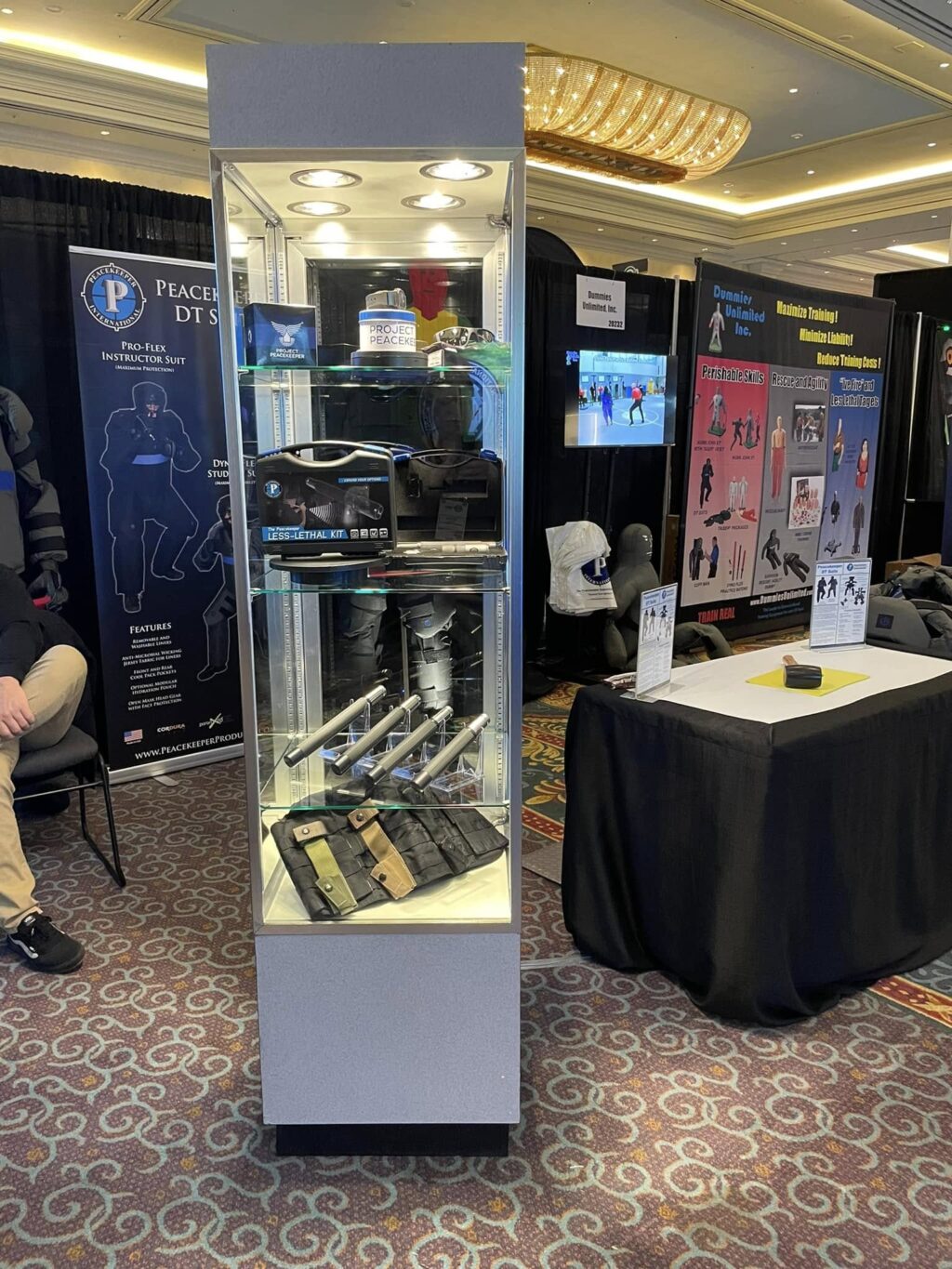
For officers, security professionals, and serious preparedness-minded users, equipment choices directly affect performance, safety, and confidence. The modern Police supply store is no longer just a place to pick up basic duty items; it’s a hub for specialized tools, tested equipment, and mission-ready solutions.
At Peacekeeper Products International, we work closely with professionals who depend on reliable equipment every day. We design and deliver Law Enforcement Tactical Gear with real-world demands in mind, and we believe users deserve not just products, but clarity about how and why gear choices matter. Let’s take a closer look at what defines a strong gear ecosystem and how to choose tools that truly support the job.
The Evolution of the Police Supply Store
Years ago, a typical Police supply store focused mainly on uniforms, badges, and a narrow set of accessories. Today, the landscape has changed dramatically. Modern supply outlets now serve as comprehensive gear centers that support patrol, tactical operations, training environments, and specialized units.
This evolution is driven by changing operational needs. Users require lighter materials, stronger retention systems, modular mounting options, and multi-role tools. Gear must perform across urban, rural, vehicle, and indoor environments without constant replacement or adjustment.
From advanced lighting systems to reinforced holsters and modular carriers, today’s Police supply store environment reflects one core truth: performance gear must match performance demands.
We build our product lines at Peacekeeper Products International around this reality, focusing on durability, field usability, and repeatable performance rather than novelty features.
What Defines Quality Law Enforcement Tactical Gear
Not all Law Enforcement Tactical Gear is created equal. True duty-grade equipment is designed around stress, repetition, and unpredictability. It must work when dropped, exposed to weather, worn for long shifts, and deployed under pressure.
Quality tactical gear starts with materials. High-strength polymers, reinforced stitching, corrosion-resistant metals, and stable composite materials all contribute to longer service life. But materials alone are not enough. Design matters just as much.
Functional design considers grip access, draw angles, retention strength, mounting compatibility, and ergonomic placement. Gear should support natural movement instead of forcing awkward adjustments. When equipment fights the user, performance drops.
At Peacekeeper Products International, we evaluate Law Enforcement Tactical Gear through use scenarios, not just lab specs. We look at how products behave during movement, vehicle entry, low-light handling, and repeated deployment cycles.
Matching Gear to Mission Type
One of the most common mistakes buyers make at a Police supply store is choosing gear based only on appearance or popularity. Tactical equipment should be selected based on mission type and usage pattern.
Patrol needs differ from training needs. Training needs differ from tactical team needs. Even within patrol roles, assignments can influence ideal gear configuration. Weight distribution, access speed, and mounting location should align with actual duties.
Law Enforcement Tactical Gear should be thought of as a system rather than isolated items. A holster affects draw stroke. A mount affects reach. A carrier affects mobility. Each piece influences the others.
We advise customers at Peacekeeper Products International to think in terms of workflow. How will the tool be carried, accessed, used, and returned? When gear supports workflow, efficiency increases naturally.
Durability Versus Comfort Balance
There is a persistent myth that tougher gear must be heavier and less comfortable. Modern design proves otherwise. Advances in materials and shaping allow Law Enforcement Tactical Gear to be both rugged and wearable.
Comfort matters because discomfort changes behavior. If gear digs, shifts, or restricts movement, users compensate by repositioning it or avoiding it. That undermines readiness. A well-designed piece of equipment should feel stable but not intrusive.
A good Police supply store will offer gear options with multiple mounting styles and fit adjustments. That flexibility allows users to fine-tune placement for their body type and duty pattern.
At Peacekeeper Products International, we emphasize shape retention and ergonomic contouring so gear stays secure without creating pressure points during long wear periods.
Consistency Builds Confidence
Consistency is one of the most underrated qualities in tactical equipment. Users benefit when their Law Enforcement Tactical Gear behaves the same way every time they touch it. Predictable retention, predictable draw resistance, and predictable placement all reduce hesitation.
Consistency supports muscle memory. Muscle memory supports speed and accuracy. That chain is critical in high-stress environments.
Products sold through a professional Police supply store should be evaluated not just for first use, but for hundredth use. Springs weaken, fabrics stretch, and shapes deform in low-quality gear. Those changes introduce uncertainty.
Our engineering approach at Peacekeeper Products International prioritizes long-cycle consistency so performance today matches performance months down the line.
Training With the Same Gear You Carry
Another important principle is training alignment. Whenever possible, users should train with the same Law Enforcement Tactical Gear they carry on duty. Differences in placement, weight, or retention can slow skill transfer.
A well-equipped Police supply store supports this by offering matching training-compatible gear or identical carry platforms for practice use. Familiar handling reduces cognitive load and improves technique retention.
We encourage structured, responsible training with duty-configured equipment. Familiarity turns gear into an extension of the user rather than an external object to manage.
Peacekeeper Products International supports this approach by keeping product designs consistent across operational and training contexts where appropriate.
Support, Not Just Sales
The best Police supply store experience goes beyond transactions. It includes guidance, product knowledge, and practical recommendations. Users benefit when suppliers understand real-world application rather than just catalog listings.
Law Enforcement Tactical Gear should come with clear use guidance, compatibility information, and maintenance expectations. Knowing how to mount, adjust, and inspect equipment extends its useful life and improves safety.
At Peacekeeper Products International, we see our role as a gear partner, not just a manufacturer. Our goal is to support smarter selection, better setup, and more confident daily use.
Building a Reliable Gear Foundation
Professional readiness starts with dependable equipment chosen for the right reasons. A modern Police supply store offers more than shelves of products; it offers access to tested solutions. High-quality Law Enforcement Tactical Gear provides durability, consistency, and ergonomic performance that supports real-world demands.