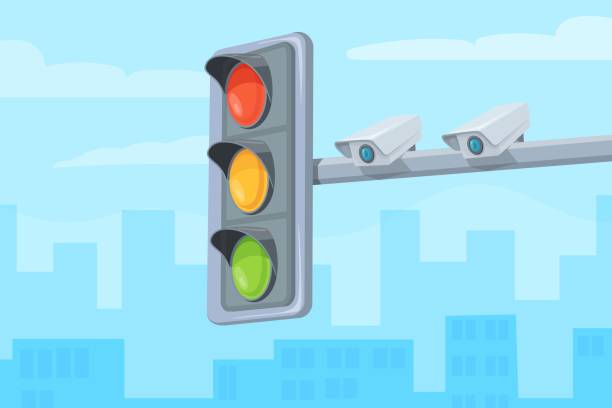
As urban populations continue to grow, managing traffic efficiently has become one of the biggest challenges for modern cities. Congestion, signal jumping, and road accidents not only disrupt daily life but also contribute to serious safety and environmental issues. To address these challenges, cities are adopting intelligent technologies like traffic signal violation detection systems. These automated systems leverage artificial intelligence, computer vision, and advanced sensors to detect violations in real time, enforce traffic laws, and improve road safety.
A traffic signal violation detection system is designed to identify vehicles that cross intersections during a red signal. Unlike traditional manual monitoring, these systems operate autonomously, capturing violation data, vehicle images, and license plate details with high precision. They play a crucial role in creating disciplined road environments while supporting the broader goal of smart city development.
The Need for Automated Traffic Violation Detection
In many urban areas, traffic violations such as red-light jumping, overspeeding, and lane violations are common. Manual enforcement by traffic officers can be limited, inconsistent, and prone to human error. Traditional surveillance methods lack the ability to detect every offense accurately, especially during peak hours or poor visibility conditions.
This is where automated traffic signal violation detection systems become essential. By integrating high-speed cameras, sensors, and AI algorithms, these systems detect violations instantaneously and generate digital evidence that can be used for enforcement. This reduces the dependency on human monitoring while ensuring consistent and accurate enforcement of traffic regulations.
How Traffic Signal Violation Detection Systems Work
The operation of a traffic signal violation detection system is based on the synchronized functioning of hardware and software components.
- Detection Sensors: Ground-embedded sensors, inductive loops, or radar sensors detect the presence and movement of vehicles at intersections.
- High-Speed Cameras: When a vehicle crosses the stop line after the red light is on, the camera captures multiple images of the violation.
- AI and Computer Vision: Artificial intelligence algorithms analyze video frames to confirm violations, identify license plate numbers, and filter out false detections.
- Evidence Generation: The system stores violation data, including timestamp, vehicle number, and signal status, as admissible evidence.
- Integration with Enforcement Systems: The data is transmitted to centralized servers or traffic command centers, where e-challans (electronic fines) are generated automatically.
This end-to-end process ensures transparency and accuracy, eliminating bias and human error in violation detection.
Improving Traffic Management
Beyond detecting violations, traffic signal violation detection systems play a crucial role in improving traffic management. The data collected by these systems helps city authorities analyze traffic patterns, identify high-risk intersections, and make data-driven decisions to optimize signal timing and road design.
For example, by studying recurring violation patterns, urban planners can adjust traffic signal durations, redesign intersections, or enhance signage visibility to reduce offenses. Additionally, real-time insights help in diverting traffic, reducing congestion, and improving travel times during peak hours.
When integrated with intelligent traffic management systems, violation detection platforms contribute to smoother, safer, and more organized traffic flow across cities. They become vital components of smart city infrastructure that promote safety, efficiency, and sustainability.
The Role of AI and IoT in Traffic Violation Detection
The success of traffic signal violation detection systems relies heavily on artificial intelligence (AI) and the Internet of Things (IoT). AI enables real-time image processing and accurate decision-making, while IoT ensures seamless data exchange between cameras, control systems, and central monitoring centers.
AI algorithms can differentiate between vehicles stopping momentarily and those actually crossing the stop line. They also adapt to changing light conditions, weather, and vehicle types. Meanwhile, IoT connectivity allows centralized monitoring, automated data transfer, and integrated communication with enforcement authorities.
These technologies make the system self-learning and adaptable. Over time, AI models become more efficient at detecting violations while minimizing false positives. This automation helps maintain law and order without overburdening traffic personnel.
Key Benefits of Traffic Signal Violation Detection Systems
- Enhanced Road Safety
By enforcing red-light discipline, these systems reduce intersection accidents and save lives. Drivers become more cautious, leading to safer driving behavior. - Automated Law Enforcement
The automation of violation detection and penalty issuance ensures transparency and fairness in law enforcement. - Data-Driven Insights
Authorities can analyze violation trends to identify problem zones, peak violation times, and recurring offenders, supporting targeted interventions. - Reduced Congestion
When combined with smart traffic lights, the system helps in better signal coordination, thereby reducing congestion and improving vehicle flow. - Cost Efficiency
Automated systems reduce the need for large on-ground enforcement teams, cutting administrative costs and improving efficiency.
Integration with Smart City Infrastructure
The traffic signal violation detection system is a key pillar of smart city infrastructure. Integrated with central command and control centers, it provides live feeds, analytics dashboards, and performance reports. This connectivity allows city administrators to oversee traffic conditions across multiple intersections and implement real-time strategies for traffic decongestion and road safety.
Many smart cities are now combining violation detection with other AI-powered systems such as automated number plate recognition (ANPR), speed enforcement cameras, and vehicle tracking platforms. Together, these systems create a unified digital ecosystem that supports holistic traffic governance.
For instance, in smart cities like Delhi, Bengaluru, and Pune, AI-based surveillance solutions are transforming how law enforcement agencies handle traffic violations. The seamless integration of these systems with digital fine management platforms ensures quick penalty processing and improved compliance rates.
Top Companies Offering Traffic Signal Violation Detection Solutions
Several technology companies have emerged as leaders in providing advanced traffic signal violation detection solutions that empower smart city ecosystems. These organizations specialize in designing AI-driven, automated systems that improve traffic discipline and enhance safety.
- Vehant Technologies – A leading Indian technology firm, Vehant Technologies offers cutting-edge traffic enforcement systems, including red-light violation detection, speed enforcement, and intelligent traffic management. Its AI-powered platforms are widely deployed across major Indian cities to improve compliance and safety.
- Axis Communications – Known for its high-quality network cameras and intelligent traffic solutions, Axis provides reliable detection systems integrated with analytics for citywide surveillance.
- Genetec – Genetec delivers integrated traffic management and violation detection solutions that combine video analytics, data visualization, and enforcement automation.
- Hikvision – A global leader in smart surveillance, Hikvision develops AI-driven traffic monitoring and red-light violation detection systems suitable for large-scale smart city deployments.
- Bosch Security Systems – Bosch provides IoT-enabled traffic enforcement solutions that use AI for real-time violation detection and automated evidence generation.
These companies continue to innovate in the field, combining AI, automation, and analytics to create safer, smarter roads across cities worldwide.
Real-World Impact and Case Studies
Cities implementing traffic signal violation detection systems have reported measurable improvements in traffic discipline and safety. In several urban centers, red-light violations have reduced by over 50% within months of deploying automated detection systems.
Moreover, these systems have helped authorities collect crucial data for urban planning. The insights generated are now being used to re-engineer road layouts, optimize signal timings, and identify accident-prone zones. The digitalization of enforcement has also increased fine recovery rates and improved citizen accountability.
Overcoming Challenges in Implementation
Despite the benefits, the deployment of traffic signal violation detection systems comes with challenges. Initial setup costs, infrastructure integration, and data privacy concerns are common hurdles. Cities must ensure robust data protection measures and public awareness campaigns to maintain transparency and trust.
Additionally, varying weather and lighting conditions can affect detection accuracy. However, continuous advancements in AI and camera technology are overcoming these challenges, ensuring reliability even under difficult conditions. Governments and private technology providers are working together to develop cost-effective and scalable solutions suitable for diverse urban landscapes.
The Future of Automated Traffic Enforcement
The future of traffic signal violation detection is closely tied to the evolution of smart cities. With 5G connectivity, cloud computing, and AI advancements, next-generation systems will offer even faster, more accurate, and integrated traffic enforcement capabilities.
Future systems may include predictive analytics that anticipate traffic violations before they occur, drone-based monitoring for large intersections, and integration with autonomous vehicle ecosystems. These innovations will create safer, more sustainable, and efficient mobility networks.
As cities continue their digital transformation journeys, automated violation detection will become a cornerstone of smart mobility infrastructure.
Conclusion
The traffic signal violation detection system represents a significant leap toward safer, smarter, and more disciplined urban mobility. By combining AI, IoT, and automation, these systems ensure accurate enforcement, enhance road safety, and optimize citywide traffic operations.
Leading companies like Vehant Technologies, Axis Communications, Genetec, Hikvision, and Bosch are at the forefront of developing and deploying these intelligent solutions across the world. As urban environments evolve, automated violation detection will not just be a tool for law enforcement—it will be the foundation for building smart, sustainable, and secure cities of the future.