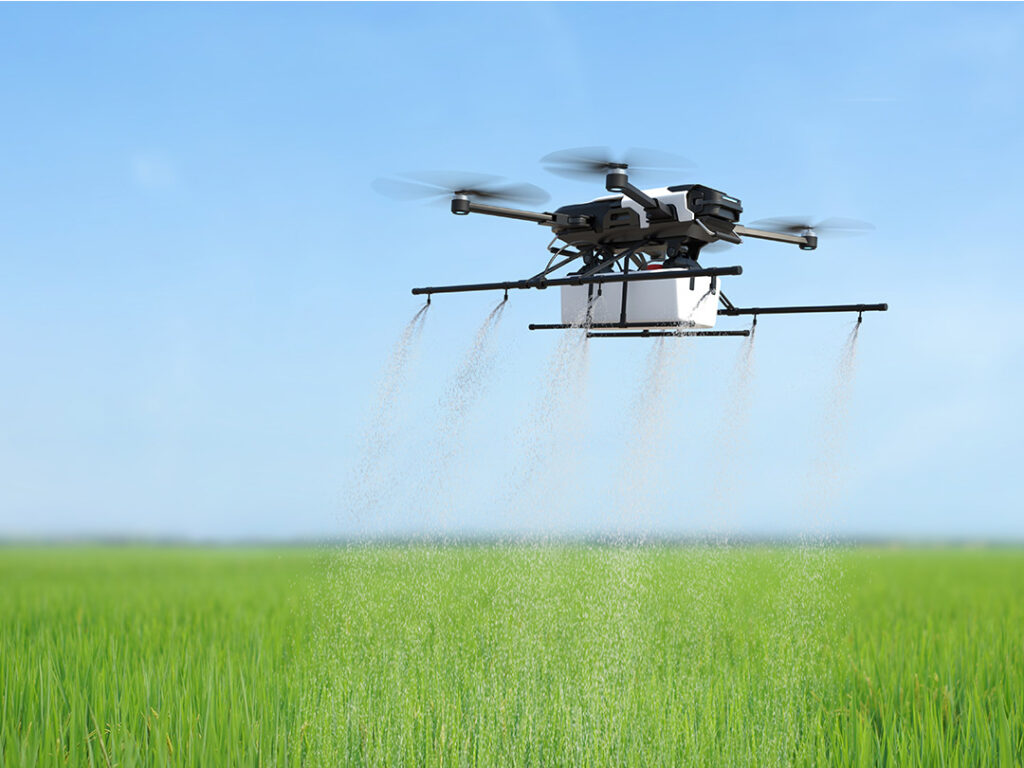
Agricultural producers are under constant pressure to increase efficiency, reduce costs, and meet growing environmental expectations. Traditional spraying methods, while effective, often struggle with accuracy, field accessibility, and input efficiency. Drone spraying services have emerged as a modern solution that addresses these challenges by delivering precise, controlled, and flexible aerial application tailored to today’s farming demands.
Drone spraying services use advanced unmanned aerial systems to apply crop inputs accurately and safely. These services are transforming how growers manage weeds, pests, diseases, and crop nutrition by offering a faster, more sustainable alternative to conventional spraying methods.
What Are Drone Spraying Services?
Drone spraying services involve the professional use of agricultural drones to apply liquid crop inputs such as herbicides, pesticides, fungicides, fertilizers, and biological treatments. These drones are equipped with specialized spraying systems that allow controlled application at low altitudes and precise speeds.
Unlike ground sprayers or manned aircraft, drones operate without physical contact with crops or soil, enabling application in areas that are difficult, unsafe, or impractical to reach using traditional equipment.
How Drone Spraying Services Operate
Professional drone spraying services follow a structured and controlled process to ensure accuracy, safety, and effectiveness.
Field Analysis and Treatment Planning
Before spraying begins, operators assess crop type, growth stage, terrain, and treatment objectives. Application plans are created to define spray zones, flight paths, and application rates.
Automated and Precision Flight Execution
Spraying drones are programmed to fly at consistent heights and speeds, ensuring even coverage. Automated flight control minimizes overlap and reduces the risk of missed areas.
Intelligent Spray Control
Modern drone spraying systems regulate flow rate and droplet size in real time. This ensures that the correct amount of material is applied evenly across the target area while minimizing drift.
Documentation and Monitoring
Application records are maintained for compliance and performance tracking. Post-application monitoring can be conducted to evaluate results and determine if follow-up treatment is required.
Key Benefits of Drone Spraying Services
Drone spraying services offer several advantages over traditional spraying methods.
Precision Application
Drones apply treatments exactly where they are needed, reducing over-application and improving effectiveness.
Reduced Chemical Use
Accurate targeting and controlled flow rates significantly reduce overall chemical usage, lowering costs and environmental impact.
No Soil Compaction or Crop Damage
Unlike ground equipment, drones do not compact soil or damage crops, preserving field structure and plant health.
Access to Challenging Fields
Drone spraying services are ideal for:
Wet or muddy fields
Steep or uneven terrain
Tall or dense crops
Late-season applications
Drones operate where ground equipment cannot.
Faster Response Time
Drone spraying allows rapid treatment of emerging issues such as pest outbreaks or disease pressure, preventing wider spread.
Common Applications of Drone Spraying Services
Drone spraying services are used across a wide range of agricultural scenarios.
Weed Management
Targeted herbicide application helps control weeds while minimizing impact on surrounding vegetation and soil.
Insect and Pest Control
Drones allow precise pesticide application, reducing exposure to beneficial insects and non-target areas.
Disease Control
Timely fungicide applications during critical growth stages help prevent yield loss and disease spread.
Fertilizer and Nutrient Application
Liquid fertilizers and micronutrients can be applied efficiently to support crop growth and correct deficiencies.
Spot Treatments and Variable Applications
Drone spraying services are well-suited for spot treatments and variable-rate applications based on field variability and scouting data.
Drone Spraying vs Traditional Spraying Methods
Traditional spraying methods often involve uniform application across entire fields, regardless of variability. This can lead to wasted inputs and uneven results.
Drone spraying services provide:
Greater precision and consistency
Lower fuel and labor requirements
Reduced environmental impact
Improved operational flexibility
These advantages make drone spraying an increasingly popular choice for modern farms.
Technology Used in Drone Spraying Services
Drone spraying services rely on advanced equipment designed for agricultural applications.
High-Performance Agricultural Drones
Professional spraying drones are built for stability, payload capacity, and durability. They are capable of operating for extended periods with consistent performance.
Advanced Spray Systems
Spray systems are designed to produce uniform droplet sizes and consistent coverage, ensuring effective treatment and minimal drift.
Precision Navigation Systems
High-accuracy GPS and terrain-following technology allow drones to maintain consistent altitude and spacing, even over uneven fields.
Data Integration Capabilities
Drone spraying services can integrate with field maps, prescription files, and farm management systems to support data-driven decision-making.
Safety and Regulatory Compliance
Professional drone spraying services operate under strict aviation and agricultural regulations. Certified pilots follow established safety procedures and chemical handling guidelines.
Compliance includes:
Licensed drone operators
Approved spraying equipment
Safe chemical mixing and disposal practices
Environmental buffer zone management
Using professional services ensures legal, safe, and responsible operations.
Environmental and Sustainability Advantages
Drone spraying services support sustainable agriculture by minimizing chemical use and reducing environmental disturbance.
Environmental benefits include:
Reduced spray drift
Lower chemical runoff
Decreased fuel consumption
Protection of soil structure
These benefits align with modern environmental standards and conservation goals.
Economic Impact of Drone Spraying Services
From a financial perspective, drone spraying services provide measurable value.
Growers benefit from:
Reduced input costs
Lower labor expenses
Increased operational efficiency
Improved crop performance
Over time, precision spraying contributes to higher return on investment and more predictable production outcomes.
Integrating Drone Spraying into Farm Operations
Drone spraying services are most effective when integrated into broader precision agriculture strategies. Combined with scouting, mapping, and data analysis, drone spraying becomes part of a comprehensive crop management system.
This integration enables:
Early problem detection
Targeted intervention
Optimized input use
Improved long-term field management
Limitations and Best Practices
While drone spraying services offer many advantages, successful implementation requires proper planning.
Best practices include:
Applying treatments at appropriate growth stages
Monitoring weather conditions carefully
Using accurate field data
Working with experienced service providers
Professional operators help manage these factors to ensure consistent results.
Future Outlook for Drone Spraying Services
Advancements in drone technology continue to expand spraying capabilities. Larger payloads, improved automation, and smarter sensors will further increase efficiency and scalability.
Drone spraying services are expected to become a standard component of modern, sustainable agriculture systems.
Conclusion
Drone spraying services provide a precise, efficient, and environmentally responsible approach to crop input application. By delivering targeted treatments without soil disturbance or unnecessary chemical use, these services help growers improve productivity while reducing costs and environmental impact.
For agricultural operations seeking flexible and modern spraying solutions, drone spraying services represent a powerful alternative to traditional methods and a key tool in the future of precision farming.