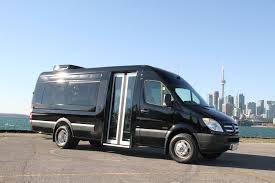
Bus Rental Toronto
Corporate transportation plays an important role in keeping business operations organized, professional, and efficient. Whether we are arranging transportation for an executive meeting, a company conference, a training session, a corporate retreat, or a business celebration, choosing the right transportation service can make the entire experience easier. When employees and business guests travel together, we can coordinate schedules more effectively, reduce logistical complications, and create a more comfortable journey.
In a busy business destination like Toronto, arranging transportation for multiple employees or clients can become challenging. Traffic congestion, limited parking, changing meeting schedules, and unfamiliar routes can create unnecessary stress for companies. A well-planned transportation solution helps businesses manage these challenges while allowing employees to focus on their professional responsibilities.
Bus Rental Toronto services provide a practical way to organize group transportation for companies of different sizes. Instead of asking employees to drive separately, arrange multiple taxis, or depend on individual transportation plans, businesses can coordinate their journeys through a single service. This approach supports better time management, improves communication, and helps create a professional experience from departure to arrival.
By understanding the available transportation options, identifying company requirements, and planning each journey carefully, we can simplify corporate travel and make business events more successful.
Why Corporate Transportation Matters for Toronto Businesses
Corporate transportation involves more than moving employees from one location to another. It also affects punctuality, productivity, employee comfort, and the overall impression a company creates for clients and business partners.
When transportation arrangements are disorganized, employees may arrive at different times, meetings can start late, and event coordinators may need to spend valuable time resolving travel problems. These issues can be particularly disruptive when a company is hosting an important conference, welcoming international visitors, or organizing a large corporate gathering.
A coordinated transportation plan helps address these challenges before they occur. By arranging a suitable vehicle and establishing a clear travel schedule, we can give employees and guests a more predictable experience.
Toronto businesses may need transportation for a variety of purposes, including:
- Corporate meetings and executive appointments
- Conferences, seminars, and professional workshops
- Employee training sessions and recruitment events
- Company retreats and team-building activities
- Airport transfers for business travelers
- Corporate dinners, award ceremonies, and celebrations
- Trade shows, exhibitions, and industry events
- Transportation between offices, hotels, and event venues
Each occasion has different requirements. A small executive team may need a comfortable minibus, while a large organization may require a full-size charter bus. Selecting the appropriate transportation option allows us to match the vehicle to the group, schedule, and nature of the event.
How Bus Rental Toronto Simplifies Corporate Travel
Managing transportation for a group can quickly become complicated when every participant makes separate arrangements. Employees may choose different departure times, follow different routes, or encounter unexpected delays. Coordinating these individual journeys requires additional communication and makes it harder to maintain a consistent schedule.
With Bus Rental Toronto, companies can organize group travel through one central transportation arrangement. Employees can meet at an agreed departure point, board the designated vehicle, and travel together according to a planned itinerary.
This arrangement offers several practical advantages.
1. Better Coordination and Punctuality
Punctuality is essential for corporate events. Meetings, conferences, presentations, and training sessions often follow carefully planned schedules, leaving little room for transportation delays.
When employees travel independently, a company may need to account for several arrival times. One employee might encounter traffic, another might struggle to find parking, and someone else might arrive at the wrong entrance.
Group transportation reduces these coordination challenges by giving everyone a shared departure time and destination. We can establish a schedule that includes reasonable travel time, planned pickup points, and clear arrival instructions.
Although no transportation service can eliminate every possible delay, a coordinated plan makes it easier to manage the journey and communicate changes when necessary.
2. Less Stress for Employees
Employees attending a corporate event should be able to concentrate on the event itself rather than worry about driving, parking, or navigating unfamiliar areas.
Providing organized transportation can make the journey more comfortable, particularly when employees need to travel across Toronto or reach a venue outside the downtown area.
Instead of managing individual travel arrangements, participants can use the journey to review presentations, discuss the event, answer routine messages when appropriate, or simply relax before their professional commitments.
This can be especially useful for full-day conferences, company retreats, and off-site training programs where employees already have demanding schedules.
3. A More Professional Experience for Guests
The transportation experience often forms part of a visitor’s overall impression of a business. When a company welcomes clients, speakers, consultants, or executives from other locations, organized transportation demonstrates attention to detail.
A planned pickup service can help guests reach the correct venue without having to navigate unfamiliar streets or arrange their own transportation.
Companies can also coordinate pickup instructions, luggage requirements, and arrival times in advance. These details are particularly valuable when several guests are attending the same event or arriving at different times.
Professional transportation supports a consistent experience while allowing the company to focus on hosting its visitors.
Choosing the Right Vehicle for Corporate Transportation
Selecting the appropriate vehicle is one of the most important parts of planning business travel. The right choice depends on the number of passengers, journey length, luggage requirements, accessibility needs, and the type of event.
Minibuses for Small Corporate Teams
Minibuses are useful for smaller groups that need transportation between offices, hotels, conference centers, and meeting venues.
They can be suitable for departmental meetings, executive outings, recruitment events, and local business appointments. Their size may also make them a practical option when a group needs to visit several locations during the same day.
Before booking, we should confirm the passenger capacity, seating configuration, luggage space, and any additional requirements.
Charter Buses for Larger Groups
Larger companies may need transportation for dozens of employees or business guests. A charter bus can help accommodate a substantial group in one vehicle, depending on its seating capacity and the number of passengers.
These vehicles can be appropriate for conventions, corporate conferences, company-wide meetings, and team-building events.
Keeping participants together simplifies boarding arrangements and helps event organizers communicate important instructions before departure. When the group exceeds the capacity of a single vehicle, we can consider arranging multiple buses with coordinated schedules.
Executive Transportation for Important Visitors
Certain corporate occasions call for a more personalized travel experience. Executive meetings, client visits, and senior leadership events may require vehicles that offer additional comfort and privacy.
When choosing executive transportation, we should consider the vehicle’s interior, seating arrangements, punctuality expectations, and the level of service provided.
The objective is to select transportation that reflects the nature of the occasion while remaining practical for the group and itinerary.
Accessible Transportation Options
Corporate events should be planned with the needs of all participants in mind. Employees or guests with mobility requirements may need accessible boarding arrangements, designated seating, or additional assistance.
We should communicate these requirements before confirming a reservation. This allows the transportation provider to determine whether a suitable vehicle is available and whether any special arrangements are necessary.
Confirming accessibility in advance helps prevent avoidable difficulties on the day of the event.
Planning Corporate Transportation Around Toronto Traffic
Toronto’s traffic conditions can affect corporate schedules, especially during weekday rush hours, major events, and periods of road construction. A journey that appears short on a map may take considerably longer during busy periods.
Effective transportation planning begins with understanding the route and the timing of the event.
Schedule Pickups With Sufficient Time
We should establish pickup times based on the required arrival time rather than simply estimating the shortest possible journey.
For an important meeting or conference, it is sensible to allow additional time for traffic, boarding, and unexpected delays. The appropriate buffer depends on the route, time of day, and consequences of arriving late.
If a conference begins at a fixed time, we should also consider registration, security procedures, and the distance between the drop-off point and the meeting room.
Confirm Pickup and Drop-Off Locations
Corporate venues can have multiple entrances, loading zones, parking areas, and designated passenger drop-off points.
Providing an exact address and confirming the appropriate entrance helps drivers and passengers avoid confusion. For large conferences, it may also be useful to share a recognizable meeting point with all participants.
If a venue has restrictions on bus access, we should confirm these details before finalizing the itinerary.
Prepare for Multiple Stops
Some corporate trips involve several offices, hotels, or event locations. In these situations, the transportation plan should include the order of stops, estimated departure times, passenger counts, and instructions for each location.
We should also determine whether the vehicle will remain with the group throughout the day or return at a later time.
A clear itinerary reduces unnecessary waiting and helps the transportation provider understand the company’s expectations.
Managing Corporate Transportation Costs Effectively
Transportation costs can become difficult to manage when a business organizes travel for many employees. Separate taxis, mileage reimbursements, parking charges, and last-minute bookings can create expenses that are difficult to predict.
Group transportation provides an opportunity to organize these costs more clearly.
Compare the Total Cost of Different Options
When evaluating a transportation service, we should compare the complete cost of the journey rather than focusing only on the initial quotation.
Depending on the arrangement, the final price may be affected by vehicle size, distance, booking duration, additional stops, waiting time, tolls, parking, and other applicable charges.
We should request a detailed quotation that explains what is included and identifies any potential additional expenses.
It is also useful to compare the proposed group transportation cost with the combined cost of alternative arrangements, such as individual taxis, rideshare vehicles, or employee mileage reimbursements.
Select the Appropriate Passenger Capacity
Booking a vehicle that is too large may increase transportation expenses unnecessarily, while choosing one that is too small can require additional vehicles or create capacity problems.
We should confirm the number of passengers before booking and account for expected changes in attendance.
For larger events, it is sensible to establish a final passenger count before the transportation schedule is confirmed.
Book Early for Better Planning
Early booking gives businesses more time to compare vehicles, confirm schedules, and communicate requirements.
It can be particularly helpful during busy conference periods, holiday seasons, and major city events when transportation demand may increase.
Booking early does not automatically guarantee the lowest price, but it can improve the range of available options and reduce the risk of making rushed decisions.
Using Bus Rental Toronto for Corporate Events and Conferences
Corporate events often require transportation arrangements that go beyond a simple trip between two locations. Organizers may need to coordinate arrival times, distribute instructions, accommodate different passenger groups, and maintain a schedule throughout the day.
Bus Rental Toronto can support these arrangements by providing a coordinated way for employees and guests to travel between designated locations.
Conference and Seminar Transportation
Conferences frequently involve employees, speakers, and business guests arriving from different offices or hotels. Providing group transportation can simplify travel to the venue and reduce the number of individual arrival arrangements.
Organizers should confirm the conference schedule, the number of attendees using the service, and the venue’s designated passenger drop-off area.
If the event lasts several days, we should determine whether transportation will be required each day and whether pickup locations will remain consistent.
Corporate Retreats and Team-Building Activities
Company retreats often take place outside the usual workplace. Employees may travel to recreational facilities, hotels, conference centers, or outdoor activity locations.
A dedicated group vehicle helps participants begin the trip together and provides a central transportation arrangement for the return journey.
When planning these trips, we should consider journey duration, luggage, activity equipment, meal breaks, and any scheduled stops along the route.
Airport Transfers for Business Travelers
Airport transportation can be an important part of hosting visiting employees, clients, and executives.
A well-organized transfer should account for flight arrival times, luggage, passenger numbers, and the distance between the airport and the final destination.
For airport pickups, we should establish clear meeting instructions and determine how delays or flight schedule changes will be communicated.
For departures, we should allow sufficient time for traffic, airport procedures, and the airline’s recommended arrival window.
Corporate Celebrations and Company Dinners
Annual celebrations, award ceremonies, holiday parties, and company dinners may take place at venues that are difficult for some employees to reach independently.
Arranging transportation can help participants travel together and simplify the return journey after the event.
Companies should confirm the event’s start and finish times, the number of passengers, and whether return transportation will be provided at one time or through multiple departures.
How to Choose a Reliable Corporate Transportation Provider
Selecting a transportation provider requires more than comparing prices. We should evaluate the company’s ability to meet the schedule, accommodate the group, communicate clearly, and provide an appropriate vehicle.
Review Vehicle Capacity and Condition
The vehicle should have sufficient seating for the confirmed passenger count. We should also ask about luggage capacity, air conditioning, seating comfort, and any facilities required for the journey.
For longer trips, these details can have a significant effect on passenger comfort.
We should confirm that the vehicle is suitable for the intended route and that the provider can accommodate any special requirements.
Confirm Licensing and Insurance
Before making a reservation, we should verify that the provider and vehicle meet the applicable transportation requirements.
We should ask about relevant operating credentials, insurance coverage, and safety procedures. If the company has internal procurement requirements, the transportation provider should be able to supply the necessary documentation.
Clear confirmation of these details helps businesses make informed decisions and manage their responsibilities.
Understand the Booking Terms
A professional booking process should explain the reservation conditions, payment schedule, cancellation policy, waiting-time charges, and procedures for changing the itinerary.
We should review these details before confirming the service.
For corporate bookings, it may also be useful to identify a primary contact who can communicate with the transportation provider if the schedule changes.
Evaluate Communication and Customer Support
Clear communication is essential when several employees or guests depend on the same transportation arrangement.
We should assess how the provider handles inquiries, confirms reservations, communicates pickup instructions, and responds to unexpected changes.
A reliable communication process can reduce uncertainty and make it easier for event organizers to manage the journey.
Creating a Corporate Transportation Checklist
A checklist helps us keep important details organized before the day of travel. It also provides a practical way to delegate responsibilities among office managers, event coordinators, and administrative staff.
Before confirming the reservation, we should review the following points:
- Confirm the event date and required arrival time.
- Establish the total number of passengers.
- Identify all pickup and drop-off locations.
- Select a suitable vehicle based on group size.
- Confirm luggage space and accessibility requirements.
- Prepare the route and identify any scheduled stops.
- Request a detailed quotation and review additional charges.
- Check the cancellation and modification policies.
- Share pickup instructions with all participants.
- Confirm the reservation with the transportation provider.
- Identify a contact person for schedule changes.
- Reconfirm the itinerary and passenger count before departure.
Completing these steps in advance helps prevent confusion and makes the transportation plan easier to manage.
Improving the Employee Experience During Business Travel
Corporate transportation can contribute to a more organized and comfortable employee experience when the service is planned around the needs of the group.
We should consider the journey from the passenger’s perspective. Employees need clear information about departure times, meeting points, expected travel duration, and return arrangements. Without these details, even a suitable vehicle may not deliver a smooth experience.
Providing a simple itinerary before departure can help participants prepare. The itinerary should include the pickup location, boarding time, destination, event contact, and instructions for any planned stops.
For longer journeys, we should consider opportunities for breaks where appropriate. We should also communicate whether passengers can expect access to charging facilities, Wi-Fi, or other amenities rather than assuming these features will be available.
Comfort is especially important when employees are traveling before a full day of meetings or returning after an intensive corporate event. Appropriate seating, a reasonable schedule, and clear communication can make the journey more manageable.
Companies should also collect feedback after major events. Employees may identify practical improvements, such as changing the pickup point, adjusting the departure time, or selecting a different vehicle size. Reviewing this feedback can help improve future transportation arrangements.
Common Corporate Transportation Mistakes to Avoid
Even a straightforward journey can become complicated when essential details are overlooked. Recognizing common mistakes helps us create a more dependable plan.
Underestimating the Number of Passengers
An inaccurate passenger count can result in insufficient seating or unnecessary transportation expenses.
We should gather attendance information early and establish a deadline for confirming the final number. If attendance remains uncertain, we should discuss suitable options with the provider before making a final commitment.
Leaving the Booking Until the Last Minute
Late reservations can limit vehicle availability and leave less time to compare prices or confirm special requirements.
Planning early gives us more flexibility and allows us to communicate the details to participants well before the event.
Ignoring Traffic and Venue Restrictions
A route that works for a regular passenger vehicle may not be suitable for a larger bus. Certain venues may also have restrictions on vehicle access or passenger drop-off.
We should confirm the route, access arrangements, and expected traffic conditions before the travel date.
Failing to Communicate Changes
Corporate schedules can change because of meeting extensions, flight delays, or adjustments to the event program.
When changes occur, we should communicate them promptly to the transportation provider and affected passengers. A clear process for handling changes helps everyone understand the updated arrangements.
Choosing Price Over Suitability
A low quotation may appear attractive, but it does not necessarily represent the best overall value.
We should evaluate the vehicle, service terms, capacity, communication, and operational requirements alongside the price. Choosing a service that meets the company’s needs can help avoid additional costs and inconvenience later.
Why Organized Corporate Transportation Supports Business Productivity
Time is a valuable resource for every organization. When employees spend unnecessary time arranging individual journeys, searching for parking, or coordinating arrival times, they have less time to focus on the purpose of the event.
A coordinated transportation plan helps reduce these administrative demands. Event organizers can work with one provider, communicate a shared itinerary, and manage transportation requirements through a clearer process.
Group travel can also create opportunities for employees to interact before reaching the destination. Colleagues from different departments may use the journey to discuss project objectives, exchange ideas, or prepare for upcoming activities.
However, we should recognize that not every passenger will want to work during the journey. Providing a comfortable environment and allowing employees to use their travel time according to their needs can create a better overall experience.
For organizations that regularly arrange conferences, off-site meetings, or employee events, establishing a consistent booking process can improve efficiency over time. Standardized checklists, approved providers, and clear communication procedures make future arrangements easier to repeat.
Conclusion
Corporate transportation becomes much easier to manage when businesses plan ahead, select suitable vehicles, and establish clear travel arrangements. From coordinating conference arrivals to organizing airport transfers and company retreats, a structured approach can reduce logistical complications and support a more professional experience for employees and guests.
Choosing Bus Rental Toronto allows businesses to consider group transportation as part of their wider event planning strategy. By evaluating passenger numbers, journey requirements, vehicle capacity, booking terms, and service quality, we can make informed decisions that suit the organization and its budget.
Successful corporate travel depends on careful preparation and reliable communication. When we confirm the itinerary, account for traffic, provide clear pickup instructions, and work with a suitable transportation provider, we create a more organized journey from beginning to end.
With the right planning process, companies can simplify transportation, make better use of employees’ time, and focus on achieving the objectives of their meetings and events.
FAQs
1. What is corporate bus rental used for in Toronto?
Corporate bus rental is used to transport employees, executives, clients, and business guests to meetings, conferences, training sessions, airport transfers, company retreats, and corporate celebrations. The vehicle can be selected according to the number of passengers and the requirements of the journey.
2. How do we choose the right bus for a corporate event?
We should consider the number of passengers, journey duration, luggage requirements, accessibility needs, and event schedule. Minibuses may suit smaller teams, while larger charter buses can accommodate bigger groups. Confirming these details before booking helps ensure that the vehicle meets the company’s needs.
3. How far in advance should we book corporate transportation?
We should book as early as practical, especially for large conferences, major company events, and busy travel periods. Early planning provides more time to compare vehicle options, confirm availability, review booking conditions, and share travel instructions with participants.
4. Can corporate transportation include multiple pickup locations?
Yes, some transportation arrangements can include multiple pickup points and destinations. We should provide the complete itinerary when requesting a quotation and confirm that the provider can accommodate the required stops, schedule, and passenger count.
5. How can we manage corporate transportation costs?
We can manage costs by confirming the passenger count, selecting an appropriately sized vehicle, booking early, comparing detailed quotations, and reviewing additional charges. Comparing the complete transportation cost with individual travel arrangements helps us assess which option offers the best value for the event.
For more information: Airlink Tours Niagara Falls Toronto