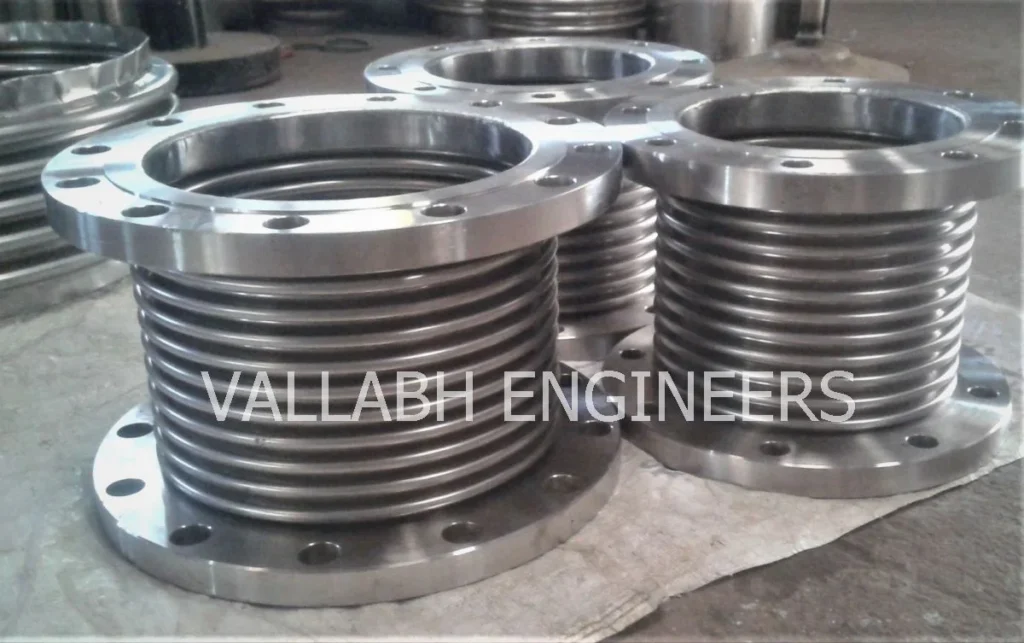
Are you in search of the best among the Stainless Steel Bellow Manufacturers in Vadodara ends at Vallabh Engineers. We have been in the domain for the past many years, and our products are known for their specifications, strength and stability.
Learn about stainless steel bellow types, benefits, uses, and industrial applications. Explore quality bellow solutions by Vallabh Engineers.
Industrial pipelines, machinery, and equipment often experience movement due to temperature changes, pressure variations, and vibration. These conditions can put stress on connected components and affect their performance. Stainless steel bellows are designed to accommodate such movements while maintaining flexibility in industrial systems.
Vallabh Engineers offers industrial bellow solutions for different applications and operating requirements. These products are widely used in industries where strength, flexibility, corrosion resistance, and reliable performance are important.
What Is a Stainless Steel Bellow?
A stainless steel bellow is a flexible mechanical component manufactured using stainless steel. It features a series of corrugated folds that allow it to expand, compress, and bend according to the movement of connected equipment.
These components are commonly installed in industrial pipelines, exhaust systems, pumps, valves, and machinery. Their primary purpose is to absorb thermal expansion, contraction, vibration, and mechanical movement.
Different stainless steel grades, such as SS 304 and SS 316, are used depending on the working environment, temperature, and corrosion requirements.
How Does a Stainless Steel Bellow Work?
The working principle depends on its corrugated structure. These folds provide flexibility and allow the component to accommodate movement without damaging the connected pipeline sections.
For example, when hot fluids travel through an industrial pipeline, the temperature causes the pipe to expand. When the temperature decreases, the pipe contracts.
These repeated movements can create stress on joints and supporting structures. A stainless steel bellow absorbs the required movement through its flexible folds, helping reduce mechanical stress and protect the piping system.
Different Types of Stainless Steel Bellows
Different industrial applications require different bellow designs. Some commonly used types include:
1. Axial Stainless Steel Bellows
These are designed to absorb movement along the length of a pipeline. They are commonly installed in straight piping sections where thermal expansion and contraction occur.
2. Universal Stainless Steel Bellows
Universal designs generally consist of two bellows connected through an intermediate pipe section. They are suitable for applications requiring greater lateral movement.
3. Hinged Stainless Steel Bellows
Hinged designs accommodate angular movement around a fixed axis. They are useful in piping systems where movement needs to be controlled in a particular direction.
4. Gimbal Stainless Steel Bellows
Gimbal designs allow angular movement in multiple planes. They are commonly used in complex industrial piping arrangements.
5. Exhaust Stainless Steel Bellows
These are used in exhaust systems to absorb engine movement, vibration, and thermal expansion. They are commonly found in automotive and industrial equipment.
Common Applications of Stainless Steel Bellows
Stainless steel bellows are used in various industries because of their flexibility, strength, and corrosion resistance.
-
Chemical Industries: Used in suitable pipelines carrying chemicals and industrial fluids.
-
Power Plants: Installed in steam pipelines and high-temperature equipment.
-
Automotive Industry: Used in exhaust systems to absorb engine vibration and movement.
-
Oil and Gas Industry: Help accommodate movement in industrial pipeline installations.
-
Pharmaceutical Industry: Used in suitable process equipment and fluid-handling systems.
-
Food Processing Industry: Applied in equipment where appropriate stainless steel grades are required.
-
HVAC Systems: Installed in heating, ventilation, and air conditioning systems.
Benefits of Using Stainless Steel Bellows
These components offer several advantages for industrial applications.
1. Corrosion Resistance: Stainless steel provides good resistance to corrosion in suitable working environments.
2. High Strength: They provide the mechanical strength required for demanding industrial applications.
3. Flexibility: Their corrugated construction allows them to accommodate movement and vibration.
4. Temperature Resistance: Suitable stainless steel grades can be selected for different operating temperatures.
5. Durability: Proper material selection, installation, and maintenance help improve service life.
6. Equipment Protection: They help reduce excessive stress on connected pipes, joints, and machinery.
How to Choose the Right Stainless Steel Bellow?
Selecting the correct product is important for safe operation and long-term performance. Consider the following factors:
-
Material Grade: Choose SS 304, SS 316, or another suitable grade according to the application.
-
Operating Pressure: Check the pressure requirements of the system.
-
Temperature Range: Ensure the material can withstand the expected working temperature.
-
Movement Requirements: Identify whether axial, lateral, or angular movement is required.
-
Dimensions: Check the diameter, length, thickness, and connection specifications.
-
Working Environment: Consider exposure to chemicals, moisture, gases, and other environmental conditions.
Consulting an experienced manufacturer can help you select the appropriate design for your requirements.
Frequently Asked Questions (FAQs)
1. What is the main purpose of a stainless steel bellow?
Its main purpose is to absorb movement, vibration, and thermal expansion in industrial pipelines and machinery.
2. Which stainless steel grades are commonly used?
SS 304 and SS 316 are commonly used grades. The selection depends on corrosion exposure, operating temperature, pressure, and application requirements.
3. Are stainless steel bellows suitable for high-temperature applications?
Yes. Specially designed products can be used in high-temperature environments when their material and construction meet the operating requirements.
4. Where are stainless steel bellows commonly used?
They are used in power plants, chemical industries, automotive exhaust systems, pharmaceutical facilities, oil and gas installations, and manufacturing units.
5. What is the difference between stainless steel and rubber bellows?
Stainless steel bellows are generally preferred for applications requiring metal strength and temperature resistance. Rubber bellows are commonly used for vibration isolation, noise reduction, and certain fluid-handling applications.
Conclusion
Stainless steel bellows play an important role in modern industrial systems by accommodating movement, reducing vibration, and protecting connected equipment from mechanical stress. Their flexibility, strength, and corrosion resistance make them suitable for a wide range of applications.
Vallabh Engineers offers industrial bellow solutions designed for different operating conditions and application requirements. Choosing the right stainless steel bellow can help improve equipment reliability, operational safety, and long-term performance.