Gear Motors Explained: Types, Applications and How to Select the Right One
Electric motors power many machines, from conveyor belts to automated production equipment. Gear motors combine an electric motor with a gearbox to deliver controlled speed and increased output torque. This combination helps equipment move loads efficiently and operate consistently. Understanding the available designs, common applications and key selection factors helps businesses choose suitable equipment for specific tasks.
What Is a Gear Motor and How Does It Work?
A gear motor combines an electric motor and a gearbox into one drive unit. The motor generates rotational motion, while the gearbox transfers power through gears. Together, these components provide the speed and torque mechanical equipment needs.
The gearbox uses a selected gear ratio to reduce rotational speed and increase output torque. For example, a 10:1 reduction ratio converts 1,000 revolutions per minute at the input into approximately 100 revolutions per minute at the output.
What Are the Different Types of Gear Motors?
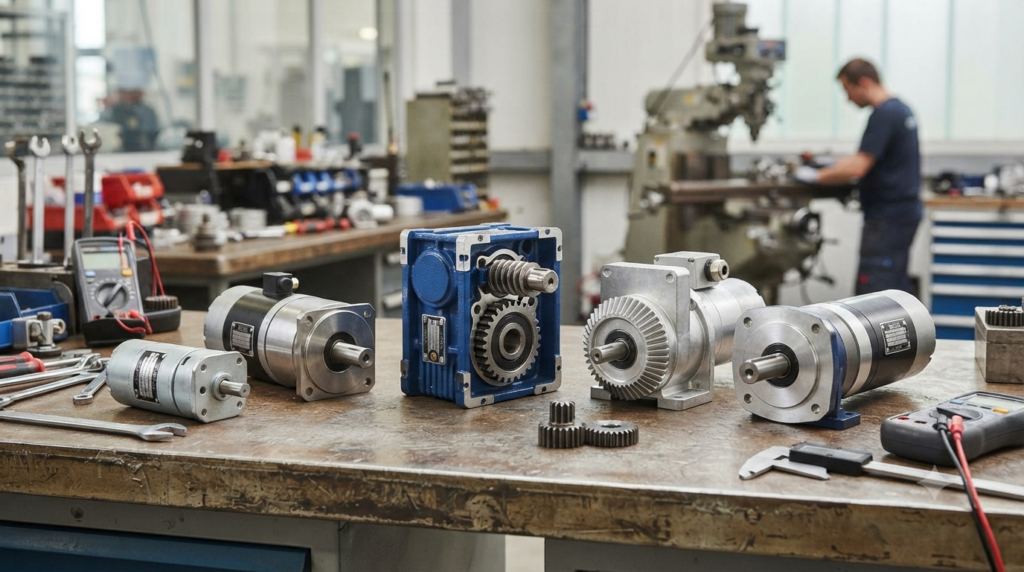
Different gear designs support specific operating requirements. Common types include:
- Spur Gear Motors: Use straight-cut gears to transmit power between parallel shafts in simple mechanical systems.
- Helical Gear Motors: Feature angled teeth that engage gradually, supporting smooth operation and higher load capacity.
- Worm Gear Motors: Use a worm-and-wheel arrangement to provide substantial speed reduction through perpendicular shafts.
- Planetary Gear Motors: Distribute loads across multiple gears, providing high torque capacity within a compact design.
Each design offers distinct advantages based on equipment size, torque requirements and operating speed.
Where Are Gear Motors Commonly Used?
Industries use geared drive systems to control mechanical movement across various processes. Common applications include:
- Conveyor Systems: Maintain controlled belt movement for transporting materials through production and distribution facilities.
- Industrial Machinery: Drive mixers, packaging machines and processing equipment at suitable operating speeds.
- Automated Equipment: Support controlled positioning and movement in robotic assemblies and automated production systems.
- Doors and Gates: Operate powered opening and closing mechanisms through controlled rotational movement.
These applications demonstrate how geared drives support consistent movement across different equipment types.
How to Select the Right Gear Motor for Your Application
Choosing suitable gear motors involves matching equipment specifications with actual operating requirements. Important factors include:
- Torque Requirements: Calculate the torque needed to move the load, including startup and operating demands.
- Speed and Gear Ratio: Select an output speed that matches the machine’s intended movement.
- Load and Duty Cycle: Consider operating hours, repeated starts and variations in mechanical load.
- Mounting and Available Space: Check shaft orientation, mounting dimensions and available installation space.
- Operating Conditions: Evaluate temperature, moisture, dust exposure and the need for appropriate enclosure protection.
Reviewing manufacturer specifications and application requirements helps ensure you select suitable equipment.
Conclusion
Selecting a suitable gear motor starts with understanding how its motor and gearbox work together. Different gear arrangements serve different mechanical needs, while torque, speed, operating conditions and mounting requirements guide the final choice. Comparing these factors with manufacturer specifications helps businesses select dependable drive equipment that supports efficient operation and consistent performance over time.