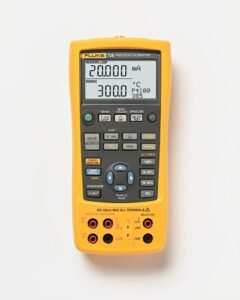
Industrial equipment depends on accurate readings. Even small errors can affect quality, process stability and maintenance decisions. A Fluke Multi Function Calibrator helps technicians check whether instruments are measuring and responding correctly, making it an important tool in modern process control and industrial maintenance.
Rather than carrying several separate instruments, engineers can use a multifunction calibrator to generate known signals, measure outputs and compare results with expected values. This approach supports fault finding and routine verification.
What Is a Fluke Multi Function Calibrator?
A Fluke Multi Function Calibrator is a test instrument designed to measure, generate or simulate signals used in industrial instrumentation. Depending on the model, it can help verify voltage, current, resistance, frequency and temperature-related signals. Compatible pressure modules can extend some process calibrators to pressure testing.
A calibrator does more than display an unknown measurement. It provides a known reference that technicians can compare with the response from a sensor, transmitter or control instrument. That comparison helps identify deviations and determine whether adjustment or further investigation is necessary.
Why Is Multifunction Calibration Important in Industry?
Industrial systems depend on information from connected sensors and control devices. If a transmitter reports the wrong value, an automated controller may make decisions using unreliable data. Regular checks help teams detect changes early.
The main benefits include:
- Better Measurement Confidence: Compare instrument readings with known reference signals.
- More Efficient Maintenance: Perform several test types with one suitable device.
- Reduced Troubleshooting Time: Separate sensor faults from wiring, transmitter or controller issues.
- Improved Process Consistency: Check critical measurement points against defined tolerances.
- Clearer Maintenance Records: Document results and identify instruments needing attention.
Results also depend on sound test methods, conditions and a reliable reference instrument.
Which Functions Make a Fluke Multi Function Calibrator Useful?
How Do Electrical Signal Testing Features Help?
Many Fluke process calibrators can measure and source direct-current voltage and milliamp signals. These functions are particularly relevant to industrial control loops, where 4–20 mA signals commonly represent process values such as pressure, flow or temperature.
By applying known inputs and monitoring the output, technicians can assess whether a transmitter responds as expected. Some models offer stepping or ramping to check multiple points.
Can It Test Temperature and Pressure Instruments?
Selected models support resistance temperature detectors (RTDs) and thermocouples, allowing technicians to simulate or measure temperature-related signals. These capabilities are useful when checking temperature transmitters without exposing a sensor to a physical temperature change.
Pressure measurement is also possible with supported external pressure modules on compatible models. Technicians should check the required pressure range, accessories and connection arrangements before testing; the calibrator alone does not necessarily generate physical pressure.
What About Frequency and Resistance?
Frequency and resistance functions extend the tool’s usefulness beyond conventional current loops. Depending on the instrument, they may support checks involving frequency-output devices, resistance-based sensors and industrial transmitters. Modes and accuracy vary by model.
Where Are Fluke Multifunction Calibrators Commonly Used?
Multifunction calibration equipment serves industries where measurements influence quality, safety and productivity. Typical environments include:
- Manufacturing Plants: Checking process transmitters and control signals during planned maintenance.
- Energy Facilities: Verifying selected instrumentation used in monitoring and control.
- Water Treatment Operations: Testing measurement loops associated with flow, level and pressure systems.
- Food and Pharmaceutical Production: Supporting documented checks of process instruments.
- HVAC and Building Systems: Investigating compatible temperature and control devices.
- Instrumentation Workshops: Preparing equipment for installation or return to service.
The aim is to verify specified tolerances, not merely obtain a reading.
How Should Technicians Use a Multifunction Calibrator Correctly?
A structured procedure improves both safety and repeatability. Before starting, confirm the instrument’s manual, electrical ratings and workplace isolation requirements. Never connect a source output to an energised circuit unless the manufacturer explicitly permits that setup.
A practical workflow includes:
- Identify the device under test and its expected operating range.
- Select the correct measurement, source or simulation function.
- Inspect leads, connectors and any required pressure accessories.
- Apply suitable test points across the device’s working range.
- Compare the observed output with the expected value and permitted tolerance.
- Record the results, conditions and any adjustments made.
Where traceability is required, organisations should use a calibrator with suitable, current calibration documentation and follow their quality procedures. An instrument’s own accuracy must be appropriate for the tolerance being assessed.
How Can You Choose the Right Fluke Multi Function Calibrator?
Selection should reflect actual maintenance needs. A compact field instrument may suit daily transmitter checks, while a documenting model may be preferable when teams need more extensive records or communication capabilities.
Consider these purchasing factors:
- Required Parameters: Confirm which electrical, temperature or pressure functions are genuinely needed.
- Accuracy and Range: Match the instrument’s capabilities to the device under test.
- Field Usability: Evaluate screen visibility, controls, power requirements and portability.
- Accessory Compatibility: Check pressure modules, leads and temperature connections.
- Documentation Needs: Decide whether manual records are sufficient or onboard reporting is valuable.
- Support and Calibration: Plan for servicing, periodic verification and long-term ownership.
For example, Fluke’s 725 and 726 address multifunction process calibration, while the 754 adds documentation and communication features for more complex workflows. These are different tools for different requirements rather than interchangeable specifications.
Why Does Reliable Calibration Matter Over Time?
Instrument performance may shift because of ageing, environmental exposure, mechanical stress or changes in operating conditions. Regular checks give maintenance teams a clearer picture of measurement reliability and allow them to schedule corrective action based on evidence.
A Fluke Multi Function Calibrator can make that work more efficient by combining relevant test functions in a single instrument. When chosen carefully and used with an appropriate procedure, it supports dependable measurements, better-informed maintenance decisions and more reliable industrial processes.