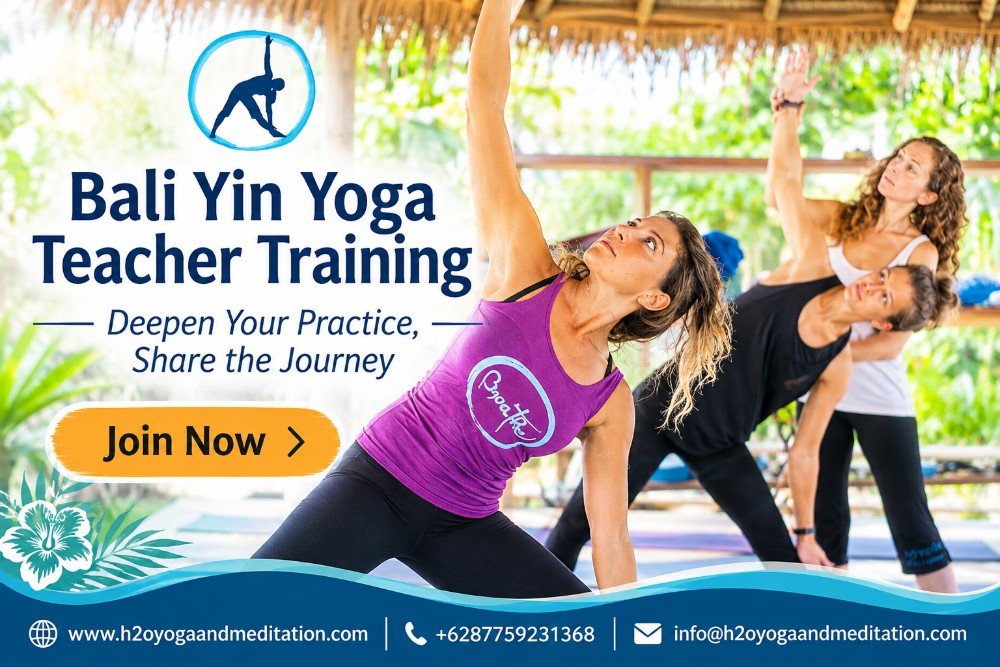
Choosing a yoga teacher training program is an important step for practitioners who want to deepen their understanding of yoga and develop the skills to guide others. Bali Yin Yoga Teacher Training offers an opportunity to explore a slower, more meditative approach to yoga while learning about the body, mindfulness, and traditional yoga principles. With its peaceful surroundings and established yoga community, Bali provides an environment where students can focus on learning and personal development.
At H2O Yoga and Meditation Center, students can explore yoga and meditation in a setting that encourages self-awareness, relaxation, and a balanced lifestyle. Understanding what a Yin Yoga training program involves can help prospective students decide whether this learning experience matches their interests and goals.
1. Understanding the Foundations of Yin Yoga
Yin Yoga is a slower style of yoga that involves holding postures for extended periods, usually between two and five minutes, depending on the pose and the practitioner’s experience. Unlike more dynamic yoga styles, Yin Yoga places less emphasis on continuous movement and focuses on stillness, mindful breathing, and gentle stretching.
During Bali Yin Yoga Teacher Training, students learn the principles behind this practice, including how to approach postures safely and adapt them to different body types. They also explore the relationship between physical movement, breath awareness, and mental relaxation.
The training helps students understand why patience and consistency are important when developing a sustainable Yin Yoga practice.
2. Learning Anatomy and Functional Movement

Anatomy is an important part of Yin Yoga education. Since practitioners hold postures for longer periods, understanding the body’s structure helps teachers guide students safely and effectively.
A typical training curriculum may cover:
- Basic skeletal and muscular anatomy.
- Connective tissues, including ligaments and fascia.
- Joint movement and individual anatomical differences.
- Safe alignment and modifications for different bodies.
- Common physical limitations and contraindications.
Students learn that every body is different. A posture that feels comfortable for one person may not be suitable for another. Understanding these differences helps future instructors offer appropriate variations rather than expecting everyone to achieve the same shape.
3. Exploring Yin Yoga Postures and Techniques
Practical sessions allow students to experience different Yin Yoga postures and understand their purpose. Training commonly includes poses that target areas such as the hips, spine, shoulders, and legs.
Students learn how to:
- Enter and exit postures carefully.
- Use props such as bolsters, blocks, and blankets.
- Recognize appropriate sensations and avoid excessive strain.
- Adjust posture duration according to individual needs.
- Combine mindful breathing with sustained poses.
These techniques help students build confidence in their personal practice while developing the knowledge needed to guide future classes.
4. Meditation, Breathwork, and Mindfulness
Yin Yoga involves more than physical postures. Stillness and awareness are central to the practice, making meditation and breathwork valuable parts of teacher education.
Students may explore different meditation techniques, breathing exercises, and mindfulness practices. These methods encourage practitioners to observe their thoughts, recognize physical sensations, and develop greater awareness of the present moment.
During Bali Yin Yoga Teacher Training, students can learn how to incorporate meditation and breathing techniques into a Yin Yoga class. These skills help create a balanced practice that addresses both physical and mental well-being.
5. Developing Teaching and Communication Skills
Learning yoga postures is only one part of becoming a yoga instructor. Teachers also need effective communication, observation, and class-planning skills.
A comprehensive training program may include opportunities to:
- Plan and structure a Yin Yoga class.
- Demonstrate and explain postures clearly.
- Provide verbal guidance and appropriate modifications.
- Understand class sequencing and timing.
- Support students with different experience levels.
- Practice teaching in front of fellow trainees.
Teaching practice allows students to apply what they learn and receive feedback. It also helps them develop a teaching approach that respects individual needs and creates a comfortable learning environment.
6. Experiencing Yoga Training in Bali
Bali attracts yoga practitioners from different parts of the world because of its established wellness community, cultural traditions, and natural surroundings. Its tropical environment can provide a change of pace for students who want to dedicate time to learning.
A training experience may also include opportunities to explore local culture, enjoy healthy meals, practice meditation, and connect with other yoga students.
H2O Yoga and Meditation Center, located on Gili Air near Lombok and Bali, offers a peaceful setting for yoga, meditation, and holistic wellness experiences. The center provides yoga studios, accommodation, a health-conscious café, and wellness facilities. Students can also enjoy the island’s beaches, natural scenery, and relaxed atmosphere outside their scheduled practice.
7. Who Should Consider Yin Yoga Teacher Training?
Yin Yoga teacher training can appeal to different types of practitioners, including:
- Regular yoga practitioners: Those interested in exploring a slower and more meditative style.
- Aspiring yoga instructors: Individuals who want to expand their teaching knowledge.
- Experienced yoga teachers: Instructors looking to introduce Yin Yoga into their existing classes.
- Wellness professionals: People interested in learning additional mindfulness and relaxation techniques.
- Personal development seekers: Practitioners who want to develop greater self-awareness and deepen their understanding of yoga.
Previous yoga experience requirements vary between programs, so it is important to review the course prerequisites before enrolling.
8. How to Prepare for the Program
Preparing for teacher training can make the learning experience more manageable. Before joining a program, review its curriculum, teaching hours, accommodation arrangements, instructor qualifications, and certification requirements.
It is also helpful to maintain a consistent yoga practice, become familiar with basic anatomy, and develop an understanding of meditation. Bringing comfortable clothing, a notebook, and an open attitude toward learning can also support your experience.
Conclusion
Bali Yin Yoga Teacher Training provides an opportunity to explore the foundations of Yin Yoga, understand anatomy, develop mindfulness, and build practical teaching skills. From learning traditional postures to practicing meditation and class instruction, the program can support both personal development and future teaching goals.
Choosing the right training involves considering the curriculum, teaching approach, instructor experience, and learning environment. At H2O Yoga and Meditation Center, students can explore yoga and meditation in a peaceful island setting while developing a deeper understanding of their practice.