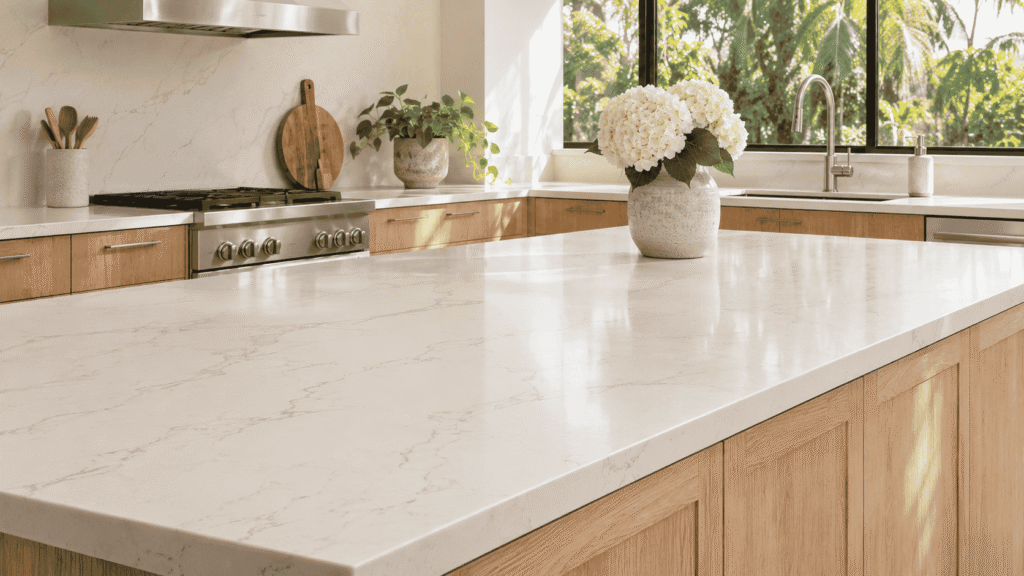
You can find a quartz sample and a porcelain sample with almost the same white background and gray veining. From a photo, they might look like the same choice. In your kitchen, you’ll also see the edge, work around the sink opening, and wipe the surface after cooking. If you’re comparing quartz countertops with porcelain for a Tampa Bay home, look at the two products as finished installations. Start with the design you like, then check the details that will affect how you use it.
Compare the Exact Products on Your Shortlist
Write down the brand, design, finish, and slab thickness for each sample. A comparison between “quartz” and “porcelain” leaves too many decisions open. You might be looking at a polished quartz design with a rounded edge and a honed porcelain design you’d want with a taller front. Those are two specific plans, and the materials may look more different once you account for the finish and edge.
Ask to see a larger view of each design. A small sample can help you narrow down the color, but you’ll want to see how the pattern looks over the length of the island or the counter beside the sink. If a sample has one broad vein, ask how it fits into the full design. You might love that vein as an accent and prefer a quieter section for the surface you see from the dining room.
Look at the Edge Before You Pick a Favorite
Turn the samples sideways. The top is what you see while cooking, but the front edge is what you see from a stool or as you walk into the room. Ask the fabricator for a finished example of the proposed edge in each material. Compare the color, sheen, and way the pattern meets the front. If you want a thicker-looking edge, ask how it would be assembled and where you’d see the joint.
Give the sink opening the same attention. If you’re considering an undermount sink, ask what the exposed edge around the bowl would look like in each product. You may prefer one surface across the island and the other around the sink once you see the actual cut edges. If you’re looking at a veined design, find out whether you’ll see a change where the finished front meets the pattern on top. A showroom photograph may not show that angle.
Read the Heat Instructions for Each Surface
Picture where you put a pan when it comes out of the oven. Then read the care guides for the two products you’re comparing. Caesarstone’s U.S. quartz care guide recommends using hot pads or trivets. Its separate porcelain guide permits placing hot cookware directly on its porcelain surfaces but calls for protection beneath devices that give off heat for an extended period. Those are instructions for Caesarstone products. Check the guidance for the exact surfaces on your shortlist before applying it to either one.
Think about the difference between a pan you set down briefly and a countertop appliance you use in the same spot for an hour. If you plan to use a toaster oven or another heat-producing appliance, read its placement instructions as well. If you’re choosing a built-in cooktop, have the fabricator and appliance installer review the model and proposed opening. The care directions for a pan don’t answer how a cooktop should be installed.
Picture the Cleanup You’ll Do Most Often
Think through a meal you make regularly. Where does oil land when you cook? Where does someone set a wet glass while clearing the table? Do you want a surface that feels smooth when you wipe it, or do you like a little texture? Look at both samples near the part of the counter that sees the most use.
Read the cleaning instructions for each finish. Caesarstone, for example, gives routine guidance for both its quartz and porcelain surfaces and discusses rinsing or removing cleaner residue. Ask which products are approved before assuming the bottle you use today will suit the new countertop. If you’re choosing a darker or more textured finish, look at how it appears under light from the side. You may care more about how it looks after a quick wipe than how it looks on a clean sample wall.
Ask the Fabricator to Explain Both Installations
Share the same layout and fixture details for each option. Point out long runs, exposed ends, and any sections that will meet a wall or another piece. If you’re keeping the cabinets, ask the fabricator to review how each surface would fit and be supported. If the island will have seating, show where the stools will go and ask how the proposed edge and support would affect that space.
Ask to see the likely seam positions. You may be fine with a seam on a run that’s mostly hidden by small appliances and want a different plan on the island. Also ask how each material would be delivered into the house. A layout that works on paper may need another look if there’s a tight turn at the kitchen entrance. Give the fabricator a chance to explain the practical differences before comparing the final price.
Check the Intended Location if the Project Extends Outdoors
If you’re choosing a counter for the kitchen and a matching surface for a patio, confirm the approved use of both products. Some products are listed for indoor and outdoor applications; others have separate outdoor versions. Caesarstone, for example, identifies indoor and outdoor applications for certain porcelain designs and lists separate outdoor quartz products. Check the specification for the design you’re ordering, even if you only plan to use it under a roof.
You can also choose different products and coordinate their colors. Bring the two samples together and look at them from the door between the kitchen and patio. You might find that a similar background color gives you the connection you want without needing the same pattern on both surfaces.
Compare the Finished Jobs, Then Make the Call
Ask for written quotes that describe the material, edge, cutouts, delivery, and installation. Confirm what happens to the old countertop and who handles plumbing or appliances if they’re affected. If one proposal changes the seam layout or requires a different edge, compare those details alongside the totals. Keep the care instructions with each quote so you can revisit them before deciding.
Then go back to the place you’ll use most. Look at the edge you’ll touch beside the sink, the surface you’ll wipe after cooking, and the color you’ll see from the table. You don’t have to decide whether quartz or porcelain is better in every kitchen. You only have to choose between two finished plans and pick the one you’d rather use in yours.