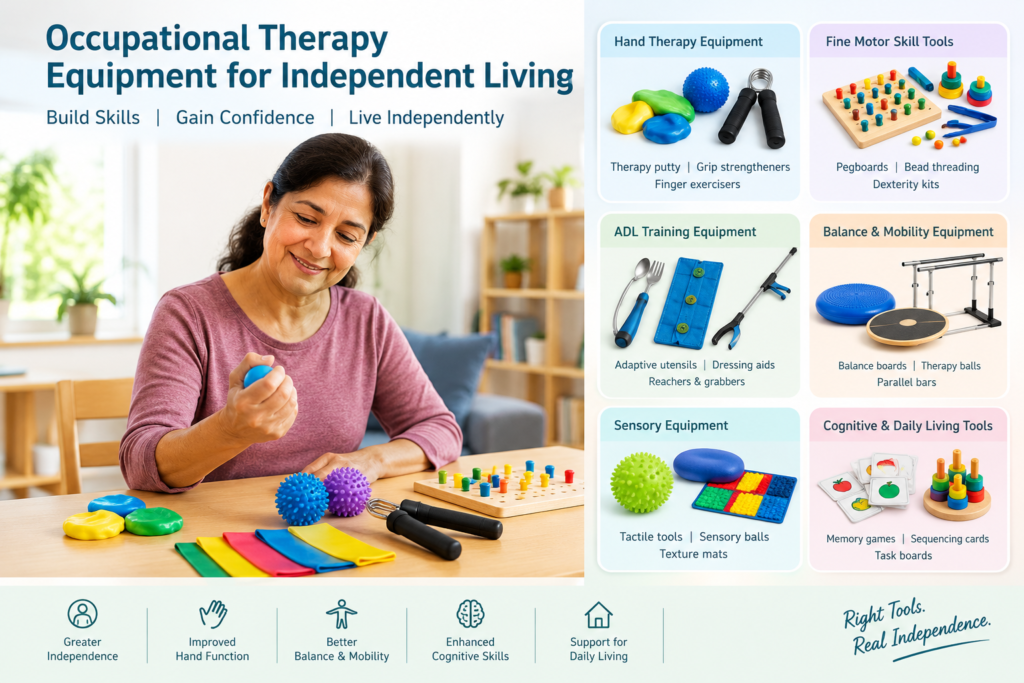
Independent living is an important part of maintaining confidence, dignity and quality of life. For individuals recovering from an injury, managing a disability, experiencing age-related changes or living with neurological conditions, everyday activities can sometimes become challenging. Tasks such as dressing, bathing, cooking, writing, walking and maintaining balance may require additional support.
This is where occupational therapy equipment for independent living can make a meaningful difference. These tools are designed to help individuals practise daily activities, improve functional skills and develop greater independence in their everyday routines.
Occupational therapists use different types of equipment to support fine motor skills, hand strength, coordination, balance, mobility, sensory processing and activities of daily living (ADLs). The right equipment depends on the individual’s abilities, goals, home environment and rehabilitation requirements.
In this guide, we explore commonly used occupational therapy equipment, how it supports independent living and what to consider when selecting suitable products.
What Is Occupational Therapy for Independent Living?
Occupational therapy (OT) helps people participate in meaningful everyday activities. It focuses on improving the skills needed to carry out personal care, household responsibilities, work, leisure and community activities.
For independent living, occupational therapy may help individuals:
- Perform personal hygiene and grooming activities.
- Improve dressing and feeding skills.
- Develop hand strength and finger coordination.
- Practise safe movement and transfers.
- Improve balance and body coordination.
- Build confidence in household activities.
- Adapt daily routines to suit their abilities.
Occupational therapists may recommend therapeutic exercises, adaptive devices, environmental modifications and structured activity practice to help people achieve their individual goals.
Why Is Occupational Therapy Equipment Important for Independent Living?
Occupational therapy equipment provides practical ways to practise functional movements and everyday tasks. It can support rehabilitation while helping individuals develop skills that are useful in their daily lives.
1. Supports Daily Living Activities
Equipment such as dressing aids, adaptive utensils and grooming tools can make everyday activities easier to practise and perform.
2. Improves Hand Strength and Coordination
Hand therapy tools help individuals work on grip strength, finger movements, dexterity and coordination. These skills are important for holding objects, buttoning clothes, writing and handling household items.
3. Encourages Balance and Mobility
Balance boards, stepping equipment and suitable mobility aids may be incorporated into therapy programmes to practise stability, controlled movement and safe mobility.
4. Builds Confidence and Participation
Practising familiar activities with appropriate support can help individuals become more confident in managing personal and household routines.
5. Supports Individual Rehabilitation Goals
Occupational therapy equipment can be selected according to a person’s functional abilities and goals, rather than using the same tools for everyone.
Most Common Occupational Therapy Equipment for Independent Living
Different equipment serves different purposes. Below are some commonly used categories in adult occupational therapy and functional rehabilitation.
1. Hand Therapy Equipment
<Add an original image of hand therapy putty, grip exercisers and finger strengthening tools here.>
Hand function is essential for many everyday activities, including eating, writing, dressing and handling objects. Hand therapy equipment can help individuals practise movements and develop strength and dexterity.
Common examples include:
- Therapy putty
- Hand grip exercisers
- Finger extension bands
- Finger strengtheners
- Hand exercise balls
- Finger dexterity boards
These tools may be included in therapy programmes for individuals who need to work on grip strength, finger control or fine motor coordination.
2. Fine Motor Skill Development Equipment
Fine motor skills involve small, controlled movements of the hands and fingers. They are required for activities such as buttoning shirts, tying shoelaces, using keys and picking up small objects.
Common fine motor equipment includes:
- Pegboards
- Bead threading sets
- Stacking and sorting activities
- Lacing boards
- Manipulative activity kits
- Hand-eye coordination tools
These activities can help individuals practise precision, coordination and controlled hand movements.
3. Activities of Daily Living (ADL) Training Equipment
Activities of daily living training is an important part of occupational therapy. It focuses on practising everyday tasks that support personal independence.
Examples of ADL equipment include:
- Dressing practice boards
- Buttoning and zipper boards
- Adaptive eating utensils
- Reaching aids
- Grooming aids
- Adaptive kitchen tools
- Bathing and personal care aids
These products can help individuals practise specific tasks and explore alternative ways of completing activities when physical limitations are present.
4. Balance and Coordination Equipment
Balance and coordination are important for standing, walking, reaching and changing positions safely.
Occupational therapists may use suitable equipment such as:
- Balance boards
- Balance cushions
- Therapy steps
- Coordination platforms
- Exercise balls
- Target-based movement activities
The selection and difficulty of these activities should be based on the individual’s balance, mobility and safety needs. Some exercises may require close supervision.
5. Upper Limb Rehabilitation Equipment
Upper limb rehabilitation focuses on functional movements involving the shoulders, arms, elbows, wrists and hands.
Commonly used equipment includes:
- Shoulder pulleys
- Arm exercise equipment
- Resistance bands
- Therapy balls
- Upper limb movement boards
- Fine motor activity stations
These tools may be used to practise reaching, grasping, controlled arm movement and other functional activities as part of an individualised programme.
6. Sensory Integration and Sensory Stimulation Equipment
Sensory experiences influence how people respond to their surroundings and participate in everyday activities. Some adults may benefit from structured sensory activities as part of an occupational therapy programme.
Examples include:
- Textured sensory materials
- Tactile activity panels
- Sensory balls
- Sensory cushions
- Weighted products when clinically appropriate
- Visual sensory equipment
Sensory equipment should be selected according to the individual’s sensory preferences, tolerance and therapeutic goals. Weighted products, in particular, should only be used with appropriate professional guidance.
7. Cognitive Rehabilitation Equipment
Cognitive skills such as memory, attention, planning and problem-solving are important for independent living.
Occupational therapists may use structured activities and tools such as:
- Matching and sequencing cards
- Memory games
- Sorting activities
- Visual perception boards
- Problem-solving tasks
- Daily routine planners
These activities can support the practice of cognitive skills used in everyday situations, such as following instructions, organising tasks and remembering routines.
8. Mobility and Transfer Support Equipment
Some individuals need additional support when moving between positions or navigating their homes.
Depending on their requirements, equipment may include:
- Transfer boards
- Walking aids
- Grab bars
- Support rails
- Suitable seating and positioning aids
- Wheelchair accessories
Equipment selection should consider the person’s mobility, physical abilities, home layout and transfer requirements. Professional assessment is especially important for products that support body weight or prevent falls.
Who Can Benefit from Occupational Therapy Equipment?
Occupational therapy equipment may be useful for individuals with different functional needs, including:
- Older adults: People experiencing age-related changes in strength, balance, coordination or daily functioning.
- Stroke survivors: Individuals working on hand function, upper limb movement, self-care and daily activities.
- People with neurological conditions: Individuals who need support with coordination, movement, sensory processing or functional tasks.
- People recovering from injuries: Individuals practising movements and activities following an injury or surgery, where appropriate.
- People with physical disabilities: Individuals who may benefit from adaptive equipment and alternative ways of completing everyday activities.
- People with reduced hand function: Individuals who need support with grip, dexterity and fine motor activities.
The type and level of support required will vary from person to person.
Conclusion
Occupational therapy equipment for independent living plays an important role in helping individuals practise everyday activities and work towards greater functional independence. From hand therapy tools and fine motor kits to ADL training products, balance equipment and adaptive aids, each category supports different aspects of daily living.
The most suitable equipment is not necessarily the most advanced or expensive option. It is the equipment that addresses an individual’s actual needs, fits their environment and supports meaningful daily activities.
For caregivers, rehabilitation professionals and individuals exploring occupational therapy equipment, choosing appropriate products with professional guidance can help make daily routines more accessible and manageable.
At Keeiko, exploring suitable occupational therapy and rehabilitation products can be a useful starting point for therapists and caregivers looking for tools to support functional practice and everyday independence.
Health and safety note: This article provides general educational information and is not a substitute for an individual occupational therapy assessment or medical advice. Equipment should be selected and used according to professional recommendations and manufacturer instructions.