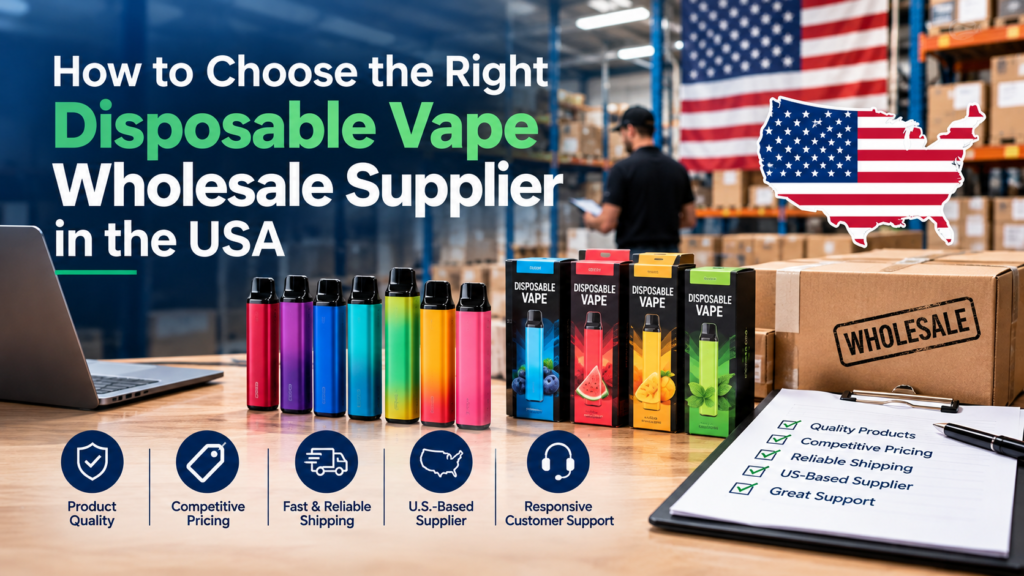
Finding the right wholesale supplier is an important decision for retailers operating in the vaping industry. A dependable supplier can help businesses maintain consistent inventory, manage purchasing costs, and respond to changing market demands. However, choosing a distributor requires more than comparing prices or selecting the company with the largest catalog.
Retailers need to consider product authenticity, legal compliance, shipping arrangements, customer service, and the supplier’s ability to meet their business requirements. By evaluating these factors carefully, businesses can make more informed purchasing decisions and establish reliable supply relationships.
1. Verify Product Authenticity and Documentation
Product authenticity should be a priority when evaluating disposable vape suppliers. Retailers need confidence that the products they purchase come through legitimate distribution channels and include accurate manufacturer information.
Before placing an order, review product packaging, labeling, manufacturer details, and available documentation. Ask the supplier about its sourcing procedures and how it verifies the authenticity of the products it distributes.
It is also important to understand how the supplier handles defective products, damaged shipments, and recalls. Clear procedures can help retailers address potential problems without unnecessary delays.
In addition, businesses should independently verify whether the products they intend to purchase are authorized for sale under applicable federal and state requirements. A supplier’s availability list alone does not establish that a product is legally marketable.
2. Compare Wholesale Prices and Total Purchasing Costs
Price comparisons are essential when managing a retail business, but the advertised unit price is only one part of the purchasing decision.
Retailers should consider minimum order quantities, shipping fees, payment terms, applicable taxes, and any other charges associated with an order. These factors determine the actual cost of acquiring inventory.
For example, a supplier with a lower unit price might require a substantially larger purchase than a retailer can comfortably afford. Another supplier may offer more flexible ordering terms that better suit a smaller business.
Before committing to a large order, compare written quotations from multiple distributors. Calculate the total landed cost and evaluate whether the purchase fits your budget and expected sales.
A careful comparison helps businesses protect cash flow while making purchasing decisions based on overall value rather than price alone.
3. Evaluate Product Selection and Availability
A suitable wholesale supplier should carry products that align with the retailer’s business model and verified customer demand.
When reviewing a catalog, examine the available product categories, manufacturer information, packaging options, and compatibility details where relevant. Ask whether listed products are currently available or subject to backorders.
Retailers researching Disposable Vape Wholesale options should compare suppliers based on inventory transparency, documented product sourcing, and the suitability of their offerings for the intended market. This approach provides a more useful basis for comparison than simply choosing the distributor with the most product listings.
Availability can also change quickly. A supplier should communicate stock limitations clearly so retailers can plan purchases without relying on uncertain delivery estimates.
Rather than purchasing every newly introduced product, businesses should evaluate demand, storage capacity, and financial exposure before expanding their inventory.
4. Assess Shipping Times and Order Fulfillment
Reliable fulfillment is another important consideration when choosing a wholesale distributor. Delayed shipments can complicate inventory planning and create gaps in product availability.
Ask prospective suppliers about their order processing procedures, estimated shipping times, tracking options, and delivery arrangements. Determine whether the supplier communicates delays promptly and provides clear information about order status.
It is also useful to review policies for missing packages, damaged merchandise, and incorrect orders. These details reveal how potential problems will be handled after a purchase.
Retailers should distinguish between advertised shipping estimates and guaranteed delivery commitments. Planning inventory around realistic lead times can reduce the likelihood of unexpected shortages.
For businesses with multiple locations, consistent documentation and predictable fulfillment procedures can make purchasing and stock allocation easier to coordinate.
5. Research Supplier Reputation and Business Practices
A professional wholesale relationship should be built on transparency and clear communication.
Before placing an order, verify the supplier’s business information, contact details, payment procedures, and written purchasing policies. Look for independent customer reviews and pay attention to recurring feedback about order accuracy, communication, and dispute resolution.
Reviews should be assessed carefully because individual experiences may not represent a company’s overall performance. When possible, use several sources rather than relying on a single testimonial.
Retailers can also contact a supplier directly to ask questions about product documentation, return procedures, and order requirements. Clear, consistent answers help establish whether the business is prepared to support a professional purchasing relationship.
For an unfamiliar distributor, beginning with a manageable order may provide useful information about service quality before making a larger financial commitment.
6. Understand Return Policies and Customer Support
Even carefully planned orders can encounter problems. Products may arrive damaged, quantities may differ from invoices, or a shipment may be delayed.
For this reason, retailers should understand a supplier’s return and replacement policies before completing a purchase. Review the time limits for reporting issues, documentation requirements, refund procedures, and any applicable restocking fees.
Customer support also matters. A supplier that provides accessible communication channels and clear responses can make it easier to resolve order-related questions.
Retailers should retain invoices, tracking records, and relevant correspondence. Maintaining organized purchasing records supports routine business administration and can help resolve disputes more efficiently.
The objective is to establish a relationship in which both parties understand their responsibilities and have practical procedures for addressing problems.
7. Consider Inventory Planning and Cash Flow
Buying in bulk can create purchasing efficiencies, but ordering excessive quantities can tie up money that a business needs for rent, payroll, and other operating expenses.
Retailers should review sales records, available storage, supplier lead times, and existing inventory before placing replenishment orders. These figures can help identify appropriate purchasing quantities and reduce the risk of holding slow-moving stock.
A basic inventory system can track quantities received, units sold, outstanding orders, and products approaching their reorder points. Regular reviews make it easier to identify discrepancies and plan future purchases.
Businesses should also account for product-specific storage requirements and any applicable restrictions. Inventory decisions should be based on verified demand and operational needs rather than assumptions about future popularity.
8. Verify Applicable Laws and Market Restrictions
Disposable vape products are subject to regulatory requirements that can affect purchasing, distribution, shipping, and retail sales.
Before choosing a supplier, retailers should confirm the applicable federal, state, and local requirements for the products they intend to carry. Depending on the circumstances, relevant considerations may include product authorization, labeling, minimum-age rules, shipping restrictions, taxes, and recordkeeping obligations.
Requirements can change, and rules may differ across jurisdictions. Retailers should consult current official government guidance and obtain qualified legal advice when necessary.
They should also maintain appropriate purchasing documentation and avoid assuming that a product is legal to sell simply because a distributor offers it.
A responsible supplier relationship should support the retailer’s compliance procedures while leaving the retailer accountable for its own legal obligations.
Conclusion
Choosing the right disposable vape wholesale supplier in the USA requires a structured evaluation of product authenticity, total costs, inventory availability, shipping reliability, customer service, and regulatory compliance.
Retailers benefit from looking beyond advertised prices and examining the complete purchasing process. Verifying documentation, comparing written terms, reviewing supplier policies, and starting with an appropriately sized order can help reduce avoidable risks.
The most suitable supplier is not necessarily the one with the largest catalog or the lowest initial price. It is the one whose verified products, business practices, ordering terms, and fulfillment capabilities align with the retailer’s needs.
By approaching supplier selection carefully, businesses can improve purchasing decisions, manage inventory more effectively, and establish a stronger foundation for responsible long-term operations