Image 1 – Light@1x
IEM Diploma Program admissions open banner with Institute of Event Management logo on dark purple background
Your career in event management starts here. IEM Diploma Program, admissions open now.

So You Want to Run Events For a Living? Read This First

It’s midnight, and you’re scrolling. Another wedding reel, another brand launch that looks completely effortless. And you think, “I could do that. Maybe even get paid for it.”
Then reality shows up. Where do you start? Do you volunteer at college fests and hope somebody notices you? Honestly, that’s what most people try first, and it’s slow. Painfully slow.
That’s why many beginners look at a structured IEM diploma program instead. In this post, I’ll cover what it teaches, who it suits, where it falls short, and how an event management leadership course fits into the picture. No brochure language, I promise.

What the IEM diploma program Actually Teaches

Most people assume event management is “decor plus coordination.” It’s not. That’s maybe 30% of the job.
All the rest is just boring-sounding technicalities, which determine how you can earn money or end up losing it – budgeting, vendor talks, contract signing, permissions, schedules, dealing with clients, and how you should react in case the DJ does not turn up an hour before the sangeet starts. A good degree will teach you all this in a structured way.
Compare the present curriculum with the institute’s, since it keeps changing. But the minimum that a good course must teach is the basics of event management, marketing, promotion, and ground realities. If it’s all theory, walk away.
Here’s the thing. Practical exposure is the whole point. Anyone can read about crowd flow. Standing in a hall at 6 AM while 40 chairs are still stacked in the corner teaches you more.

The Leadership Part Nobody Talks About

Planning an event is one skill. Leading the team that runs it is a completely different one.
I’ve seen talented planners crumble the moment they had to manage twelve people, three vendors, and one angry client at once. And this is where the event management leadership course for comes into the picture. The course is going to equip you with the skills to make decisions under pressure, delegate, coordinate, and communicate when faced with conflict situations.
Now here’s the deal – the diploma tells you how to play the game, but the leadership course prepares you to be the captain of the team.. If you are a complete beginner, get the basic knowledge first. If you’ve already worked a few events and want to move up, the leadership side is where your growth is.

Who Should Join (And Who Probably Shouldn’t)

The IEM diploma program makes sense if you’re a fresher with no industry contacts, if you’re switching careers and need a structured way in, or if you’ve done a bit of event work but feel your knowledge has gaps.
It’s probably not for you if you expect a job handed over on day one. No course can promise that, and anyone who does is selling you a dream. It’s also not ideal if you hate being on your feet, working weekends, or handling stress. Events are fun, but they’re also tiring.
Be honest with yourself about that part.

Learning on the Job vs. Diploma vs. Degree vs. Short Courses

Here’s a simple, realistic comparison.
Option Time Needed Best For The Catch
Learning on the job Years, usually People with contacts in the industry Knowledge gaps, bad habits picked up
Diploma (like the one above) Months Beginners wanting a clear path Quality varies a lot by institute
Short event management leadership course
Weeks People already working in events Doesn’t teach the basics
Full degree Several years Those who want the academic route Often less hands-on
No option wins everywhere. Pick based on where you are right now, not where Instagram says you should be.

What a Typical Week Actually Looks Like
Let’s be real for a second. Most people imagine event courses as one long party. It’s not.
A normal week in the IEM diploma program usually mixes classroom sessions with hands-on tasks like preparing budgets, drafting timelines, and calling vendors for quotes. Some weeks feel light. Others get hectic, especially when a live event is coming up, and everyone’s fighting over who handles registration.
Honestly, that chaos is the best part. You’ll make mistakes there, small ones, in a safe setting, instead of making them in front of a paying client later. If you only sit through lectures and never touch a real task, the IEM diploma program isn’t doing its job.
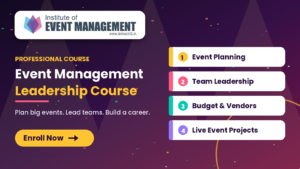
Event Management Leadership Course banner by Institute of Event Management covering event planning, team leadership, budget and vendors, and live event projects
Plan big events. Lead teams. Build a career with the Event Management Leadership Course.

Jobs, Pay and What Happens After You Finish

Here’s where most people get unrealistic. A certificate doesn’t make you an event head overnight.
After completing the IEM diploma program, you’d typically start as an assistant coordinator, an executive, or a junior planner at an agency. Pay at the start is modest, and that’s normal. It improves as your portfolio grows and you handle bigger events. That’s how any event management career works, really. Nobody skips the early grind.
The smart move? Start building a small portfolio while you study. Photos, event reports, even college fest work counts. Later, once you’ve got a few events behind you, an event management leadership course can help you step into team-lead roles faster.
Foundation first, leadership second.

Skills You’ll Pick Up (Beyond the Syllabus)

Some of the most useful things you learn in the IEM diploma program never show up on a certificate.
You learn to stay calm when a vendor cancels last minute. You learn how to say “no” to a client without losing them. You learn to read a room, to spot a problem before it blows up, to keep a straight face when the stage lights fail ten minutes before the chief guest arrives.
Nobody teaches this in a textbook. It comes from being put in situations where something has to get done. A good IEM diploma program creates those situations on purpose, with a mentor nearby, so you can fail a little and learn a lot.
And if you want to grow into bigger roles later, those soft skills are exactly what an event management leadership course builds on. Technical knowledge gets you the job. People skills get you the promotion.

Common Mistakes Beginners Make When Choosing a Course

Honestly, this is where I see the most regret.
The first mistake is picking the cheapest option. Low fees often mean no live events, no real faculty, and a certificate that doesn’t impress anyone. The second is trusting big promises. If an institute guarantees a job, be careful. Nobody can honestly guarantee that.
Then there’s the opposite problem, where people sign up for a fancy event management leadership course before they’ve ever worked a single event. It sounds impressive, but you can’t lead a team if you haven’t done the work yourself. Start with a solid IEM diploma program, build some experience, and add leadership training when you’re ready.
One more thing. Don’t ignore the alumni. If you can’t find a single former student who’ll talk about their experience, that tells you a lot. Anyone serious about an event management career should check this before paying anything.

Questions to Ask Before You Pay

Before you commit to the IEM diploma program, or any institute, really, ask these. Directly. Don’t be shy.
  • Who actually teaches the classes? Working professionals or just trainers?
  • How many live events will I work on, not watch?
  • What does “placement support” mean in real terms? Interviews? Referrals? Or just a mailing list?
  • Can I speak to former students?
  • What’s the full cost, including hidden fees?
If the answers feel slippery, trust that feeling.

Expert Insight

“Here’s what nobody tells you: no event ever runs exactly as planned. The people who last in this line are the ones who always have a Plan B, and a Plan C. A course gives you the process. Staying calm when the power cuts out? That only comes from being there.”
— a working event manager, 8+ years in the field

A Friendly Suggestion

Don’t decide today. Write down your top three institutes, visit or call each one, and ask the questions above. Sit in on a class if they let you. Ten minutes in a real classroom will tell you more than ten pages of marketing.

FAQs

1. Is the IEM diploma program worth it?

Yes, if you’re a beginner who wants structure and real practice. No, if you expect guaranteed jobs.
2. Can I join after 12th?

Often yes, but eligibility differs, so confirm with the institute.
3. How much do event managers earn?

Freshers usually start modestly. Pay grows with your portfolio and the events you’ve handled.

4. Is an event management leadership course good for beginners?

Not really. It works better once you have some on-ground experience.

5. Do I need to be an extrovert for this career?

No, but you do need to be comfortable talking to people and staying calm.

6. Where can I get guidance to compare event courses?

You can reach out to the Institute of Event Management (iemworld)for help comparing options and understanding which skills go well with event work.


Conclusion

Event management isn’t glamour. It’s planning, people, and pressure, with a bit of magic at the end.
A good foundation can be provided by an IEM diploma program, particularly if you are a beginner. Once you become confident in handling people rather than jobs, consider taking a leadership class. Pick an institute carefully, ask those difficult questions, and gain event management experience as soon as possible.
Start small. Work one event. Then another. That’s how careers get built.

Leave a Reply

Your email address will not be published. Required fields are marked *