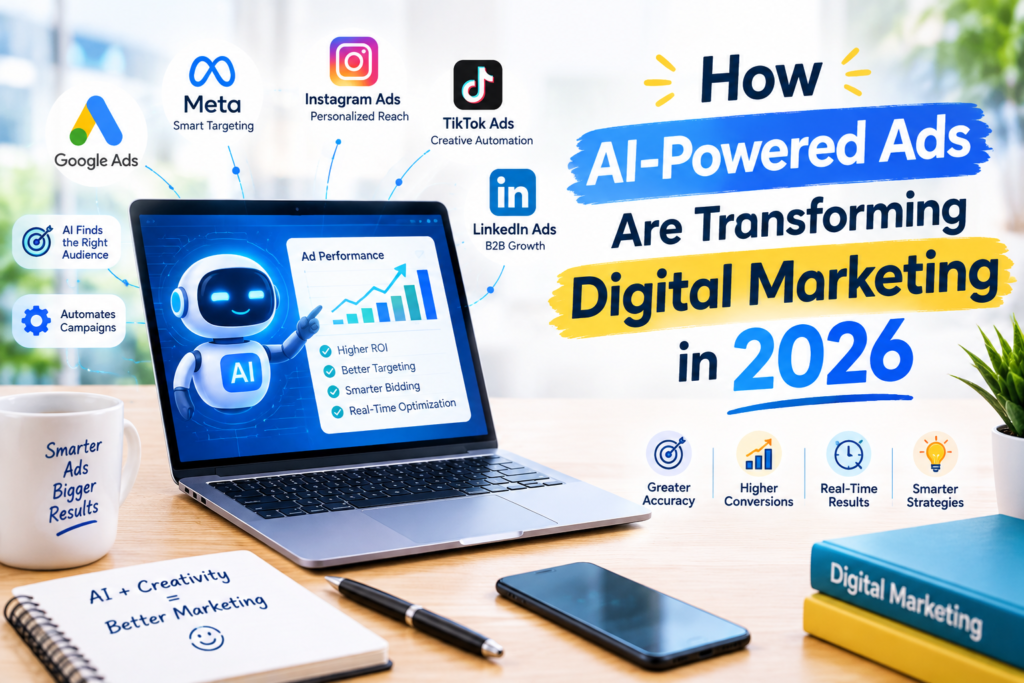
Digital advertising has become more competitive than ever. Businesses are constantly searching for new ways to attract customers, improve engagement, and increase sales. Traditional advertising methods often require significant time, creative resources, and marketing expertise. However, artificial intelligence is changing how brands approach their advertising strategies.
An AI powered ad can help businesses create personalized content, analyze audience behavior, and optimize advertising campaigns more efficiently. From small businesses to large enterprises, marketers are exploring AI-driven solutions to make their campaigns more effective.
Platforms such as predis.ai are contributing to this transformation by helping businesses simplify the process of creating social media content and advertisements. Understanding how AI advertising works can help marketers make better decisions and stay competitive in an increasingly digital marketplace.
What Is an AI-Powered Ad?
An AI-powered ad is a digital advertisement created, optimized, or delivered with the assistance of artificial intelligence.
AI technologies can analyze large amounts of information, recognize patterns, and generate creative content based on specific instructions. These capabilities allow advertisers to develop marketing campaigns that are more relevant to their target audiences.
For example, a clothing brand promoting a seasonal collection can use AI tools to generate different advertising headlines, product descriptions, and visual concepts. Instead of manually developing every variation, marketers can use AI to accelerate the creative process.
AI advertising can support several activities, including:
- Generating advertising copy and headlines.
- Creating images and promotional videos.
- Analyzing audience interests and behavior.
- Testing different creative variations.
- Optimizing campaign performance.
- Personalizing advertisements for different customer groups.
Although AI can automate many tasks, human creativity and strategic decision-making remain essential for successful advertising.
How Artificial Intelligence Is Changing Digital Advertising
Artificial intelligence is influencing almost every stage of the digital advertising process. Its impact extends beyond content creation to campaign planning, audience targeting, and performance analysis.
1. Faster Ad Creation
Creating high-quality advertisements traditionally involves several steps, including brainstorming, writing, designing, editing, and testing.
AI-powered tools can reduce the time required for these activities. Marketers can provide a product description, target audience, and campaign objective to generate initial advertising concepts.
For instance, a restaurant promoting a new menu can use AI to develop promotional headlines, social media captions, and visual ideas within minutes.
This approach allows businesses to spend less time on repetitive creative tasks and more time refining their marketing strategies.
2. Personalized Advertising Experiences
Consumers respond differently to advertising depending on their interests, preferences, and purchasing behavior.
AI can help marketers identify these differences and develop more relevant messages for specific audiences.
A fitness brand, for example, might create separate advertisements for beginners, experienced athletes, and people interested in home workouts.
Personalization can make advertisements more meaningful while helping businesses communicate their value more effectively.
However, personalization should always respect consumer privacy and applicable data protection regulations.
3. Improved Campaign Optimization
Advertising campaigns generate valuable information, including impressions, clicks, conversions, and engagement rates.
AI systems can analyze these performance indicators to identify patterns and suggest improvements.
Marketers may use these insights to determine which creative variations perform better, which audiences respond positively, and where advertising budgets should be allocated.
AI does not guarantee successful campaigns, but it can provide useful information that supports better marketing decisions.
How Predis.ai Helps Simplify Advertising
Creating consistent promotional content can be challenging for businesses that manage multiple social media platforms.
predis.ai is an AI-powered content creation platform that helps users develop social media content and marketing creatives. Its capabilities can support businesses looking to simplify their content production workflows.
The platform can be useful for marketers, entrepreneurs, content creators, and small business owners who want to produce promotional materials more efficiently.
AI-Based Social Media Content Creation
Social media marketing requires regular publishing to maintain audience engagement.
AI content creation tools can help businesses develop captions, creative concepts, and promotional content based on their requirements.
For example, an online store launching a new product can use an AI-assisted workflow to generate several content ideas for Instagram, Facebook, or other social platforms.
This can help maintain a consistent publishing schedule without requiring every post to be created entirely from scratch.
Generating Advertising Creatives
Visual presentation plays an important role in digital advertising.
Predis.ai offers AI-assisted creative generation capabilities that can help users develop promotional visuals and social media advertisements.
Businesses can explore different creative approaches, including product-focused designs, promotional graphics, and campaign-specific content.
However, generated visuals should always be reviewed to ensure that product details, branding, and promotional information are accurate.
Supporting Content Planning
A successful advertising strategy requires more than individual advertisements.
Businesses need to maintain consistency across campaigns, promotional events, and social media channels.
AI-assisted content planning can help marketers organize ideas, develop creative variations, and establish a more structured publishing workflow.
When combined with a clear marketing strategy, these capabilities can make campaign management more manageable.
Benefits of Using AI-Powered Advertising
AI advertising offers several potential advantages for businesses.
Greater Efficiency
Automation can reduce the time required for repetitive tasks such as drafting captions, developing creative concepts, and generating advertising variations.
This allows marketing teams to focus on strategy, customer relationships, and campaign improvements.
Cost-Effective Content Production
Producing advertising materials can involve expenses related to designers, copywriters, photographers, and video editors.
AI tools may help reduce some of these costs, particularly for businesses with limited marketing budgets.
However, professional review and high-quality creative production may still be necessary for important campaigns.
Creative Experimentation
Advertising performance often depends on testing different approaches.
AI can help marketers generate multiple headlines, messages, and visual concepts for experimentation.
By analyzing campaign results, businesses can identify which creative approaches resonate most effectively with their audiences.
Better Scalability
Businesses expanding into new markets or launching additional products often need more advertising content.
AI-assisted workflows can help increase content production without requiring a proportional increase in manual effort.
This can be particularly valuable for small businesses and growing digital brands.
Challenges and Limitations of AI Advertising
Despite its advantages, AI advertising also presents certain challenges.
One important concern is content quality. AI-generated advertisements may occasionally contain inaccurate information, generic messaging, or visuals that do not accurately represent a product.
Another challenge is maintaining brand identity. Businesses need consistent messaging, recognizable visual elements, and a clear communication style.
Privacy is also an important consideration. Advertisers must ensure that their use of customer information complies with relevant regulations and platform policies.
Additionally, AI-generated content can become repetitive when businesses rely too heavily on automated outputs.
The most effective approach is to combine AI capabilities with human creativity, editorial judgment, and audience understanding.
Best Practices for Creating Effective AI-Powered Ads
Businesses can improve their advertising workflows by following a few practical principles.
Define clear campaign objectives: Determine whether the advertisement is intended to increase awareness, generate leads, encourage purchases, or improve engagement.
Understand the target audience: Identify the audience’s interests, challenges, and expectations before developing advertising content.
Provide detailed instructions: AI tools generally produce more useful results when users provide specific information about the product, brand, and campaign.
Review every creative: Check spelling, product details, promotional claims, and visual accuracy before publishing.
Test different variations: Experiment with headlines, images, and calls to action to identify the most effective combinations.
Measure campaign performance: Use relevant metrics to evaluate results and make informed adjustments.
These practices help ensure that AI supports a broader marketing strategy rather than becoming a replacement for thoughtful planning.
Conclusion
Artificial intelligence is reshaping the digital advertising landscape by making content creation, personalization, and campaign optimization more accessible.
An AI powered ad can help businesses explore creative possibilities, improve production efficiency, and develop more relevant marketing messages. Platforms such as predis.ai demonstrate how AI-assisted tools can simplify social media content creation and promotional design.
However, successful advertising still depends on understanding customers, communicating genuine value, and maintaining creative quality.
Businesses that combine artificial intelligence with human expertise can build more adaptable advertising strategies and respond more effectively to changing consumer expectations.
As AI technology continues to develop, its role in digital marketing will likely become even more significant. The key is to use these tools thoughtfully, ensuring that innovation supports meaningful communication and long-term business growth.