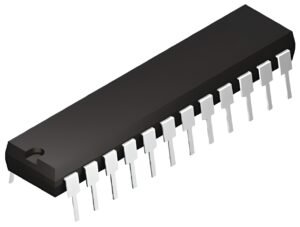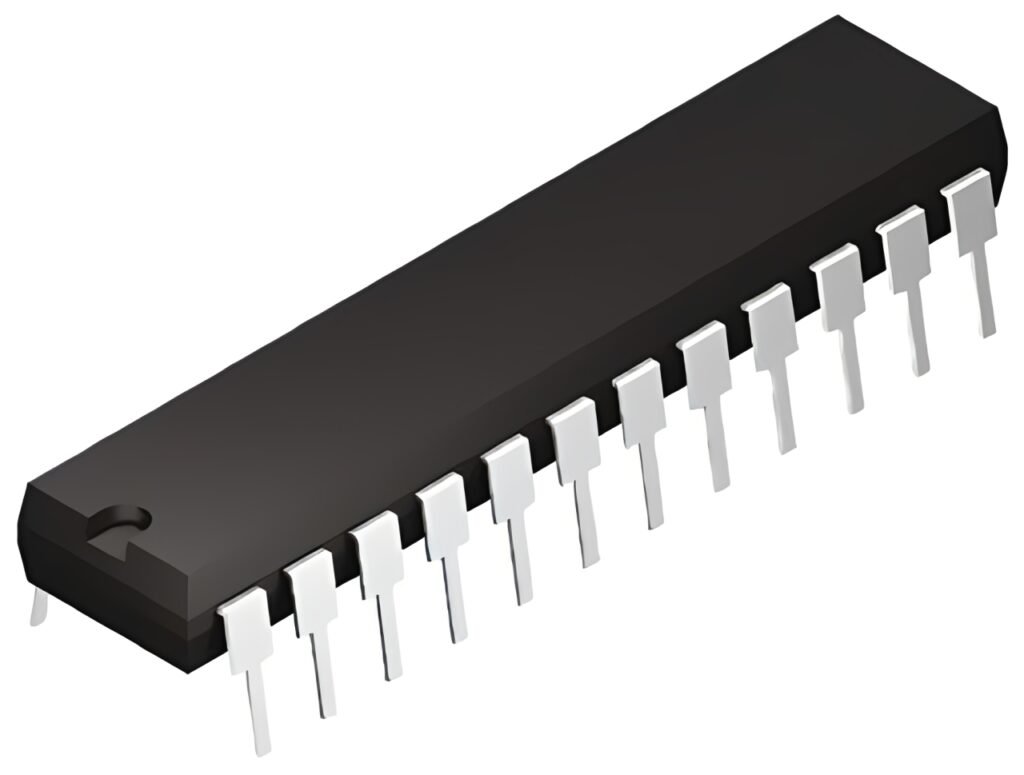
General Purpose ADCs
General Purpose ADCs are among the most important building blocks in modern electronic systems because they allow analogue information from the real world to be converted into digital data. Any application that needs to measure temperature, pressure, voltage, current, light, force, position, sound, or other continuously varying signals may depend on an analogue-to-digital converter to make that information usable by digital electronics.
The growing use of sensors, automation, connected devices, intelligent machinery, and embedded control has made accurate data acquisition increasingly important. General Purpose ADCs provide designers with a flexible way to capture analogue signals without relying on highly specialised conversion devices. They are available in many combinations of resolution, sampling speed, input channels, voltage ranges, package types, and communication interfaces, which makes them suitable for a wide variety of systems.
Their value comes from balance. Instead of being optimised only for ultra-high speed or laboratory-grade precision, General Purpose ADCs are designed to provide practical performance across many everyday electronic applications.
What Are General Purpose ADCs?
General Purpose ADCs are integrated circuits that measure analogue electrical signals and convert them into numerical digital values.
An analogue signal can take almost any value within a given range. A digital processor, however, operates using discrete binary information. The ADC connects these two domains by sampling the incoming signal and representing it as a digital code.
This process allows a processor to understand what is happening in the physical environment.
General Purpose ADCs are commonly selected because they offer flexibility in areas such as:
- Resolution
- Sampling rate
- Input voltage range
- Number of channels
- Interface type
- Power consumption
- Input configuration
- Reference voltage support
- Package size
- Operating temperature
This combination of options allows them to serve as versatile measurement devices across many electronic designs.
Why Is Analogue-to-Digital Conversion So Important?
Many of the most useful signals in electronics begin in analogue form.
A temperature sensor may generate a slowly changing voltage. A current sensor may produce a signal proportional to electrical load. A pressure transducer may vary its output according to fluid pressure. Even a simple potentiometer creates an analogue voltage when its position changes.
Processors and microcontrollers cannot use these signals directly unless they have a means of converting them into digital form.
An ADC enables the system to:
- Monitor operating conditions
- Measure physical parameters
- Record data
- Compare values against limits
- Control connected equipment
- Detect abnormal behaviour
- Trigger alarms
- Display measurements
- Send information over a network
Without analogue-to-digital conversion, many forms of sensing and monitoring would be impossible in digital systems.
How Does a General Purpose ADC Convert a Signal?
The basic conversion process begins when an analogue voltage is applied to the converter input.
The ADC samples the voltage at a specific moment and then assigns a digital code that corresponds to that input level. The number of available codes depends on the resolution of the converter.
A lower-resolution ADC divides the input range into fewer steps, while a higher-resolution device divides the same range into much smaller increments.
After conversion, the ADC transfers the result to a processor or controller.
This data can then be:
- Analysed
- Stored
- Displayed
- Filtered
- Transmitted
- Compared
- Used in a feedback loop
The overall performance depends not only on the ADC itself but also on the quality of the incoming signal and the surrounding circuit design.
Why Is Resolution Important?
Resolution determines how many digital values are available to represent the analogue input.
It is normally expressed in bits.
For example, higher bit resolution allows the input voltage range to be divided into more steps. This means the system can distinguish smaller changes in the measured signal.
Common General Purpose ADC resolutions include:
- 8-bit
- 10-bit
- 12-bit
- 14-bit
- 16-bit
- 18-bit
- 24-bit
The right choice depends on the application.
A simple battery monitor may not need very high resolution, while precision sensor instrumentation may require the ability to identify extremely small voltage differences.
However, increasing resolution does not automatically improve system accuracy.
Electrical noise, reference drift, poor layout, interference, and signal instability can prevent the system from using all available bits effectively.
What Is Effective Resolution?
Effective resolution describes how much of the theoretical resolution is actually useful in practice.
A converter may be labelled as a high-resolution ADC, but some of the least significant bits may fluctuate because of noise or other errors.
This is why engineers often examine more detailed specifications such as:
- Effective number of bits
- Signal-to-noise ratio
- Integral non-linearity
- Differential non-linearity
- Total harmonic distortion
- Offset error
- Gain error
These characteristics provide a more realistic picture of converter performance than nominal resolution alone.
For practical design, usable resolution is often more important than the headline bit count.
How Does Sampling Rate Affect Signal Capture?
Sampling rate indicates how frequently the ADC measures the analogue input.
The appropriate sampling rate depends on how quickly the signal changes.
A slow-moving temperature signal may require only occasional measurements. A vibration waveform, audio signal, or rapidly changing control voltage may need thousands or millions of samples per second.
Selecting an ADC with insufficient sampling speed may cause important signal details to be missed.
Selecting one that is unnecessarily fast can increase:
- Power consumption
- System cost
- Processor workload
- Data storage requirements
- Communication bandwidth
The goal is to choose a sampling rate that accurately captures the signal while remaining efficient.
What Is the Relationship Between Bandwidth and Sampling?
The bandwidth of the input signal is closely connected to the sampling requirement.
A converter must sample fast enough to preserve the information contained in the signal.
If a signal includes rapidly changing content, the ADC requires a suitable sampling frequency and input bandwidth.
Designers often use filtering before the ADC to limit unwanted high-frequency content. This prevents frequencies outside the desired measurement range from affecting the digital result.
This type of filtering can improve signal quality and reduce aliasing.
Why Is the Voltage Reference Critical?
The voltage reference is one of the most important parts of an ADC system.
The converter uses this reference as the basis for determining the digital value associated with the analogue input.
If the reference voltage moves, the conversion result can move with it even when the input signal remains constant.
A good voltage reference should provide:
- Low noise
- Good temperature stability
- Accurate output voltage
- Low drift
- Stable long-term performance
Some ADCs include an internal reference, while others rely on an external device.
An internal reference can simplify the circuit. An external reference may be selected when higher precision or better temperature performance is required.
How Does Input Range Influence Measurement Quality?
The ADC input range should match the expected signal as closely as practical.
If the signal uses only a small portion of the available input range, much of the converter resolution may remain unused.
For example, if an ADC accepts a wide voltage range but the sensor output varies only within a narrow band, the system may benefit from amplifying or scaling the signal before conversion.
Input range matching can be achieved using:
- Operational amplifiers
- Voltage dividers
- Buffers
- Programmable gain amplifiers
- Instrumentation amplifiers
- Attenuation networks
Effective signal scaling allows the design to use the converter’s available resolution more efficiently.
What Is Signal Conditioning?
Signal conditioning refers to preparing an analogue signal before it reaches the ADC.
Sensors do not always produce a signal that is immediately suitable for conversion. The voltage may be too small, too large, too noisy, or offset from the required input range.
Signal conditioning circuits can correct these issues.
Typical functions include:
- Amplification
- Filtering
- Attenuation
- Buffering
- Isolation
- Level shifting
- Protection
This stage can have a major influence on overall measurement accuracy.
A well-designed signal conditioning circuit can improve conversion quality even when using a relatively modest ADC.
Why Is Input Impedance Important?
The source connected to the ADC must be able to drive the converter input correctly.
Some ADC architectures briefly draw current from the signal source during sampling. If the source impedance is too high, the ADC input may not settle to the correct voltage before conversion occurs.
This can introduce errors.
A buffer amplifier may be used when:
- The signal source has high impedance
- Fast settling is required
- The ADC input presents a dynamic load
- Several circuits share the same signal
Understanding the interaction between the signal source and ADC input can prevent unstable measurements.
What Are the Main ADC Architectures?
General Purpose ADCs are available with several conversion architectures, each offering different performance characteristics.
Successive Approximation ADCs
Successive approximation register converters are widely used in general measurement applications.
They offer a strong balance of:
- Speed
- Resolution
- Power consumption
- Simplicity
- Cost
They are commonly found in industrial equipment, instrumentation, embedded systems, and sensor interfaces.
Sigma-Delta ADCs
Sigma-delta converters are well suited to applications that require high resolution and excellent low-frequency performance.
They are often used in:
- Precision instrumentation
- Weighing systems
- Temperature measurement
- Industrial sensors
- Low-level signal acquisition
Their main strength is high accuracy rather than extreme conversion speed.
Pipeline ADCs
Pipeline converters are often selected for faster signals.
They provide higher sampling rates while maintaining useful resolution.
Applications can include:
- Communication systems
- Imaging
- Data acquisition
- Higher-speed instrumentation
Flash ADCs
Flash converters can provide extremely fast conversion.
However, they typically require more power and circuit complexity, which makes them less common in standard low-power applications.
Why Are Multi-Channel ADCs Useful?
Many systems need to measure several analogue signals.
A multi-channel ADC can reduce the need for separate converters by providing several input channels in one package.
This is useful in applications such as:
- Motor monitoring
- Environmental sensing
- Battery systems
- Industrial automation
- Laboratory instruments
- Power distribution systems
Some devices use an internal multiplexer to connect one input at a time to a shared converter.
This can reduce cost and PCB space, although switching between channels may require time for the input to settle.
When Is Simultaneous Sampling Needed?
In some systems, it is important to measure multiple signals at exactly the same moment.
For example, when analysing phase relationships between voltage and current, measurements taken at different times may introduce unwanted errors.
Simultaneous-sampling ADCs solve this problem by capturing several channels together.
They can be useful in:
- Power quality monitoring
- Motor control
- Vibration analysis
- Multi-axis sensing
- Industrial instrumentation
The decision between multiplexed and simultaneous sampling depends on whether timing relationships between channels are important.
Which Digital Interfaces Are Common?
Once the conversion is complete, the ADC must send the digital result to another device.
Common interfaces include:
- SPI
- I²C
- Parallel buses
- Serial data links
SPI is often chosen when higher data rates are required.
I²C is useful when several devices need to share the same communication bus while keeping wiring simple.
Parallel interfaces may be used when extremely high data throughput is necessary, although they require more processor pins and PCB routing.
Interface selection should match both the required data rate and the capabilities of the processor.
How Do General Purpose ADCs Support Industrial Automation?
Industrial systems rely heavily on sensor data.
Machines, production equipment, and process control systems may need to measure dozens of variables continuously.
General Purpose ADCs can convert signals associated with:
- Temperature
- Pressure
- Flow
- Level
- Motor current
- Voltage
- Position
- Force
- Speed
Once converted, the data can be used for control, monitoring, maintenance, and fault detection.
Reliable ADC performance helps industrial systems respond accurately to changing operating conditions.
What Role Do ADCs Play in IoT Devices?
IoT systems often include sensors that observe environmental or equipment conditions.
Many of these sensors provide analogue outputs.
An ADC converts these signals into data that can be processed locally or sent to cloud-based systems.
Common IoT measurements include:
- Air quality
- Temperature
- Humidity
- Light level
- Battery voltage
- Soil moisture
- Pressure
- Current consumption
Low-power General Purpose ADCs are particularly valuable in battery-operated and remote IoT nodes.
How Are ADCs Used in Power and Energy Systems?
Power electronics frequently require accurate measurement of voltage and current.
These measurements can help determine:
- Energy consumption
- Battery condition
- Load behaviour
- Charging performance
- Power conversion efficiency
- System faults
General Purpose ADCs can be integrated into battery management systems, power supplies, renewable energy equipment, charging systems, and energy monitoring devices.
Accurate conversion helps the controller respond to electrical conditions more effectively.
Why Does Power Consumption Matter?
Power efficiency is especially important in portable and remote devices.
Some ADCs are designed to consume very little current between measurements.
Power-saving features may include:
- Standby operation
- Automatic shutdown
- Sleep modes
- Reduced sampling modes
- Duty-cycled conversion
These capabilities can help extend battery life.
Power consumption also matters in densely packed systems where heat generation must be controlled.
How Does PCB Layout Affect ADC Accuracy?
Even a well-selected ADC can perform poorly if the PCB layout is badly designed.
Analogue signals can be vulnerable to interference from:
- Digital clocks
- Switching regulators
- Fast data buses
- Motors
- High-current traces
- Radio transmitters
Good layout practices include:
- Keeping analogue traces short
- Separating noisy digital circuitry from sensitive analogue areas
- Using suitable grounding
- Placing decoupling capacitors close to supply pins
- Protecting the voltage reference from interference
- Routing clock signals away from analogue inputs
Attention to PCB design becomes increasingly important as resolution and measurement sensitivity increase.
Why Is Filtering Necessary?
Filtering helps remove unwanted frequencies from the input signal.
An analogue low-pass filter may be placed before the ADC to reduce noise and prevent unwanted high-frequency content from entering the converter.
Digital filtering may also be applied after conversion.
The choice between analogue and digital filtering depends on:
- Signal bandwidth
- Noise sources
- ADC architecture
- Processing capability
- Required response time
In many designs, both approaches are used together.
What Errors Should Designers Consider?
ADC measurements can be affected by several error sources.
These may include:
- Offset error
- Gain error
- Quantisation error
- Reference error
- Thermal noise
- Non-linearity
- Clock jitter
- Input settling error
- Power supply noise
Not every application requires the same level of precision.
A simple monitoring system may tolerate small errors, while precision instrumentation may require detailed calibration and compensation.
Understanding the complete error budget helps designers avoid overengineering or under-specifying the system.
How Can Calibration Improve Performance?
Calibration can correct some forms of measurement error.
A system may measure known reference values and compare them against the ADC output. Software can then apply correction factors to improve accuracy.
Calibration may compensate for:
- Offset
- Gain
- Sensor variation
- Reference tolerance
- Manufacturing variation
Some systems perform calibration only during production, while others repeat it periodically during operation.
The required approach depends on how much accuracy the application needs.
How Should Engineers Choose a General Purpose ADC?
Selecting a suitable ADC requires considering the complete measurement chain.
Important questions include:
- What signal is being measured?
- What is the expected voltage range?
- How fast does the signal change?
- How much resolution is required?
- How many input channels are needed?
- What level of accuracy is necessary?
- Which digital interface is available?
- What power budget is acceptable?
- What operating temperature range is required?
- Is an internal reference sufficient?
- Does the system need differential inputs?
- Is simultaneous sampling necessary?
Answering these questions can significantly narrow the available options.
Why Are General Purpose ADCs Better Than Choosing Only by Specification?
Selecting a converter based only on the highest resolution or fastest sampling rate can lead to a poor design.
A balanced choice is usually more effective.
For example, an unnecessarily fast ADC may increase cost and power use. A very high-resolution converter may provide little benefit if the signal path is noisy. A device with many channels may add complexity if only one input is required.
The best General Purpose ADC is therefore the one that matches the actual system rather than the one with the most impressive headline specifications.
What Is the Future of General Purpose ADC Technology?
The demand for analogue-to-digital conversion is likely to remain strong because modern electronics continue to depend on real-world data.
Growth areas include:
- Smart manufacturing
- Robotics
- Renewable energy
- Electric mobility
- Industrial IoT
- Medical instrumentation
- Building automation
- Remote sensing
- Intelligent monitoring
These applications require increasingly efficient ways to collect reliable analogue information.
Future General Purpose ADCs are likely to continue improving in resolution, power efficiency, integration, channel density, and interface flexibility.
Why Will General Purpose ADCs Remain Essential?
General Purpose ADCs provide the critical connection between physical measurements and digital intelligence.
They allow processors to understand analogue signals produced by sensors, electrical circuits, and real-world processes. Their wide range of performance options makes them suitable for everything from simple embedded devices to sophisticated industrial measurement systems.
The most successful ADC designs do not depend on the converter alone. Signal conditioning, reference quality, filtering, grounding, PCB layout, interface selection, and calibration all contribute to final performance.
As electronic products become increasingly intelligent, connected, and data-driven, accurate analogue measurement will remain a core engineering requirement. General Purpose ADCs will continue to serve as a flexible and reliable foundation for data acquisition, monitoring, automation, and control across modern electronic systems.