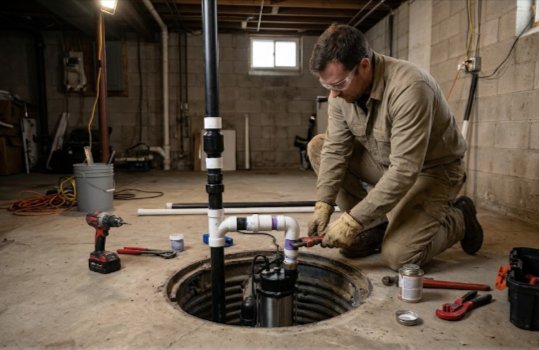
sump pump installation Iowa City
A wet basement creates problems that extend beyond a puddle on the floor. Uncontrolled water can damage stored belongings, deteriorate building materials, and create conditions that support mold growth. Repeated moisture also makes it harder to use the basement comfortably for storage, recreation, or additional living space.
Homeowners considering sump pump installation in Iowa City, IA, should understand how these systems collect and remove unwanted groundwater. A sump pump works with a collection pit, commonly called a sump basin, to manage water that enters the drainage system. When the water reaches a designated level, the pump activates and discharges it away from the home’s foundation.
How Does a Sump Pump Work?
A typical sump pump system includes a basin installed at a low point, a pump, a float switch or another activation mechanism, and a discharge pipe. Groundwater entering the collection area raises the water level until the pump activates.
The pump then moves water through the discharge line to an appropriate outdoor drainage location. Once the water level drops, the pump shuts off automatically. A check valve installed in the discharge pipe helps prevent water from flowing back into the sump basin after the pump shuts off. A properly functioning check valve helps reduce unnecessary cycling and protects the pump from repeatedly handling the same water.
The system’s effectiveness depends on more than the pump itself. Basin placement, pump capacity, discharge routing, electrical protection, and the basement’s existing drainage all influence performance.
A properly planned installation accounts for the property’s water conditions instead of simply placing a pump wherever standing water appears.
When Does Your Home Need a Sump Pump?
Some basements experience occasional dampness, while others develop standing water after prolonged rainfall or snowmelt. Recognizing recurring warning signs helps homeowners determine when additional water management is necessary.
Watch for:
- Water collecting along the basement floor or around floor drains.
- Damp patches near foundation walls.
- Repeated flooding after heavy rainfall.
- Persistent musty odors associated with moisture.
- Water entering through floor-wall joints.
- Previous water damage that returns during wet weather.
These symptoms can have several causes, including foundation cracks, leaking plumbing, poor exterior drainage, and groundwater pressure. A sump pump addresses collected water but does not automatically repair every source of basement moisture.
A professional assessment helps determine whether a pump, drainage improvements, foundation repairs, or a combination of measures is appropriate.
Choosing the Right Sump Pump
The best pump for your home depends on the volume of water it must move, the height to which it must lift water, and the discharge pipe’s length and configuration.
Submersible Pumps
A submersible pump operates inside the sump basin. Because the motor and pump are designed to work underwater, these units are generally quieter than pedestal models and remain largely concealed.
They are commonly selected for residential installations where available basin space and noise reduction are important considerations.
Pedestal Pumps
A pedestal pump has a motor positioned above the basin, with the pumping mechanism extending downward. Keeping the motor above the water can make certain maintenance tasks easier, although the exposed motor typically produces more noise.
Battery Backup Systems
A primary sump pump depends on an available power supply. During an outage, that dependence becomes a concern precisely when severe weather increases the risk of water intrusion.
A compatible battery backup can provide additional protection when the main pump loses power or becomes unavailable. The appropriate backup arrangement depends on the expected water load, outage duration, and system design.
What Happens During Professional Installation?
Installation begins with evaluating basement conditions, identifying the collection point, and determining how groundwater reaches the area. The installer selects a suitable basin location and establishes a discharge route that directs water away from the foundation.
The basin is then installed, the pump is positioned, and the discharge piping and electrical connections are completed according to applicable requirements. The pump should be connected to an appropriately rated ground-fault circuit interrupter (GFCI)-protected outlet to help reduce the risk of electrical shock in a damp environment. A properly fitted basin lid helps limit debris entry and moisture release while improving safety around the sump pit. The system should include a check valve to prevent discharge water from flowing back toward the basin.
Once installation is complete, the pump is tested to confirm that it activates, removes water, and shuts off correctly. Homeowners should also understand the location of the electrical disconnect, any battery backup equipment, and the recommended inspection schedule. A high-water alarm can provide an additional warning if the water level rises beyond the normal operating range, helping homeowners respond before significant flooding occurs.
Maintaining Your Sump Pump
Routine checks help identify problems before the next major storm. Inspect the basin for debris and verify that the float switch moves freely. Periodically test the pump according to the manufacturer’s instructions and confirm that the discharge outlet remains unobstructed.
In Iowa City’s cold winter conditions, inspect the discharge line for freezing or blockages. Frozen discharge pipes can prevent a functioning pump from removing water, potentially causing the basin to overflow. Keep the discharge outlet clear of snow and ice, and ensure the line is routed and maintained to reduce the risk of freezing.
Listen for unusual noises, excessive vibration, or repeated cycling. These symptoms can indicate a blocked discharge line, a failing component, or a pump that is incorrectly sized for the conditions.
Check battery backup equipment regularly and replace batteries according to the manufacturer’s recommendations. If the pump runs continuously, fails to start, or cannot keep up with incoming water, arrange a professional inspection promptly.
Protect Your Iowa City Basement From Water Damage
Basement water problems are easier to manage when the drainage system matches the property’s conditions. A correctly installed sump pump helps collect and remove groundwater before it accumulates across the floor.
If your basement repeatedly becomes damp or floods during storms, arrange an evaluation to identify the cause and determine the right solution. Investing in sump pump installation in Iowa City, IA, can help protect your belongings, preserve usable basement space, and improve your home’s overall moisture management.