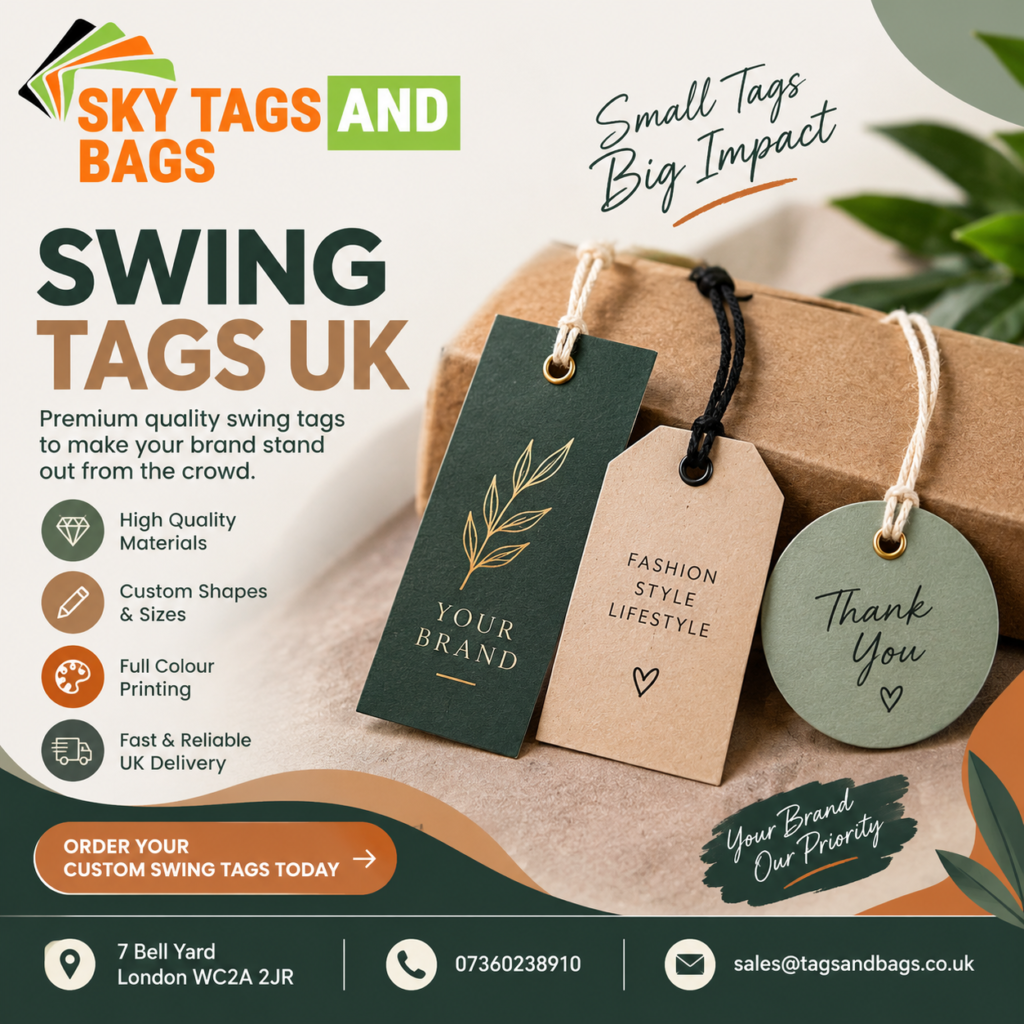
In retail and e-commerce, product presentation plays an important role in shaping customer perceptions. Before customers assess quality, durability or value, they often notice the small details that make a product look organised and professional. Swing tags are one such detail, providing essential product information while supporting a consistent brand identity.
From clothing boutiques and fashion retailers to independent designers and online businesses, well-planned swing tags can serve several practical purposes. They can display prices, product codes, care instructions and brand details without requiring additional packaging. Understanding the available materials, printing options and design considerations helps businesses select tags that meet their operational and presentation needs.
Understanding the Purpose of Swing Tags in Retail
Swing tags are labels attached to products using string, ribbon, pins or other fastening methods. They are commonly associated with clothing, but their applications extend to accessories, handmade goods, gift items and selected packaged products.

A well-designed tag combines useful information with an appropriate visual style. For example, a clothing retailer may include a brand name, garment size and price, while a handmade jewellery business might highlight materials, product care or the story behind an item.
Businesses can use swing tags to:
- Display pricing, sizes and stock-keeping information.
- Communicate brand names, logos and product details.
- Provide care instructions or material descriptions.
- Support seasonal collections, promotions and gift packaging.
- Create a consistent appearance across different product ranges.
When the information is easy to read and the tag suits the product, it can improve the overall shopping experience. The most effective design is not necessarily the most elaborate; it is the one that balances appearance, practicality and cost.
Materials, Shapes and Printing Options
Choosing the right material is an important step when planning Swing tags for a retail collection. The material affects durability, print quality, perceived value and suitability for different products.
Cardstock is a common choice because it supports a wide range of printing styles and finishes. Lightweight paper may suit simple, temporary labels, while thicker card can provide greater rigidity for premium clothing, accessories and gift items. Recycled and responsibly sourced paper options may also appeal to businesses seeking to communicate environmental considerations.
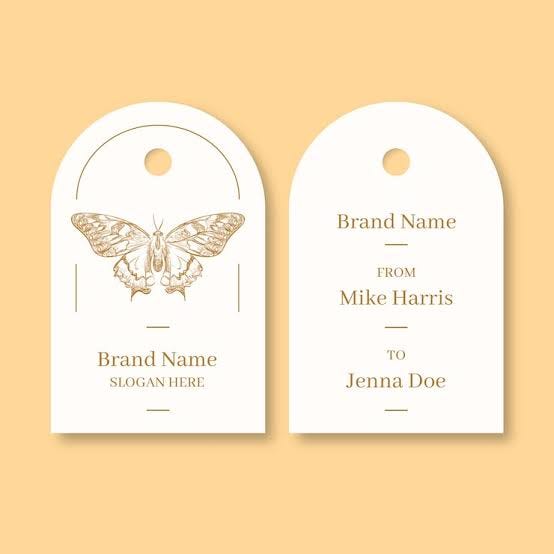
Shape and size deserve similar attention. Rectangular tags offer generous space for information, whereas square, circular and custom-shaped designs can help a collection stand out. However, unusual shapes should remain practical to handle, attach and store.
Printing options can include:
- Full-colour printing: Useful for detailed graphics, photographs and colourful brand identities.
- Single-colour printing: Suitable for minimalist designs and straightforward product information.
- Foil detailing: Adds a metallic accent for selected premium or occasion-based products.
- Embossing or debossing: Creates a raised or recessed surface effect.
- Matte or gloss finishes: Influence the appearance, texture and readability of the finished tag.
The correct combination depends on the product, intended audience and available budget. Additional finishes can improve visual appeal, but they should not compromise legibility or make routine production unnecessarily complicated.
How to Select the Best Swing Tags for Your Business
Choosing the Best Swing tags requires more than comparing designs. Businesses should consider how tags will be used, what information they need to communicate and how they fit into the wider packaging process.
Start by identifying the essential information. A tag with too much text can become difficult to read, particularly when attached to a small product. Prioritise the brand name, product details and any legally or operationally necessary information.

Next, assess the product itself. Delicate fabrics may require lightweight tags and gentle attachment methods, while heavier garments or accessories may need stronger card and more durable fastenings.
Businesses should also evaluate the following factors:
- Brand consistency: Use typography, colours and visual elements that complement existing packaging.
- Readability: Choose suitable font sizes, strong contrast and clear spacing.
- Attachment method: Match string, ribbon or fasteners to the product’s material and weight.
- Order quantity: Estimate demand carefully to avoid unnecessary stock and outdated printed information.
- Production quality: Review samples for colour accuracy, cutting precision and material strength.
For businesses researching Swing tags uk suppliers, it is also sensible to check production specifications, delivery expectations, available customisation and minimum order quantities. Reviewing a physical sample, where possible, can help identify problems that may not be obvious on a digital proof.

Affordable Swing Tags Without Sacrificing Quality
Managing packaging expenses is important for small retailers, growing fashion brands and established businesses alike. However, reducing costs should not automatically mean choosing the thinnest material or the simplest design.
Businesses looking for affordable Swing tags can control spending through practical decisions. Standard shapes and sizes often reduce production complexity, while limiting unnecessary finishes can help keep specifications manageable. Ordering an appropriate quantity may also reduce the cost per unit, although excessive ordering can create waste if product details or branding change.
Another useful approach is to create a flexible design template. Keeping the logo, typography and core visual identity consistent while allowing product-specific information to change can simplify future orders.
Before approving a production run, check:
- Whether the quoted price includes printing, finishing and fastening materials.
- Whether artwork setup or design adjustments involve additional charges.
- Whether the selected card weight meets the intended use.
- Whether the final proof matches the approved colours, dimensions and text.
- Whether the order quantity reflects realistic sales forecasts.
Suppliers such as Tags and Bags provide a reference point for businesses exploring customised options through their swing tags range. Comparing specifications rather than price alone helps retailers make decisions that account for both immediate costs and long-term usability.

Emerging Trends in Swing Tag Design
Retail packaging continues to evolve as businesses balance brand differentiation, operational efficiency and environmental considerations. Minimalist layouts, tactile finishes and distinctive typography remain useful approaches for creating recognisable product presentation without overcrowding the design.
Sustainability is another consideration. Some businesses are exploring recycled paper, responsibly sourced card and reduced-plastic packaging components. However, environmental claims should be accurate and supported by relevant material information rather than relying on vague descriptions.
Digital integration can also expand the role of a tag. A QR code may direct customers to product information, care guidance, a digital catalogue or a brand’s website. To work effectively, the code needs sufficient space, adequate contrast and testing before mass production.
These developments demonstrate that swing tags can function as more than decorative accessories. When designed thoughtfully, they connect physical products with useful information and a consistent brand experience.

Conclusion
Swing tags combine product identification, practical communication and visual presentation in one compact format. Selecting suitable materials, readable layouts and appropriate finishes helps businesses create tags that support both retail operations and customer expectations.
Whether a company prioritises premium detailing, straightforward labelling or cost control, the best results come from matching design decisions to actual business needs. By assessing quality, quantity, attachment methods and printing specifications before production, retailers can develop effective tagging solutions that remain practical, consistent and suitable for their products.
Contact Us : https://www.tagsandbags.co.uk/contact-us/
About Us : https://www.tagsandbags.co.uk/about-us/
Website Link : https://www.tagsandbags.co.uk/