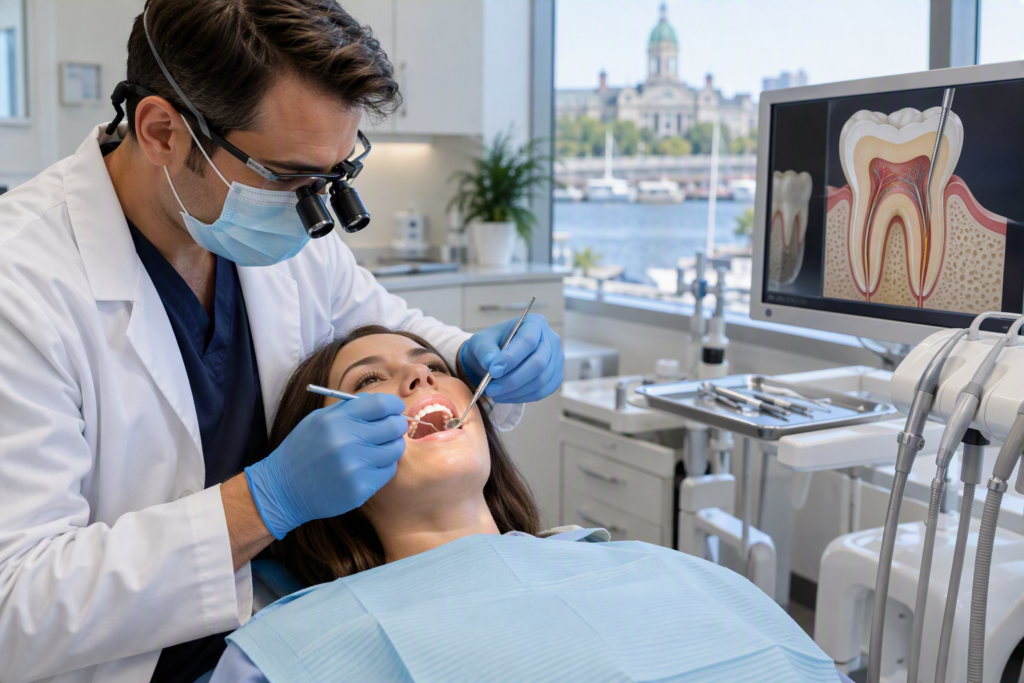
Tooth pain can make everyday activities such as eating, drinking, and sleeping uncomfortable. When the discomfort comes from infection or inflammation inside a tooth, root canal treatment may help relieve symptoms and preserve the natural tooth. Instead of removing the tooth, this procedure focuses on cleaning the infected area and sealing the tooth to help prevent further damage.
For patients considering root canal treatment Kingston, understanding the procedure, its benefits, and when to seek dental care can make the decision less stressful. At Cataraqui Family Dental, patients can discuss their symptoms and treatment options with a dental professional to determine the most appropriate approach for their oral health.
What Is Root Canal Treatment?
Root canal treatment is a dental procedure used to treat infection or inflammation in the pulp, the soft tissue inside a tooth that contains nerves and blood vessels. Deep decay, a cracked tooth, repeated dental procedures, or an injury can damage this tissue.
When the pulp becomes infected or severely inflamed, treatment may be needed to prevent the problem from worsening. During a root canal, the dentist removes the affected pulp, cleans and disinfects the inside of the tooth, and seals the space with appropriate filling material.
Depending on the tooth’s condition, a crown may be recommended afterward to protect the remaining structure and restore function. The exact treatment plan depends on the extent of the damage and the tooth’s overall prognosis.
Signs You May Need Root Canal Treatment
Not every toothache requires a root canal, but certain symptoms deserve professional attention. A dental examination can help identify the cause and determine whether treatment is necessary.
Common warning signs include:
- Persistent or severe tooth pain
- Sensitivity to hot or cold that lingers after the source is removed
- Pain when biting or chewing
- Swelling or tenderness around the affected tooth
- Darkening or discoloration of a tooth
- A pimple-like bump on the gums near the tooth
Some teeth with pulp damage may cause little or no pain. For this reason, symptoms alone cannot confirm whether a root canal is needed. A dentist may examine the tooth, assess its response to testing, and take dental X-rays when clinically appropriate.
Facial swelling, fever, or difficulty swallowing or breathing can indicate a serious infection. Seek urgent medical or dental care, and get emergency medical assistance for difficulty breathing or swallowing.
How a Kingston Dentist Helps Preserve Your Natural Tooth
When you visit a Kingston dentist for tooth pain, the first step is to identify the underlying cause. The dentist reviews your symptoms, examines the affected area, and discusses the findings and available treatment options with you.
If root canal treatment is appropriate, the process generally involves several steps.
- Examining the Tooth
The dentist assesses the tooth, surrounding gums, and supporting structures. Diagnostic tests and X-rays, when indicated, help evaluate the extent of the problem and whether the tooth can be restored.
- Removing the Infected Tissue
Local anesthesia is generally used to help keep the procedure comfortable. The dentist creates an opening in the tooth and removes the damaged or infected pulp from inside its root canals.
- Cleaning and Sealing the Canals
The canals are carefully cleaned, shaped, and disinfected before being filled and sealed. Depending on the case, treatment may be completed in one or more appointments.
- Restoring the Tooth
After the root canal, the tooth needs an appropriate restoration. A filling or dental crown may be recommended depending on the tooth’s location, the amount of remaining structure, and the forces placed on it during chewing.
Following the dentist’s instructions and completing the recommended restoration are important parts of protecting the treated tooth.
Benefits of Saving Your Natural Tooth
Preserving a natural tooth can offer several advantages when the tooth is suitable for treatment. It can help maintain normal chewing function, support the natural alignment of neighboring teeth, and avoid extraction when possible.
Keeping the tooth may also prevent the need to consider replacement options, such as a dental bridge or implant. However, root canal treatment cannot save every tooth. Extensive fractures, insufficient remaining tooth structure, or severe supporting-tissue damage may affect whether the tooth can be retained.
Your dentist can explain the likely benefits, limitations, risks, and alternatives so you can make an informed decision.
What to Expect After Root Canal Treatment
Some tenderness around the treated tooth is possible for a few days, particularly if the area was already inflamed. Follow your dentist’s aftercare instructions, avoid chewing hard foods on the tooth until it has been appropriately restored, and take medication only as directed.
Contact your dental office if pain worsens, swelling develops, your bite feels uneven, or symptoms do not improve as expected. A treated tooth can last for many years with appropriate restoration, good oral hygiene, and regular dental checkups, although its long-term outcome cannot be guaranteed.
When Should You See a Dentist?
Do not ignore persistent tooth pain or assume it will resolve on its own. Early assessment may help identify the problem before it progresses and allow you to consider suitable treatment options.
At Cataraqui Family Dental in Kingston, ON, patients can discuss concerns about tooth pain, possible infection, and treatments intended to preserve natural teeth. Every case is different, so recommendations should be based on an individual examination rather than symptoms alone.
If you are experiencing tooth discomfort, arrange a dental assessment to understand the cause and determine your next steps. Prompt, appropriate care may help protect your oral health and preserve your natural smile.