Ordering from an online retailer involves more than selecting a product and completing checkout. Shipping restrictions, delivery estimates, payment conditions, return eligibility, and customer support procedures can all influence the overall purchasing experience.
In the online vape retail market, these details deserve careful attention because product restrictions and delivery requirements may differ depending on the item and destination. A retailer’s website may display a product, but that does not necessarily mean it can be shipped to every location or returned under every circumstance.
Understanding the relevant policies before placing an order helps adult consumers establish realistic expectations and identify potential issues before they arise.
Understanding Shipping Eligibility Before Ordering
One of the first steps in preparing an online order is confirming whether the selected product can be shipped to the intended destination.
Shipping eligibility may depend on the product category, destination, applicable federal and state laws, local restrictions, and carrier requirements. Certain products may be subject to specific delivery limitations or may not be available in particular locations.
Consumers should therefore review the retailer’s shipping policy and confirm that the product is eligible for delivery to their address before proceeding. A general statement that a store ships within the United States should not be interpreted as a guarantee that every product can be shipped to every state.
Retailers should communicate relevant restrictions clearly so that customers can understand whether an order is eligible before investing time in checkout.
Delivery Estimates and Order Processing
Delivery estimates are useful, but they do not always represent the entire time between placing an order and receiving a package.
Order processing and carrier transit are separate stages. Processing may involve payment confirmation, inventory checks, order preparation, and dispatch. Transit time begins once the shipment enters the carrier’s delivery network, although the precise definitions used can vary by retailer.
Customers should read delivery estimates in the context of the store’s published terms. Weekends, holidays, address verification, weather, and carrier disruptions may affect the timing of an order.
When a specific delivery date matters, reviewing the retailer’s stated estimates and any applicable limitations is more reliable than assuming that a general shipping banner guarantees arrival by a particular day.
Shipping Costs and Additional Charges
The listed price of a product does not always reflect the final order total. Shipping charges, applicable taxes, and other disclosed fees may affect the amount due at checkout.
Before submitting an order, consumers should review the final total and check whether promotional offers have conditions. Free-shipping offers, for example, may depend on a minimum purchase amount, an eligible destination, or the type of product being ordered.
It is also useful to confirm whether shipping charges are refundable if an order is returned or canceled. The answer may depend on the retailer’s policy and the circumstances of the transaction.
Reviewing these details before payment helps avoid misunderstandings and makes it easier to compare the complete cost of ordering from different stores.
Tracking an Order and Handling Delays
Order tracking can help customers understand whether an order has been processed, dispatched, or transferred to a carrier. However, tracking information may not update continuously, particularly during the early stages of shipment or when a carrier is experiencing delays.
If an order appears delayed, customers should first review the latest tracking information and the retailer’s stated delivery window. If the expected timeframe has passed, contacting the store through its published support channel may help clarify the situation.
When contacting customer support, it is useful to have the order number, confirmation email, and available tracking details ready. These records help the retailer identify the transaction and investigate the issue.
Customers should also review the store’s procedure for packages that appear lost, arrive damaged, or are marked as delivered but cannot be located.
Return Eligibility and Refund Conditions
Return policies vary between retailers and may also differ by product category. Before purchasing, consumers should determine whether the item is eligible for a return and which conditions must be satisfied.
Some products may have restrictions because they have been opened, used, or removed from their original packaging. Other items may be covered by separate procedures for defects, shipping damage, or incorrect fulfillment.
A return policy should explain relevant deadlines, documentation requirements, authorization procedures, and any applicable fees. It should also clarify how refunds are handled and whether the original shipping charges are refundable.
Customers should not assume that a product can be returned simply because it is unused or because another retailer accepts similar returns. The specific terms published by the store are the appropriate starting point.
Damaged, Incorrect, or Defective Orders
Problems can occur even when a customer has carefully selected a product. An order may arrive with damaged packaging, contain an incorrect item, or reveal a defect that was not apparent before delivery.
In these situations, the retailer’s procedures for reporting and resolving order problems become particularly important.
Customers should review the store’s instructions and report the issue within the applicable timeframe. Keeping the order confirmation, photographs of visible damage, product packaging, and relevant correspondence may help document what happened.
The available remedy may depend on the circumstances, the retailer’s terms, the manufacturer’s warranty, and applicable consumer-protection laws. A damaged shipment, a fulfillment error, and a product defect are not necessarily handled through the same process.
Clear reporting procedures help both the customer and retailer establish the details needed to assess the issue.
Comparing Policies Across Online Vape Retailers
Online vape retailers can differ in their shipping arrangements, return conditions, product availability, and customer-support procedures. Names such as Element Vape, EightVape, VaporDNA, Mi-Pod, 123Vape, YummyPuffs, and ShopNVape are part of the broader U.S. online retail landscape that consumers may encounter when researching products and store policies. Rather than assuming that all retailers provide identical shipping options or return protections, shoppers should review each store’s published terms and confirm how those rules apply to the specific product and destination. The most useful comparison focuses on practical details: whether delivery is available, how shipping costs are calculated, how delays are handled, which returns are eligible, and what procedures apply when an order arrives damaged or incorrect. Reviewing these details individually gives consumers a clearer understanding of the conditions attached to a purchase.
Payment, Confirmation, and Order Records
After an order is submitted, the confirmation message and transaction records can serve as important references.
Consumers should check that the confirmation reflects the correct products, quantities, shipping destination, and total amount. If any detail appears incorrect, contacting the retailer promptly may help resolve the issue before fulfillment progresses.
It is also worth reviewing the retailer’s published payment and cancellation policies. An order may enter processing soon after submission, and cancellation options may become more limited once it has been prepared or dispatched.
Customers should keep relevant confirmation emails and order information until the transaction is complete and any applicable return or warranty period has passed.
Why Clear Store Policies Matter
Store policies are most useful when they are easy to locate, written in understandable language, and specific enough to explain what customers should expect.
A clear policy should distinguish between processing times and transit estimates, explain relevant shipping restrictions, outline return eligibility, and identify the appropriate contact channel for order problems.
Consumers should also be able to distinguish between the retailer’s own return procedures and a manufacturer’s warranty. These may cover different situations and have different requirements.
A professional-looking website alone does not establish that its policies are favorable or that every transaction will proceed without problems. Reading the actual terms and retaining order records provides a more practical basis for understanding the purchase.
A Checklist Before Completing an Online Order
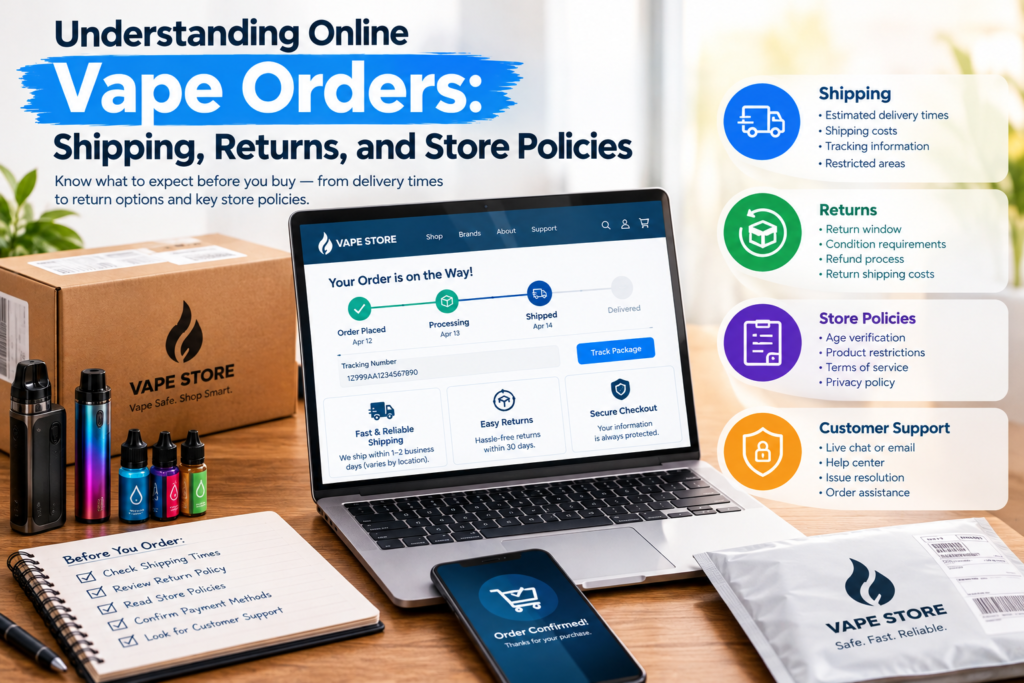
Before placing an order, adult consumers can review the following points:
-
Shipping eligibility: Can the selected product legally be shipped to the intended destination?
-
Delivery estimates: Are processing and transit expectations clearly explained?
-
Final cost: Are shipping charges, applicable taxes, and disclosed fees included in the total?
-
Tracking: Does the retailer explain how tracking information is provided?
-
Returns: Is the product eligible for return, and what deadlines or conditions apply?
-
Refunds: Are refund methods and any relevant exclusions explained?
-
Order problems: Is there a clear process for damaged, missing, incorrect, or defective items?
-
Documentation: Can the customer retain order confirmations and relevant correspondence?
Taking a few minutes to check these details can reduce uncertainty and make the terms of a purchase easier to understand.
Conclusion
Shipping, returns, and store policies are important parts of the online shopping experience. Understanding delivery eligibility, estimated timeframes, total costs, return conditions, and procedures for resolving order problems helps consumers prepare for the entire transaction rather than focusing only on the initial product selection.
Retailers including Element Vape, EightVape, VaporDNA, Mi-Pod, 123Vape, YummyPuffs, and ShopNVape can be assessed using the same practical approach: review the applicable policies, confirm destination eligibility, and understand the terms before placing an order.
Ultimately, informed purchasing begins before checkout. Clear information, careful policy review, and organized order records help adult consumers understand their options and know where to turn if a delivery or transaction does not go as expected.