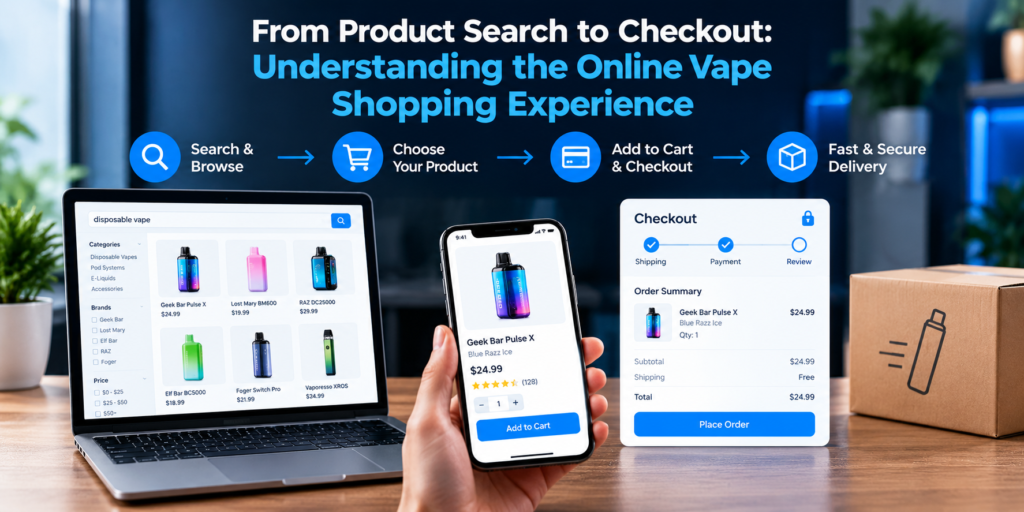
Shopping online involves much more than finding a product and clicking a purchase button. In the U.S. vape retail market, the experience often begins with a search for a particular brand or device and continues through product research, price comparisons, shipping information, and a review of store policies.
Each stage influences how easily customers can understand their options. A well-organized website helps visitors move between categories, compare relevant details, and identify the information they need before proceeding. Retailers such as 123Vape, Element Vape, and VaporDNA illustrate different storefronts that shoppers can explore when learning about the online retail landscape.
Understanding the steps involved in online shopping provides a more useful perspective than focusing on product availability alone.
1. Starting With a Product Search
The shopping journey usually begins with a question. A customer may be researching a particular brand, looking for information about a device, or comparing products within a category. The search may be broad, such as looking at different types of vape devices, or specific enough to include a product name and model.
This initial stage makes website navigation important. Search functions, category menus, brand pages, and filters can help visitors move from a general interest to a more focused selection.
For example, a multi-category retailer such as 123Vape brings together product categories that include disposable vapes, devices, e-liquids, pods, coils, and accessories. Its catalog features recognizable brands such as Geek Bar, Lost Mary, RAZ, Elf Bar, Mr Fog, and Foger.
That range creates several possible starting points for product research. A visitor might begin with a brand, explore a product category, or look for information about a specific item. Clear organization helps make those paths easier to follow.
The most useful search experience does not simply return a large number of products. It helps visitors understand which results are relevant and where to find additional information.
2. Moving From Search Results to Product Pages
Once a shopper finds a potentially relevant product, the next step is to examine its listing. Product pages should provide enough information to distinguish one item from another without forcing visitors to rely on photographs or marketing names alone.
Useful details may include:
-
The manufacturer and full product name.
-
Product type and relevant technical specifications.
-
Package contents and included accessories.
-
Compatibility information, where applicable.
-
Current price and availability.
-
Important product limitations or instructions.
These details are particularly relevant when two products have similar names or when a device requires compatible replacement components.
MyVaporStore provides another example of a retailer shoppers may encounter while researching vaping devices and related hardware. For products that use specific pods or coils, checking compatibility and package details can be just as important as comparing the listed price.
The key is to evaluate the actual product information rather than assume that items within the same category are interchangeable.
3. Comparing Brands, Formats, and Specifications
Product comparison is often where online shopping becomes more demanding. Two listings may look similar while differing in specifications, included components, dimensions, or intended compatibility.
A structured comparison begins by identifying the characteristics that matter for the product being researched. For a device, that may involve its design, power specifications, or compatible components. For a replacement part, it may mean confirming the exact device model it supports.
Brand pages can also help shoppers navigate a large assortment. A familiar manufacturer name may narrow the search, but brand recognition alone does not establish that a product is suitable for every customer or compatible with every device.
EightVape is one example of an online retailer with category and brand-based product navigation. These types of navigation tools can help visitors explore the catalog from different directions, whether they begin with a product format or a manufacturer.
For a useful comparison, shoppers should keep the same criteria in mind across all the listings they review. Comparing the full product details is more informative than relying on a single specification or promotional description.
4. Understanding Price Beyond the Product Listing
The displayed price is an important part of the decision, but it is not always the final cost of an order.
Before proceeding, shoppers should review any applicable shipping charges, taxes, minimum-order conditions, and other fees disclosed during the purchase process. Promotional offers should also be read carefully to understand eligibility requirements and whether restrictions apply.
A lower listed price does not necessarily mean a lower final total. Differences in delivery charges, product availability, and offer conditions can change the overall comparison.
Element Vape is another broad-catalog retailer that shoppers may include when comparing product listings and purchase information. As with any online store, current prices, available products, and applicable terms should be checked directly on the retailer’s website.
A practical approach is to compare the complete cost for the same or genuinely comparable products, rather than judging stores solely by the first price displayed.
5. Reviewing Shipping and Delivery Information
Shipping is a separate part of the shopping journey that deserves attention before checkout. Delivery options, charges, estimated timeframes, and destination restrictions can affect whether an order is suitable for a particular customer.
Vape products may be subject to federal requirements and state or local restrictions, and some destinations may have additional limitations. A product appearing on a website does not necessarily mean it can be shipped to every address.
Before placing an order, shoppers should look for answers to several practical questions:
-
Is delivery available to the intended destination?
-
What shipping charges and conditions apply?
-
Are delivery estimates provided, and what do they represent?
-
Are there any product-specific or location-specific restrictions?
-
What information is available if an order is delayed?
These questions are especially important when comparing retailers operating across different parts of the United States. Customers should verify the current rules and shipping terms rather than assume that every store follows the same process.
6. Checking Store Policies Before Checkout
The checkout stage should not be the first time a shopper encounters a retailer’s important policies. Reviewing those policies earlier can help clarify what happens if an item arrives damaged, an order needs assistance, or a return or warranty question arises.
A store’s policy pages may cover returns, refunds, cancellations, damaged deliveries, warranties, and customer-support procedures. The details can differ between retailers and may depend on product type, condition, timing, or applicable law.
123Vape is one of the multi-category storefronts shoppers can review when comparing products and retailer information. As with other stores, customers should consult its current published terms for the specific conditions that apply to their order rather than rely on assumptions about industry-wide practices.
It is also worth checking whether the website provides accessible contact information and clear instructions for resolving an order-related issue.
Transparent policies help customers understand the transaction before committing to it. They also provide a more meaningful basis for comparing retailers than promotional messages alone.
7. Understanding Age Verification and Legal Requirements
Responsible online retail includes age checks and compliance with applicable sales and delivery laws. In the United States, federal law prohibits the sale of tobacco products, including covered e-cigarette products, to anyone under 21.
Online customers may encounter age-verification steps during account creation, checkout, or delivery, depending on the retailer’s procedures and applicable requirements. Additional restrictions can apply according to the product and destination.
These requirements are not merely optional features of the shopping experience. They form part of the legal framework governing covered products.
Customers should provide accurate information, follow the retailer’s verification process, and confirm that the product can legally be sold and delivered to their location. Retailers should communicate relevant requirements clearly and avoid implying that all products are available in every jurisdiction.
8. The Final Review: What to Check Before Placing an Order
Before submitting an order, it helps to review the purchase as a complete transaction rather than focusing on the product alone.
A final check can include the following:
-
Product accuracy: Confirm the selected brand, model, and product type.
-
Specifications: Review the details that distinguish the item from similar products.
-
Quantity and price: Verify the number of items and the displayed prices.
-
Order total: Check shipping charges, applicable taxes, and disclosed fees.
-
Delivery information: Confirm the destination and available delivery terms.
-
Store policies: Make sure you understand the relevant return, refund, or warranty conditions.
-
Legal eligibility: Confirm that the sale and delivery are permitted for the intended destination.
-
Order confirmation: After completing an eligible purchase, review the confirmation details and retain the information needed for reference.
This final review can help identify mistakes before an order is submitted and clarify what to expect afterward.
9. What Makes an Online Shopping Experience Work Well?
The best-designed shopping experiences tend to connect each stage naturally. Search should lead to relevant categories, categories should lead to informative product pages, and product pages should make it straightforward to locate pricing, availability, and relevant policies.
Different retailers can accomplish this in different ways. A large catalog may provide extensive choice, while a more specialized assortment may help shoppers concentrate on a particular type of product. Neither model removes the need for accurate listings and clear purchasing information.
For a retailer such as 123Vape, the relationship between brand discovery and category navigation is particularly relevant because its assortment includes multiple product types and recognizable manufacturers. Other stores, including VaporDNA, Element Vape, EightVape, and MyVaporStore, offer additional points of comparison within the broader online retail environment.
Looking at each store’s actual catalog, product descriptions, current policies, and checkout information provides a more reliable basis for comparison than assuming that all online retailers offer the same experience.
Conclusion: A More Informed Approach to Online Shopping
The online vape shopping journey extends from the first product search to the final review of an order. Along the way, customers need to interpret product specifications, compare relevant options, understand the complete cost, review shipping conditions, and check the policies that govern the transaction.
Retailers contribute to this process through the way they organize their catalogs and communicate essential information. A clear website can make research easier, but shoppers still benefit from checking individual listings and verifying the terms that apply to their location and purchase.
Whether exploring the multi-category selection at 123Vape, reviewing product information at Element Vape, or comparing other retailers such as VaporDNA, EightVape, and MyVaporStore, the same principle applies: informed decisions begin with accurate information.
Understanding each step of the process makes it easier to evaluate an online store on its own merits, identify important purchasing conditions, and approach the checkout stage with a clearer understanding of the