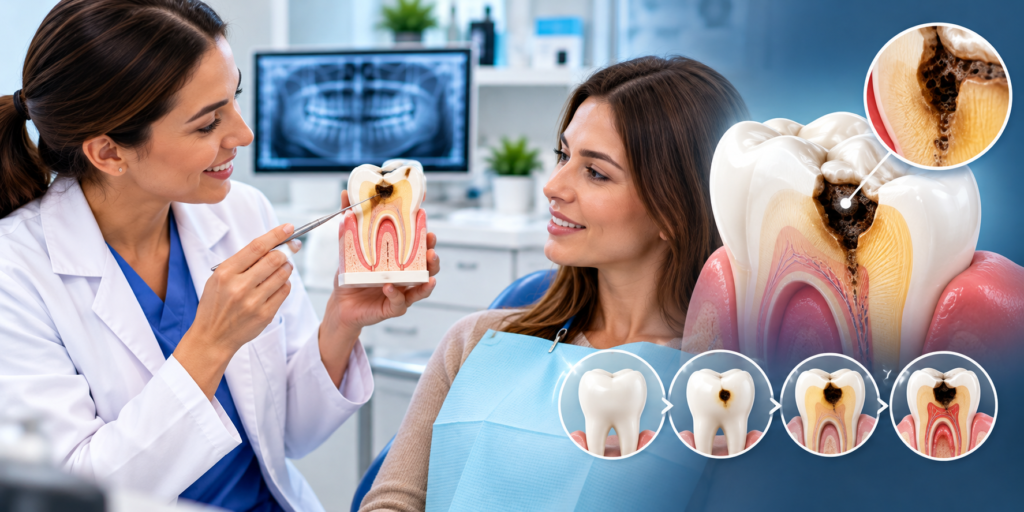
Tooth decay does not always hurt. In fact, one of the biggest problems with dental decay is that it can develop quietly while a tooth still looks and feels normal.
You may brush regularly, experience no toothache, and assume everything is fine, only to discover during a dental examination that a cavity has already formed.
This is why waiting for pain before seeing a dentist can allow a relatively small problem to become more complicated. Regular dental examinations help identify changes that may not be visible or noticeable to you at home.
A dentist in Mernda can assess your teeth, gums, and overall oral health to detect early signs of decay and recommend treatment before the damage progresses.
What Is Silent Tooth Decay?
Silent tooth decay refers to decay that develops without obvious symptoms.
A cavity can form beneath the surface of a tooth or in an area that is difficult to see. Early decay may not cause pain because the damage has not yet reached the deeper layers containing the tooth’s sensitive nerve tissue.
This can create a false sense of security.
You might assume that a tooth is healthy because you can eat normally and do not experience sensitivity. However, the absence of pain does not necessarily mean the absence of decay.
Dental examinations allow your dentist to look for changes that you may not notice during your everyday routine.
Why Does Tooth Decay Sometimes Cause No Pain?
Tooth decay develops progressively.
The outer layer of the tooth, called enamel, does not contain nerves. When decay initially affects enamel, you may not experience pain.
As the decay progresses into dentine, you may begin noticing sensitivity or discomfort. If the decay reaches the pulp, where the tooth’s nerves and blood vessels are located, pain can become more significant.
However, symptoms do not always follow a predictable pattern.
Some people may experience sensitivity early, while others may notice very little until the decay becomes extensive.
This is one reason professional examinations remain important even when you feel completely comfortable.
Where Can Hidden Tooth Decay Develop?
Decay can occur in several areas of the mouth, including places that are difficult to inspect yourself.
Common locations include the grooves and pits on the chewing surfaces of back teeth, between teeth, around existing restorations, and near the gumline.
The spaces between teeth are particularly difficult to evaluate by simply looking in a mirror.
Food particles and plaque can accumulate in these areas, and if cleaning is inadequate, decay can develop without an obvious visible cavity.
Your dentist in Mernda can assess these harder-to-reach areas during a comprehensive examination.
Early Decay May Look Like a Small Change
A cavity does not always appear as a large dark hole.
Early changes may appear as white or chalky areas on the enamel. As the decay progresses, the affected area may become brown, grey, or darker.
However, appearance alone cannot reliably determine the severity of decay.
A small-looking area may involve more extensive changes beneath the surface, while a noticeable stain may not necessarily represent active decay.
Professional assessment is therefore important before assuming that a mark on a tooth is simply cosmetic staining.
Dental X-Rays Can Help Find Hidden Decay
Some cavities cannot be easily identified during a visual examination.
Dental X-rays can provide information about areas that are difficult to inspect directly, including certain spaces between teeth.
Your dentist may recommend dental imaging based on your age, oral health, previous dental history, symptoms, risk factors, and clinical findings.
X-rays are not necessarily required at every appointment for every patient. Your dentist can determine when imaging is appropriate as part of an individualised approach to diagnosis.
Why Regular Dental Examinations Matter
One of the simplest ways to reduce the risk of undetected tooth decay is to maintain regular dental appointments.
Routine examinations give your dentist an opportunity to monitor changes over time.
This is important because a dentist who knows your dental history can compare current findings with previous examinations and identify changes that may otherwise be difficult to notice.
Regular appointments can also identify other oral health concerns, including gum disease, worn restorations, cracks, and changes around existing dental work.
The appropriate frequency of dental visits depends on your individual needs and risk factors.
You Can Have Good Oral Hygiene and Still Develop Decay
Brushing and flossing are essential, but they do not eliminate every risk.
Tooth decay can be influenced by factors such as dietary habits, frequency of sugar exposure, saliva flow, oral bacteria, existing dental restorations, tooth anatomy, and certain medications or health circumstances.
Some people may therefore have a higher risk of developing cavities despite maintaining a consistent oral hygiene routine.
This does not mean brushing and flossing are ineffective. It means prevention involves several factors working together.
Your dentist can help identify areas where your personal routine may need adjustment.
Sugar Frequency Matters, Not Just the Amount
Many people focus on how much sugar they consume but overlook how frequently they consume it.
Repeated exposure to sugary foods and drinks gives oral bacteria more opportunities to produce acids that contribute to enamel damage.
Frequent snacking, sipping sweetened beverages throughout the day, or consuming sugary foods between meals can increase the number of acid attacks affecting the teeth.
Reducing unnecessary frequency can therefore be an important part of a cavity-prevention strategy.
Water is generally a better choice between meals than regularly consuming sweetened drinks.
Dry Mouth Can Increase the Risk of Tooth Decay
Saliva plays an important role in protecting teeth.
It helps wash away food particles and contributes to the neutralisation of acids in the mouth.
When saliva production decreases, the mouth may become more vulnerable to tooth decay.
Dry mouth can have several causes, including certain medications, dehydration, and other circumstances.
If you regularly experience a dry or sticky feeling in your mouth, difficulty swallowing dry foods, or a persistent need to drink water, mention it to your dentist.
Managing the underlying cause and improving moisture in the mouth may help reduce oral health risks.
Existing Fillings Do Not Make a Tooth Immune to Decay
A tooth that already has a filling can develop decay again.
Decay may form around the edges of an existing restoration, particularly when plaque accumulates in areas that are difficult to clean.
Dental fillings can also wear down over time.
This does not mean every old filling needs replacement. Your dentist can assess its condition and determine whether it remains functional.
Regular examinations help monitor existing restorations and identify changes before they become more serious.
Gumline Decay Can Be Easy to Miss
The area where the tooth meets the gum can sometimes be difficult to clean effectively.
Plaque accumulation around the gumline can contribute to both gum disease and decay, particularly if part of the tooth root becomes exposed due to gum recession.
Root surfaces are less resistant to acid than enamel, making them more vulnerable once exposed.
If you notice gum recession, increased sensitivity, or changes around the gumline, discuss them with your dentist.
Tooth Sensitivity Can Be a Warning Sign
Tooth sensitivity does not always mean you have a cavity, but it should not automatically be dismissed.
Sensitivity to cold, hot, sweet foods, or pressure can have several causes, including enamel wear, gum recession, cracks, exposed dentine, or tooth decay.
If sensitivity is new, persistent, worsening, or affecting your daily routine, arrange a dental assessment.
Your dentist can determine the likely cause instead of relying on guesswork.
Bad Breath May Sometimes Be Linked to Dental Problems
Persistent bad breath can have many causes, and it is not always related to tooth decay.
However, ongoing plaque accumulation, gum disease, decay, infection, or food trapped around damaged teeth can contribute to unpleasant odours.
If bad breath continues despite brushing, flossing, and cleaning your tongue, speak with a dental professional.
Identifying the underlying cause is more useful than repeatedly trying to mask the smell with mouthwash or breath fresheners.
What Happens If Silent Decay Is Left Untreated?
Early decay can sometimes be managed with preventive or minimally invasive approaches, depending on how advanced it is.
As decay progresses, more tooth structure can be lost.
A larger cavity may require a filling. If decay reaches the pulp, more extensive treatment may be required to address infection or preserve the tooth.
In severe cases, extraction may become necessary.
This is why early detection matters. Treating a problem while it is smaller can often provide more options than waiting until significant damage has occurred.
How Dentists Treat Tooth Decay
Treatment depends on the stage and location of the decay.
Very early enamel changes may sometimes be managed with preventive measures and improved fluoride exposure, depending on the circumstances.
A cavity involving actual loss of tooth structure may require a restoration such as a filling.
If decay has progressed into the pulp, root canal treatment may be considered to remove infected tissue and preserve the tooth where appropriate.
The dentist will assess the tooth before recommending treatment.
There is no single treatment that applies to every cavity.
How to Reduce Your Risk of Silent Tooth Decay
Prevention starts with consistent daily habits.
Brush your teeth twice a day using fluoride toothpaste and clean between your teeth regularly. Limit frequent consumption of sugary foods and drinks, particularly between meals.
Drink water regularly and avoid using sugary beverages as your main source of hydration.
Keep up with professional dental examinations even when your teeth feel fine.
If you have a higher risk of decay, your dentist may recommend additional preventive measures based on your oral health.
When Should You See a Dentist?
Do not wait for severe pain before arranging an appointment.
You should consider seeing a dentist in Mernda if you notice:
- New or persistent tooth sensitivity
- A visible hole or change in a tooth
- Food repeatedly becoming trapped in one area
- Tooth discolouration that concerns you
- Swelling around a tooth or gum
- Persistent bad breath
- Pain when biting
- A broken or damaged filling
However, you do not need to wait until any of these symptoms appear.
Routine dental examinations are designed to identify problems before they become obvious.
What Every Patient Should Remember About Silent Decay
The most important lesson is simple: a lack of pain does not guarantee healthy teeth.
Tooth decay can develop quietly, particularly in areas that are difficult to see or clean. By the time a cavity becomes painful, the damage may already be significant.
Regular dental examinations, good daily oral hygiene, sensible dietary habits, and early professional advice can all help reduce the risk of advanced decay.
Your dentist is not simply looking for cavities. They are monitoring changes in your oral health and helping you maintain your teeth over the long term.
Conclusion
Silent tooth decay is a reminder that oral health problems do not always announce themselves with pain.
A tooth can appear normal and feel completely comfortable while decay develops beneath the surface or in a difficult-to-see area. Regular dental examinations allow these changes to be identified earlier, giving you a better opportunity to address them before they progress.
Smileology takes a prevention-focused approach to dental care in Mernda, helping patients maintain healthy teeth and gums through regular examinations, personalised advice, and appropriate treatment when problems are identified.
Our experienced dental team understands that every patient has different oral health needs, which is why we take the time to assess your individual circumstances rather than relying on a one-size-fits-all approach.
You do not need to wait for a toothache before taking your oral health seriously.
Book an appointment with our dentist in Mernda today for a comprehensive dental examination and give your teeth the attention they need, even when everything feels perfectly fine.