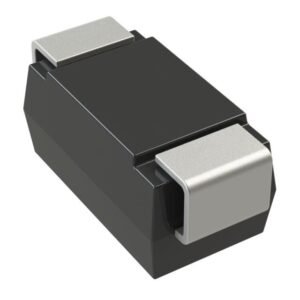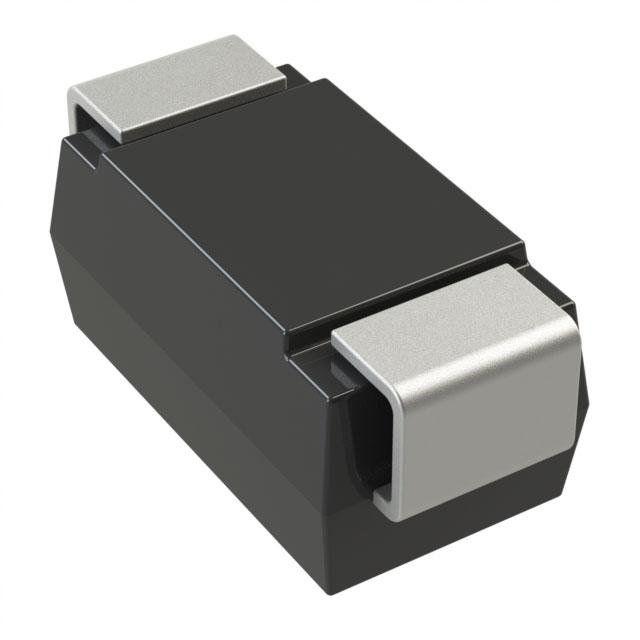
Thyristors
Power electronics sits at the heart of modern electrical systems. From industrial machinery and renewable energy installations to railway traction, electric heating, motor drives, and high-voltage transmission, today’s equipment depends on reliable methods of controlling electrical energy. Thyristors continue to play an important role in this field because they can regulate significant amounts of power with efficient semiconductor switching.
Thyristors are solid-state devices designed to control the movement of electrical current. They are widely used where high voltage, high current, dependable switching, and controlled power delivery are required. Unlike ordinary mechanical switches, thyristors have no moving contacts. This allows them to operate rapidly, repeatedly, and with reduced mechanical wear.
Their value becomes especially clear in demanding applications where the switching device must withstand electrical stress while maintaining stable performance over long periods.
What Exactly Is a Thyristor?
A thyristor is a semiconductor switching device generally built from four alternating layers of semiconductor material. These layers are commonly arranged in a P-N-P-N structure.
A basic thyristor normally contains three terminals:
- Anode
- Cathode
- Gate
The anode and cathode form the primary current path, while the gate is used to initiate conduction.
Before being triggered, a thyristor can block current even when forward voltage is applied. Once the correct gate signal reaches the device, its internal structure changes state and current begins to flow between the anode and cathode.
This behaviour makes the thyristor useful as an electronically controlled high-power switch.
Why Is the Latching Effect So Important?
One of the most important characteristics of many thyristors is their ability to latch into the conducting state.
Once the device has been successfully triggered and sufficient current is flowing, the gate signal is usually no longer required. The thyristor stays on until current through the main path falls below a certain level known as the holding current.
This latching action provides an efficient method of power switching.
The control circuit does not need to continuously supply a gate signal throughout the conduction period. Instead, a short trigger can be enough to activate the main power path.
This feature is particularly useful in systems where current naturally falls to zero, such as alternating-current circuits.
How Does a Thyristor Move From Off to On?
The transition from blocking to conduction occurs when electrical conditions inside the device reach the required level.
Initially, the thyristor remains off even if forward voltage is present.
When a suitable gate pulse is applied, charge carriers begin moving through the internal semiconductor structure. Regenerative action rapidly increases conduction until the device enters its fully switched-on state.
Once conduction begins, current flows through the main terminals according to the connected load and power source.
This switching process allows a low-power control circuit to influence a much larger electrical load.
What Happens When the Current Falls?
A conventional thyristor remains active only while the current flowing through it stays above its holding-current threshold.
If the current decreases below that value, the device returns to its non-conducting state.
In AC circuits, current passes through zero during every waveform cycle. This naturally allows the device to turn off.
A new gate signal can then be applied during the next cycle.
This repeated switching behaviour is the foundation of many phase-control applications.
How Do Thyristors Control AC Power?
Alternating-current systems provide an ideal environment for thyristor-based power regulation.
Instead of allowing an entire AC waveform to reach the load, the control circuit determines the point during each cycle at which conduction begins.
This process is often referred to as firing-angle control or phase-angle control.
When the device is triggered early during the cycle, more of the waveform reaches the load. When triggering occurs later, the delivered power is reduced.
This principle is useful in applications such as:
- Electric heating control
- Lighting regulation
- Motor speed adjustment
- Industrial process control
- AC voltage regulation
- Power conditioning
Because the thyristor switches rather than continuously dissipating unused power, this method can provide efficient load regulation.
Which Thyristor Types Are Used in Modern Circuits?
The thyristor family includes several semiconductor devices developed for different control requirements.
Silicon Controlled Rectifiers
Silicon Controlled Rectifiers, commonly called SCRs, are among the best-known thyristor devices.
They mainly conduct current in one direction and are frequently used in controlled rectifiers, motor drives, high-current charging equipment, and industrial power systems.
An SCR can be triggered through its gate and typically remains conducting until its main current falls below the holding-current level.
TRIACs
TRIACs provide bidirectional current control.
Instead of controlling only one direction of current, they can conduct during both halves of an AC waveform.
This makes them suitable for:
- Household dimmers
- Fan regulators
- Small motor controls
- Electric heaters
- Appliance power controllers
- AC switching circuits
Their ability to manage both polarities simplifies many lower- and medium-power AC control designs.
DIACs
A DIAC is usually used as a triggering component rather than as the main load switch.
It can conduct after a certain breakover voltage is reached and is commonly paired with a TRIAC.
This arrangement helps provide consistent triggering in phase-control circuits.
Gate Turn-Off Thyristors
Gate Turn-Off thyristors, known as GTOs, offer additional control because they can be switched off through the gate.
This is different from conventional SCRs, which normally require current to fall below the holding level before they turn off.
GTO technology has historically been used in:
- Railway traction
- Large industrial drives
- High-power converters
- Heavy electrical equipment
Light-Triggered Thyristors
Some high-power thyristors can be activated using light.
Optical triggering creates strong electrical isolation between the control section and the high-voltage power stage.
This can be useful in specialised transmission and converter systems where electrical isolation is especially important.
Why Are Thyristors Effective in Controlled Rectifiers?
Controlled rectification is one of the most important applications of thyristor technology.
A conventional diode rectifier converts AC into DC automatically whenever the diode becomes forward biased.
A thyristor-based rectifier provides more control.
The circuit can delay the point at which the device begins conducting. This changes the average DC output voltage.
As a result, engineers can create adjustable DC power from an AC source.
Controlled rectifiers are used in applications such as:
- Industrial DC power systems
- Battery chargers
- Electroplating equipment
- Welding machines
- DC motor drives
- High-current process equipment
This flexibility makes thyristors useful wherever DC output needs to be regulated rather than fixed.
How Do Thyristors Improve Motor Starting?
Large electric motors can draw significant current when connected directly to full supply voltage.
This sudden inrush can place stress on electrical infrastructure and mechanical components.
A thyristor-based soft starter gradually controls the voltage reaching the motor during startup.
Instead of immediately applying full voltage, the controller increases the delivered power smoothly.
This can help reduce:
- Starting current
- Mechanical shock
- Belt stress
- Coupling wear
- Sudden torque
- Voltage disturbances
Once the motor reaches the required operating condition, the system can provide normal running voltage.
Soft starters are commonly used with pumps, fans, conveyors, compressors, and other industrial motors.
Why Are Thyristors Used in Industrial Heating?
Industrial heating processes often require precise and repeatable temperature management.
Mechanical contactors can switch heaters on and off, but frequent mechanical switching causes wear and can reduce service life.
Thyristors provide a solid-state alternative.
They can regulate electrical power delivered to heating elements rapidly and repeatedly without physical contacts.
Common applications include:
- Industrial furnaces
- Drying ovens
- Plastic moulding equipment
- Heat-treatment machinery
- Packaging systems
- Food-processing equipment
- Chemical production processes
Accurate electrical control can help maintain stable process temperatures and improve manufacturing consistency.
What Role Do Thyristors Play in Electric Transportation?
Electric transportation systems require large amounts of electrical energy to be converted and controlled efficiently.
Historically, thyristors have been widely used in traction systems for trains, trams, and other electrically driven transport.
They can support:
- Traction motor regulation
- Power conversion
- High-current rectification
- Speed control
- Energy management
Newer technologies such as IGBTs and advanced wide-bandgap semiconductors have replaced thyristors in some high-frequency applications, but thyristor-based equipment remains important in many heavy-duty installations.
Their ability to manage substantial current continues to make them useful in selected transportation and infrastructure systems.
How Are Thyristors Connected to High-Voltage Power Transmission?
Some of the most demanding thyristor applications can be found in high-voltage direct-current transmission.
HVDC systems are used to transmit large amounts of electricity over long distances.
Converter stations are required to transform electricity between AC and DC.
High-power thyristor valves have historically played a major role in these conversion systems.
Their high voltage and current capability makes them suitable for handling the enormous energy levels involved.
Multiple devices can be connected together to create valve structures capable of operating at transmission-level voltages.
This demonstrates the enormous scale at which thyristor technology can operate.
What Specifications Should Engineers Check Before Selecting Thyristors?
Selecting a suitable device requires careful examination of the datasheet.
Important characteristics include:
- Repetitive peak off-state voltage
- Reverse voltage capability
- Average on-state current
- RMS current
- Surge-current rating
- Gate trigger voltage
- Gate trigger current
- Latching current
- Holding current
- Maximum junction temperature
- On-state voltage drop
- Thermal resistance
- Turn-on time
- Rate of voltage rise
- Rate of current rise
Each specification relates to a specific operating condition.
A device that appears suitable based only on current rating may still fail if the circuit exceeds its voltage, thermal, or switching limits.
Why Does the Rate of Voltage Rise Matter?
A thyristor can sometimes turn on unintentionally if voltage across the device rises too quickly.
This behaviour is associated with the rate of change of voltage, commonly expressed as dv/dt.
Rapid voltage changes can generate internal displacement current within the semiconductor structure.
If this internal current becomes sufficient, unintended triggering may occur.
Designers often use snubber circuits to reduce this risk.
An RC snubber placed around the device can slow sudden voltage changes and improve switching stability.
Why Is the Rate of Current Rise Important?
When a thyristor first turns on, conduction does not instantly spread across the entire semiconductor junction.
If current rises too rapidly, a small region of the device may temporarily carry an excessive amount of current.
This can create concentrated heating and damage the semiconductor structure.
The rate of current increase is commonly known as di/dt.
Inductors and other current-limiting techniques may be used where necessary to prevent excessive di/dt during turn-on.
How Does Thermal Management Affect Thyristor Reliability?
Heat is one of the most important considerations in power semiconductor design.
Even efficient Thyristors generate heat while carrying current because there is a voltage drop across the device.
Power dissipation increases as current rises.
Without adequate cooling, the junction temperature can exceed the safe operating limit.
Designers may use:
- Aluminium heat sinks
- Thermal interface materials
- Forced-air cooling
- Liquid cooling in high-power systems
- Temperature sensors
- Correct mounting pressure
- Appropriate cabinet ventilation
Proper thermal design helps maintain electrical performance and extends component life.
What Protection Components Are Commonly Used Around Thyristors?
Power circuits often experience abnormal conditions such as overvoltage, short circuits, switching spikes, and temporary overloads.
Protective components help reduce the risk of thyristor failure.
Common solutions include:
- Semiconductor fuses
- RC snubbers
- Surge suppressors
- Metal oxide varistors
- Current-limiting reactors
- Gate protection resistors
- Electrical isolation devices
- Thermal protection systems
Protection should be selected according to the voltage, current, and operating environment of the circuit.
How Can Thyristors Provide Overvoltage Protection?
A particularly interesting use of thyristors is the crowbar protection circuit.
In a crowbar design, the thyristor remains inactive during normal operation.
If the circuit detects an excessive voltage, the thyristor is immediately triggered.
This produces a low-resistance path across the power supply output.
The resulting current causes a fuse, circuit breaker, or other protective device to disconnect the supply.
The objective is to protect sensitive equipment from damaging overvoltage.
Although this approach intentionally creates a high-current condition, it does so in a controlled way to protect more valuable components.
How Are Thyristors Different From Power Diodes?
Both thyristors and diodes can carry substantial electrical current, but they behave differently.
A diode begins conducting automatically when it becomes forward biased.
A thyristor can remain off under forward voltage until it receives a trigger signal.
This means a thyristor provides an additional level of control.
In rectification systems, diodes are ideal when a fixed output is required, while thyristors are valuable when the output must be regulated.
How Do Thyristors Compare With MOSFETs?
MOSFETs are widely used in modern switching power supplies because they can switch extremely quickly.
They are particularly effective in applications involving high-frequency operation.
Thyristors generally do not provide the same level of high-frequency switching performance.
However, Thyristors can offer exceptional current and voltage capability and are highly suitable where switching frequency is relatively low.
The choice between them depends on factors including:
- Operating voltage
- Current level
- Switching frequency
- Efficiency
- Control requirements
- Thermal conditions
- Cost
How Do Thyristors Compare With IGBTs?
IGBTs are commonly used in motor drives, renewable energy converters, and industrial inverters.
Unlike conventional thyristors, IGBTs can be turned on and off directly using their gate control.
This offers greater switching flexibility.
Thyristors, however, remain highly attractive in certain extremely high-power applications because of their rugged conduction characteristics and strong blocking capabilities.
Choosing between IGBTs and Thyristors depends on system requirements rather than assuming one technology is always superior.
What Industries Depend on Thyristor Technology?
Thyristors appear across a wide variety of industrial sectors.
Their use can be found in:
- Manufacturing
- Power generation
- Electricity transmission
- Railway systems
- Mining
- Metal processing
- Chemical production
- Welding
- Industrial heating
- Motor control
- Battery charging
- Building automation
The common requirement across these sectors is the need to handle substantial electrical energy reliably.
Why Is Reliability a Major Advantage of Thyristors?
Solid-state construction gives Thyristors an important reliability advantage over mechanical switching devices.
There are no moving contacts to wear out.
There is no repeated physical opening and closing action.
When installed correctly and operated within their rated limits, thyristors can provide consistent switching over long service periods.
However, reliable performance still depends on proper design.
Electrical oversizing, adequate cooling, surge protection, and correct gate control are all important.
How Can Thyristors Support Energy Efficiency?
Modern industries are under pressure to reduce energy consumption and improve electrical efficiency.
Thyristors contribute by enabling controlled delivery of power.
Instead of running certain loads continuously at maximum power, systems can regulate the amount of electrical energy supplied according to actual demand.
Potential benefits include:
- Lower unnecessary power consumption
- Better motor startup control
- More accurate heating regulation
- Improved process stability
- Reduced mechanical stress
- Controlled conversion efficiency
The exact savings depend on the application and control method, but efficient semiconductor switching remains an important part of modern energy management.
Why Are Thyristors Still Relevant When New Semiconductor Technologies Exist?
Power semiconductor technology continues to evolve rapidly.
MOSFETs, IGBTs, silicon carbide devices, and gallium nitride technologies now offer capabilities that were not available in earlier power systems.
Even so, Thyristors continue to hold an important position.
Their strengths remain particularly valuable where systems require:
- Very high current
- High voltage blocking
- Robust power handling
- Reliable latching behaviour
- Low conduction losses
- Established industrial technology
The best semiconductor device is always determined by the operating requirements of the system.
Newer does not automatically mean better for every application.
What Does the Future Look Like for Thyristors?
Future power systems will continue to demand reliable methods of controlling increasing amounts of electricity.
Industrial electrification, renewable energy integration, infrastructure expansion, automated manufacturing, and large-scale energy transmission will all require sophisticated power electronics.
Thyristors are likely to remain valuable in applications where their electrical strengths closely match the system requirements.
Their role may change as newer switching technologies become more common, but high-power thyristor solutions continue to offer characteristics that are difficult to replace in certain environments.
Why Do Thyristors Remain a Powerful Choice for Electrical Control?
Thyristors have earned their place in power electronics because they combine strong electrical capability with efficient and dependable switching.
They can control motors, regulate heaters, manage rectifiers, protect circuits, and support power-conversion systems ranging from industrial equipment to major electrical infrastructure.
Their ability to control large electrical loads using relatively small trigger signals makes them especially valuable in high-power environments.
As electrical systems continue to become more automated, energy-conscious, and power-intensive, Thyristors will remain an important technology wherever reliable control of voltage and current is essential.
Their long history does not make them outdated. Instead, it highlights how effectively their operating principles continue to meet demanding electrical requirements across modern power engineering.