The Future of Energy Infrastructure: Why Integrated Execution is Reshaping Energy Delivery
Developing complex energy infrastructure has never been a walk in the park, but today’s market demands a level of agility that traditional project models struggle to keep up with. Rising material costs, tightening environmental standards, and increasingly volatile global markets mean that standard fragmented delivery models—where engineering, procurement, and construction are sliced up and handed to different vendors—often lead to bloated budgets and extended timelines.
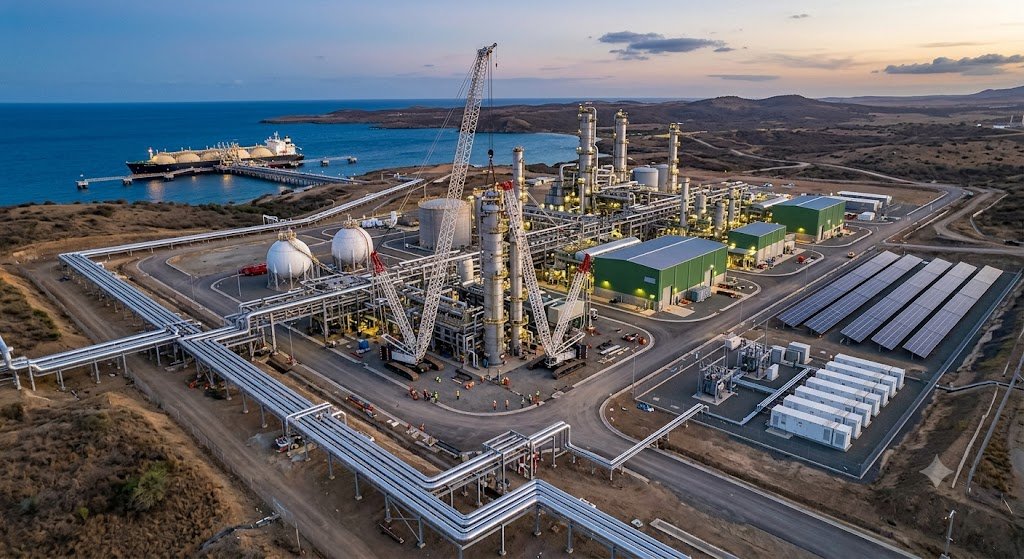
To keep pace, forward-thinking energy companies are moving away from piecemeal Contracting in favor of streamlined, single-source models. By leveraging turnkey oil and gas project solutions, energy firms can eliminate the friction between separate phases of development, transferring full lifecycle accountability to a single specialized partner.
Here is a look at why this integrated approach is becoming the standard for modern energy developments, and how it directly tackles the biggest bottlenecks in energy infrastructure.
The Challenge with Legacy Project Execution
In a traditional setup, an operating company hires one firm to handle initial engineering designs, contracts another to procure long-lead items, and brings in a third-party contractor to handle field construction and commissioning. While this allows companies to shop around for individual components, it introduces significant operational vulnerabilities:
- Siloed Accountability: When delays or design flaws emerge during construction, contractors often point fingers back at the engineering firm. The operator gets caught in the middle, managing disputes instead of progress.
- Scope Creep and Change Orders: Small gaps in communication between design engineers and procurement teams often manifest as costly change orders once field crews start building.
- Extended Timelines: Managing multiple RFPs, contract handoffs, and coordination meetings creates administrative drag that eats away at the project schedule.
In an industry where getting to first production quickly dictates profitability, these friction points add real financial risk.
Key Strategic Advantages of Integrated Execution
When a client hands over total responsibility for a project—from conceptual design to final startup—the dynamics shift completely. A single point of contact oversees engineering, material sourcing, field construction, and testing.
TRADITIONAL MODEL INTEGRATED TURNKEY MODEL
+——————————+ +——————————+
| Engineering Firm A | | |
+————–+—————+ | |
| Handoff | |
+————–v—————+ | SINGLE TURNKEY PARTNER |
| Procurement Vendor B | VS. | |
+————–+—————+ | Engineering • Procurement |
| Handoff | Construction • Commissioning |
+————–v—————+ | |
| Construction Firm C | | |
+——————————+ +——————————+
(High risk of scope gaps) (Single point of accountability)
1. Unified Risk Management
In an end-to-end delivery framework, the primary contractor absorbs the technical and logistical risks. Because the team that designs the facility is also responsible for fabricating and commissioning it, they are incentivized to create practical, constructible designs from day one. Engineering flaws can’t be pushed downstream because the turnkey partner owns the eventual outcome.
2. Accelerated Delivery Cycles
Fast-tracking becomes standard practice rather than an emergency measure. Procurement teams can place orders for long-lead equipment—such as specialized pumps, pressure vessels, or compression packages—while engineering detail work is still being refined. Because the engineering and procurement arms sit within the same organization, specifications are aligned immediately without waiting through lengthly external approval cycles.
3. Clear Cost Visibility
Contracting out individual phases makes accurate budgeting difficult until late in the project lifecycle. Comprehensive project packages lock in scope and pricing early, providing capital efficiency and financial predictability. This transparency is critical for operators securing project financing or managing tight capital budgets.
Where Integrated Projects Deliver the Highest Value
While comprehensive management benefits nearly every major build, certain sectors within energy production see immediate returns from this consolidated model:
| Sector / Facility | Strategic Value Delivered |
| Upstream Field Development | Rapid deployment of modular production units, wellsite hookups, and central gathering plants to accelerate initial cash flow. |
| Midstream & Distribution | Coordinated execution of pipeline networks, booster stations, and storage terminals across varied geographical terrains. |
| Refining & Processing Upgrades | Seamless integration of new processing units or environmental retrofits into operating facilities during scheduled turnarounds. |
| Offshore Operations | Highly synchronized logistics and modular offshore platform integration where delay costs on water are astronomical. |
Essential Capabilities of a Qualified Execution Partner
Not every contractor has the infrastructure to manage full end-to-end execution. Companies seeking a partner to take an asset from site assessment to live production should evaluate several core competencies:
- In-House Technical Expertise: The partner must possess deep internal engineering expertise across civil, mechanical, structural, and electrical disciplines. Relying heavily on sub-tier subcontractors defeats the purpose of single-source delivery.
- Supply Chain and Vendor Networks: Established relationships with major equipment manufacturers ensure priority slotting for critical equipment, mitigating global supply disruptions.
- Rigorous HSE Culture: Field safety directly impacts project timelines. A partner must demonstrate a proven safety track record and stringent quality management protocols across all field operations.
- Digital Project Management: Advanced project control platforms—offering real-time progress monitoring, digital twin tracking, and predictive maintenance planning during commissioning—keep costs transparent and progress on track.
Navigating the Energy Transition
As energy companies diversify into low-carbon infrastructure—including carbon capture and storage (CCS), hydrogen generation, and renewable natural gas (RNG)—the need for integrated engineering and construction is growing rapidly.
These new sectors often rely on novel processing setups and complex technologies that don’t have decades of standardized practices behind them. Having a unified partner who can take new process designs, procure specialized components, and construct testing or full-scale facilities minimizes the learning curve and lowers technical risk for pioneering energy developers.
Final Thoughts
The push toward operational efficiency, capital discipline, and faster time-to-market is changing how energy companies view project execution. By moving away from fragmented, multi-vendor approaches and embracing integrated execution strategies, asset owners gain greater control over costs, schedules, and safety outcomes.
In an industry where delays translate directly into lost revenue, having a trusted, single-source execution strategy is no longer just a contractual preference—it is a distinct competitive advantage.