Market Overview
The Global Uterine Fibroid Diagnostics and Therapeutics Market is expected to reach approximately US$ 832 Mn by 2027, expanding at a CAGR of 10.6% during the forecast period. The market is being supported by the increasing prevalence of uterine fibroids among women of reproductive age, growing awareness of women’s health, improvements in diagnostic technologies, and the development of minimally invasive treatment options.
Get to Know More About This Market Study: https://www.maximizemarketresearch.com/request-sample/72483/
Uterine fibroids are benign tumors that develop from the smooth muscle tissues of the uterus. They are also referred to as leiomyomas, myomas, fibroleiomyomas, or fibromyomas. Fibroids can differ considerably in size, number, and location and may occur as subserosal, intramural, or submucosal growths. Although most uterine fibroids are non-cancerous, they can produce symptoms including heavy or prolonged menstrual bleeding, pelvic pressure, abdominal swelling, lower back pain, frequent urination, and reproductive complications.
The growing availability of diagnostic procedures has improved the identification and monitoring of uterine fibroids. Ultrasound, magnetic resonance imaging (MRI), and computed tomography (CT) are among the diagnostic technologies used to evaluate the size and location of fibroids and determine an appropriate treatment approach. Ultrasound remains particularly important because it is widely available, comparatively cost-effective, and does not expose patients to ionizing radiation.
The therapeutic landscape is also evolving as healthcare providers increasingly adopt less invasive procedures. Treatment options include medication, uterine fibroid embolization, magnetic resonance-guided focused ultrasound, myolysis, endometrial ablation, hysterectomy, and myomectomy. The choice of treatment depends on factors such as fibroid size and location, symptoms, age, reproductive plans, and overall health.
The market is therefore moving toward a more patient-centric treatment model, with increasing emphasis on early diagnosis, preservation of fertility where appropriate, reduced hospitalization, and improved recovery outcomes.
Market Drivers and Trends
The increasing prevalence of uterine fibroids represents one of the major factors supporting market expansion. Fibroids are frequently identified among women during their reproductive years, creating sustained demand for diagnostic procedures and treatment services. Greater awareness of symptoms and women’s reproductive health is also encouraging patients to seek medical consultation earlier.
Get to Know More About This Market Study: https://www.maximizemarketresearch.com/request-sample/72483/
Increasing Awareness of Women’s Health
Growing awareness of gynecological conditions has encouraged women to undergo regular health examinations and diagnostic evaluations. Educational initiatives, healthcare campaigns, digital health resources, and increased access to gynecological services are helping patients recognize symptoms associated with uterine fibroids.
The increasing focus on women’s health is also encouraging healthcare systems and medical technology companies to develop improved diagnostic and therapeutic solutions. As patients become more informed about available treatment options, demand is shifting toward therapies that can effectively control symptoms while reducing recovery time.
Advancement in Diagnostic Technologies
Technological development in medical imaging is another significant growth factor. Ultrasound is widely used as an initial diagnostic tool, while MRI can provide detailed information regarding the number, size, and location of fibroids. CT may also be used in selected clinical situations.
Improvements in imaging quality, digital systems, image-guided procedures, and clinical decision-support technologies are helping physicians improve diagnostic accuracy. Artificial intelligence and advanced image-analysis capabilities are also creating opportunities for more efficient identification and characterization of abnormalities.
Growing Demand for Minimally Invasive Treatment
Patients and healthcare providers are increasingly interested in treatment approaches that reduce surgical trauma, hospitalization, and recovery time. Procedures such as uterine fibroid embolization and magnetic resonance-guided focused ultrasound have contributed to the expansion of minimally invasive treatment options.
Myomectomy also remains important for patients seeking removal of fibroids while preserving the uterus. Advances in laparoscopic, robotic-assisted, and image-guided surgical techniques are creating additional opportunities for treatment providers and medical device manufacturers.
Increasing Healthcare Expenditure
Growth in healthcare expenditure, particularly in developing economies, is improving access to diagnostic equipment, specialized gynecological services, and advanced treatment procedures. Rising investment in hospitals and specialty healthcare facilities is expected to support market development, particularly across emerging economies.
The expanding number of women of reproductive age in several developing countries further strengthens the potential patient base. Improved education and healthcare access can encourage earlier diagnosis and treatment.
Primary Market Constraints
Despite favorable growth prospects, the uterine fibroid diagnostics and therapeutics market faces several challenges.
High Cost of Advanced Equipment and Procedures
Advanced imaging systems, robotic-assisted surgical platforms, and specialized treatment technologies require substantial capital investment. The high acquisition, installation, maintenance, and operating costs associated with sophisticated medical equipment can limit adoption, particularly among smaller healthcare facilities and hospitals in developing markets.
Treatment costs can also create affordability challenges for patients where insurance coverage or public healthcare support is limited.
Regulatory Requirements
Medical diagnostic devices, pharmaceuticals, and therapeutic technologies are subject to stringent regulatory requirements. Product approvals, clinical evidence requirements, quality standards, and post-market surveillance can increase development timelines and costs for manufacturers.
Regulatory differences between countries may further complicate international product commercialization.
Limited Awareness in Developing Regions
Although awareness of women’s health is increasing, knowledge regarding uterine fibroids remains uneven across regions. Patients in underserved areas may delay medical consultation because of limited healthcare infrastructure, financial constraints, social factors, or inadequate awareness of symptoms.
This creates a gap between the potential patient population and the number of individuals receiving timely diagnosis and treatment.
Treatment-Related Challenges
Not every treatment is suitable for every patient. Treatment selection depends on factors such as fibroid location, severity of symptoms, age, fertility goals, and overall health. Surgical treatments can involve recovery periods and potential complications, while some non-surgical therapies may not be appropriate for all fibroid types.
These clinical considerations can influence treatment adoption and create demand for personalized therapeutic strategies.
Key Market Segments
The Global Uterine Fibroid Diagnostics and Therapeutics Market is segmented based on type, diagnosis, treatment, and region.
By Type
The market is segmented into:
- Subserosal Fibroids
- Intramural Fibroids
- Submucosal Fibroids
- Others
Intramural fibroids represent an important segment because they develop within the muscular wall of the uterus and can contribute to symptoms such as heavy menstrual bleeding, pelvic pressure, and abdominal discomfort. Subserosal and submucosal fibroids also require appropriate diagnostic evaluation because their location can influence symptoms and treatment selection.
By Diagnosis
The diagnostic segment includes:
- Magnetic Resonance Imaging (MRI) Scanners
- Computed Tomography (CT)
- Ultrasound
- Others
Ultrasound is expected to remain an important diagnostic modality because of its accessibility, established clinical use, relatively lower cost, and lack of ionizing radiation. MRI is particularly valuable when detailed visualization is required for treatment planning or when ultrasound findings require further evaluation.
By Treatment
The treatment segment includes:
- Uterine Fibroid Embolization
- Magnetic Resonance-Guided Focused Ultrasound
- Myolysis
- Endometrial Ablation
- Hysterectomy
- Myomectomy
The treatment landscape is increasingly characterized by the availability of multiple options. Minimally invasive and uterus-preserving procedures are attracting attention because they can address symptoms while potentially reducing recovery time compared with traditional major surgery. However, hysterectomy continues to have an important role for patients with severe symptoms or specific clinical indications.
By Region
The market is analyzed across:
North America: United States, Canada, and Mexico.
Europe: UK, France, Germany, Italy, Spain, Sweden, Austria, and the Rest of Europe.
Asia Pacific: China, South Korea, Japan, India, Australia, Indonesia, Malaysia, Vietnam, Taiwan, Bangladesh, Pakistan, and the Rest of APAC.
Middle East and Africa: South Africa, GCC countries, Egypt, Nigeria, and the Rest of MEA.
South America: Brazil, Argentina, and the Rest of South America.
Get to Know More About This Market Study: https://www.maximizemarketresearch.com/request-sample/72483/
Regional Analysis
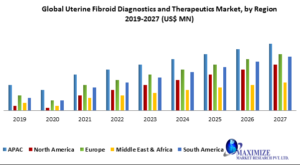
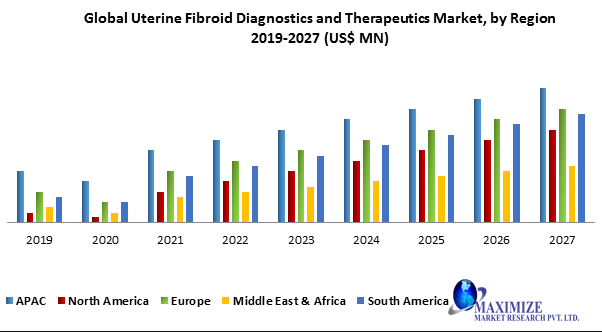
Asia Pacific is expected to represent a significant growth opportunity for the uterine fibroid diagnostics and therapeutics market during the forecast period. The region benefits from a large and growing female population, increasing healthcare expenditure, improving medical infrastructure, and rising awareness regarding reproductive and gynecological health.
Countries such as India, China, Japan, and South Korea are witnessing improvements in diagnostic capabilities and specialized healthcare services. Increasing urbanization, changing lifestyles, improved access to healthcare facilities, and growing investment in medical technology are expected to contribute to regional market growth.
North America remains an important market because of its advanced healthcare infrastructure, high adoption of medical imaging technologies, established pharmaceutical and medical device industries, and greater awareness of uterine fibroid diagnosis and treatment.
Europe is also expected to maintain significant demand, supported by developed healthcare systems, technological advancement, and growing attention to women’s health. Meanwhile, emerging markets in Latin America and the Middle East & Africa offer opportunities associated with improving healthcare infrastructure and increasing access to specialized medical services.
Major Industry Players
The competitive landscape of the Global Uterine Fibroid Diagnostics and Therapeutics Market includes pharmaceutical companies, medical device manufacturers, diagnostic technology providers, and healthcare organizations. Companies are focusing on product development, technological innovation, strategic collaborations, acquisitions, geographic expansion, and regulatory approvals to strengthen their market positions.
Major industry participants and companies associated with the broader uterine fibroid diagnostics and therapeutics ecosystem include:
- AbbVie Inc.
- Pfizer Inc.
- Bayer AG
- GE HealthCare
- Siemens Healthineers
- Koninklijke Philips N.V.
- Johnson & Johnson
- Stryker Corporation
- Boston Scientific Corporation
- Merit Medical Systems, Inc.
- CooperSurgical, Inc.
- Hologic, Inc.
- Karl Storz SE & Co. KG
- Medtronic plc
These companies are pursuing different strategies across diagnostics, pharmaceuticals, medical devices, minimally invasive procedures, and imaging technologies. Product launches, research and development, partnerships, acquisitions, and geographic expansion are expected to remain important competitive strategies.
Frequently Asked Questions
1. What is the expected size of the Global Uterine Fibroid Diagnostics and Therapeutics Market?
The Global Uterine Fibroid Diagnostics and Therapeutics Market is expected to reach approximately US$ 832 Mn by 2027, expanding at a CAGR of 10.6% during the forecast period.
2. What are uterine fibroids?
Uterine fibroids are generally non-cancerous tumors that develop from the smooth muscle tissue of the uterus. They can vary in size and location and may cause heavy menstrual bleeding, pelvic discomfort, abdominal pressure, or reproductive complications.
3. What are the major diagnostic methods used for uterine fibroids?
Major diagnostic methods include ultrasound, magnetic resonance imaging (MRI), and computed tomography (CT). Ultrasound is commonly used for initial evaluation, while MRI can provide more detailed visualization for diagnosis and treatment planning.
4. What are the major treatment options for uterine fibroids?
Major treatment options include uterine fibroid embolization, magnetic resonance-guided focused ultrasound, myolysis, endometrial ablation, hysterectomy, and myomectomy. The appropriate treatment depends on the patient’s symptoms, fibroid characteristics, age, health status, and reproductive goals.
5. Which region is expected to provide significant growth opportunities?
Asia Pacific is expected to provide significant growth opportunities because of its large female population, improving healthcare infrastructure, increasing healthcare expenditure, and rising awareness of gynecological conditions.
Conclusion
The Global Uterine Fibroid Diagnostics and Therapeutics Market is positioned for strong expansion, supported by increasing disease awareness, a growing population of women requiring gynecological care, advances in diagnostic imaging, and the emergence of minimally invasive therapeutic approaches. The projected US$ 832 Mn market size by 2027 and 10.6% CAGR highlight the significant commercial potential of this healthcare segment.
Connect With Us:
MAXIMIZE MARKET RESEARCH PVT. LTD.
2nd Floor, Navale IT park Phase 3,
Pune Banglore Highway, Narhe
Pune, Maharashtra 411041, India.
+91 9607365656
sales@maximizemarketresearch.com
About Maximize Market Research:
Maximize Market Research is one of the fastest-growing market research and business consulting firms serving clients globally. Our revenue impact and focused growth-driven research initiatives make us a proud partner of majority of the Fortune 500 companies. We have a diversified portfolio and serve a variety of industries such as IT & telecom, chemical, food & beverage, aerospace & defense, healthcare and others.