Education is not only about completing a syllabus or remembering information. A good classroom helps students understand ideas, ask questions, solve problems, and use their knowledge in daily life. Choosing the right Method Of Teaching can make lessons easier to understand and more enjoyable for children.
Every classroom has students with different interests, abilities, and learning styles. Because of this, teachers need flexible approaches that encourage participation and support individual learning needs. A balanced teaching approach can help students become more confident and active learners.
What Makes a Good Teaching Approach?
A good teaching approach should focus on what students need to learn and how they learn best. Choosing the right Method Of Teaching can help teachers use explanations, discussions, activities, examples, and practical tasks to make lessons easier to follow.
For example, instead of only explaining a science concept, a teacher can show a simple experiment. Students can observe what happens, discuss their findings, and connect the activity with the lesson. This makes learning more practical and memorable.
The right approach also allows teachers to change their strategy when students are having difficulty understanding a topic.
Make Students Active in the Classroom
Students learn better when they participate instead of only listening. Teachers can include questions, group discussions, role-play, quizzes, games, and classroom activities to keep children involved.
A language lesson, for example, can include a short storytelling activity where students create their own ending to a story. This can improve communication skills while making the lesson more interesting.
An effective Method Of Teaching gives students opportunities to think, speak, create, and learn from their experiences.
Use Educational Tools for Better Learning
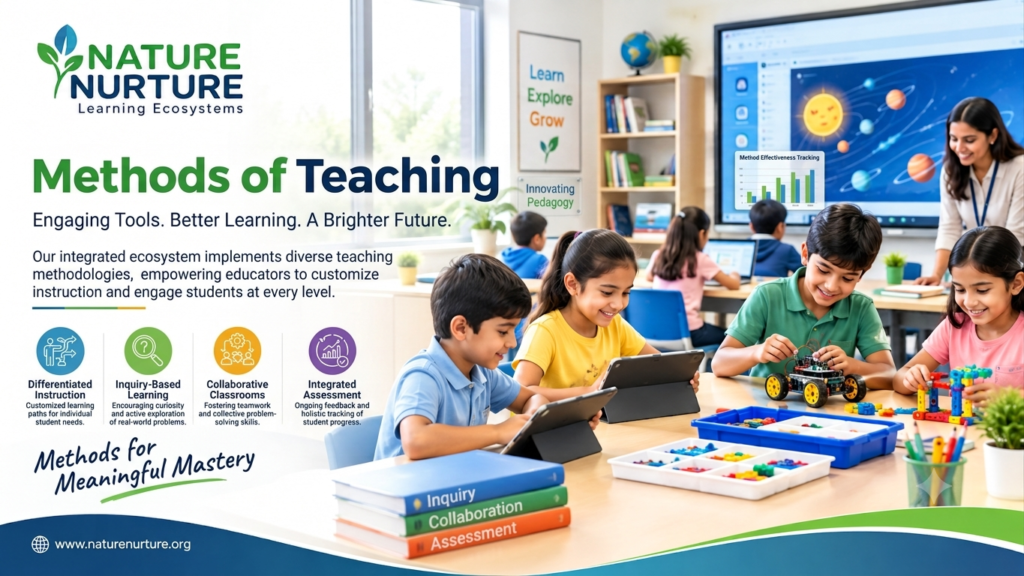
Modern classrooms have access to many resources that can support teaching. Educational Tools For Students can include interactive displays, learning applications, educational videos, digital quizzes, activity kits, and online resources.
These tools can make difficult concepts easier to understand. For example, a digital animation can help students understand how the solar system works, while an educational activity kit can help them explore basic science concepts through hands-on learning.
However, teachers should choose tools according to the lesson and age of the students. Technology should support learning rather than distract students from the main topic.
Encourage Practical and Experiential Learning
Children often understand concepts better when they can connect them with real-life situations. A practical Method Of Teaching gives students opportunities to use their knowledge instead of simply memorizing information.
For example, students learning about money can take part in a simple classroom activity where they create a small shop. They can practice adding prices, giving change, and making buying decisions.
Activities like these can develop problem-solving, communication, teamwork, and decision-making skills.
Support Different Learning Needs
Every student is different. Some children may understand a topic quickly through pictures, while others may need explanations, practice, or hands-on activities. A flexible Method Of Teaching can help teachers respond to these different learning needs.
Teachers can combine different approaches within the same lesson. Visual examples can be used for students who learn better by seeing, while discussions and activities can support children who learn through participation.
This flexible approach can help teachers provide extra support to students who need more time while giving other learners opportunities to explore topics further.
Create a Positive Learning Environment
The classroom environment also plays an important role in learning. Students should feel comfortable asking questions and sharing their ideas without fear of making mistakes. A supportive Method Of Teaching can help create a classroom where children feel valued and ready to participate.
Teachers can create this environment by listening to students, appreciating their efforts, and encouraging them to try again when something does not work.
A positive classroom helps children develop confidence and understand that mistakes can be a natural part of learning.
Why Choose Nature Nurture?
Nature Nurture focuses on practical and student-centered education solutions that help schools create meaningful learning experiences. By combining experiential learning, modern educational resources, and thoughtful teaching approaches, schools can make classroom learning more engaging. A well-planned Method Of Teaching can further help teachers connect lessons with the needs of their students.
The aim is not to use technology or new methods simply because they are available. The focus should be on choosing solutions that match learning goals and support the overall development of students.
Create a Culture of Continuous Learning
Teaching methods should continue to improve as classroom needs change. Teachers can learn from student feedback, classroom results, colleagues, workshops, and professional development programs. Choosing the right Method Of Teaching can help educators respond better to changing student needs.
Schools can encourage teachers to experiment with new activities and reflect on what works best for their students. This creates a learning culture where both teachers and students continue to grow.
Conclusion
The right Method Of Teaching can turn a classroom into a place where students actively explore, understand, and apply knowledge. Practical activities, discussions, educational resources, and technology can all support better learning when they are used with a clear purpose.
A strong teaching approach is not about using one method for every student. It is about understanding learners and selecting suitable strategies that help them learn with confidence. With thoughtful planning and support from organizations like Nature Nurture, schools can create engaging classrooms that prepare students for future learning and everyday challenges .