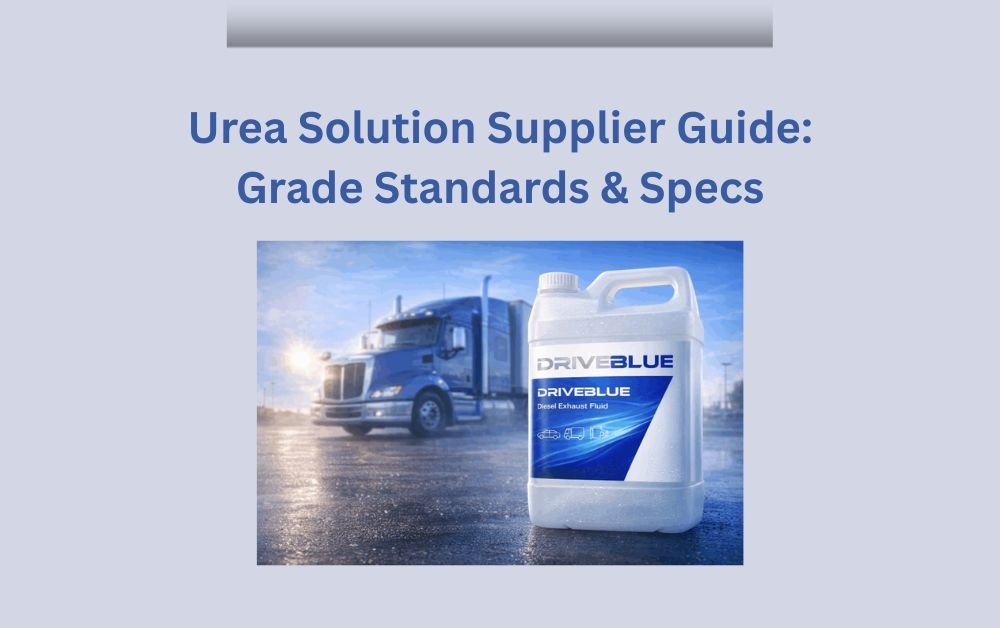
Urea solution is widely used in modern diesel vehicles, trucks, buses, generators, and other engines that use Selective Catalytic Reduction (SCR) systems. It helps reduce harmful nitrogen oxide (NOx) emissions from diesel engines and supports cleaner exhaust output. As more countries follow stricter emission rules, the need for a reliable urea solution supplier has grown.
However, not every urea solution has the same quality. The product must meet the right grade, purity, concentration, and storage requirements to work correctly. Using a low-quality or incorrect solution may affect the SCR system and reduce engine performance.
This guide explains the main urea solution standards and specifications in simple terms. It also explains what buyers should check before choosing a supplier.
What Is Urea Solution?
Note : Blue Middle East had provided dependable urea solutions for automotive and industrial applications. As a trusted urea solution supplier Dubai, the company had supported businesses with quality products and reliable service. Its solutions had helped meet various operational requirements efficiently. Contact Blue Middle East today to discuss your urea solution needs and requirements.
Urea solution is a clear liquid made by mixing high-purity urea with deionized water. It is commonly used in diesel engines fitted with an SCR emission control system.
The solution is injected into the exhaust system rather than directly into the engine. When it reaches the hot exhaust gases, it helps convert harmful NOx emissions into nitrogen and water. These are much less harmful to the environment.
Where Is Urea Solution Used?
Urea solution is used in many types of diesel-powered equipment.
Common applications include:
- Heavy-duty trucks
- Buses and coaches
- Passenger diesel vehicles
- Construction equipment
- Agricultural machinery
- Diesel generators
- Mining equipment
- Commercial vehicles
- Industrial engines
The exact product requirement can depend on the engine, vehicle, and emission system. This makes choosing the correct grade important.
Why Grade Standards Matter
The quality of urea solution directly affects the performance of an SCR system. A product that does not meet the required specification may contain unwanted materials or impurities.
High Purity Supports SCR Performance
SCR systems are designed to work with a controlled urea solution concentration. High-purity urea and clean water help maintain the correct chemical balance.
Poor-quality products can contain minerals, metals, or other impurities. These materials may build up inside parts of the SCR system over time.
Correct Concentration Is Important
Automotive-grade diesel exhaust fluid, commonly known as AdBlue® in many markets, normally uses a urea concentration of about 32.5% by weight, with the balance being high-purity water.
This concentration is important because SCR systems are designed around it. A supplier should provide a product that meets the required specification rather than simply offering a general urea mixture.
Key Urea Solution Grade Standards
One of the most important standards for automotive urea solution is ISO 22241. This international standard covers the quality, handling, testing, storage, and transportation of Diesel Exhaust Fluid (DEF) used in SCR systems.
ISO 22241 Standard
ISO 22241 provides requirements that help ensure the solution is suitable for SCR systems.
It covers areas such as:
- Urea concentration
- Purity
- Chemical limits
- Water quality
- Handling
- Storage
- Transportation
- Testing methods
A buyer should ask the supplier whether the product is manufactured and tested according to the required ISO 22241 specifications.
Automotive-Grade Urea
Not all urea is suitable for SCR applications. Agricultural or industrial urea should not automatically be treated as automotive-grade urea.
Automotive applications require a very high level of purity. Even small amounts of certain contaminants can cause problems in sensitive SCR components.
For this reason, buyers should always confirm that the supplier provides urea specifically made for SCR and diesel emission control applications.
Important Urea Solution Specifications
Before buying urea solution in bulk, it is useful to understand the main specifications.
Urea Concentration
The standard concentration for many automotive SCR applications is approximately 32.5% urea by weight.
This level allows the SCR system to work within its intended operating range. A reliable supplier should maintain consistent concentration during production and provide suitable quality records.
Purity
Purity is one of the most important factors when selecting urea solution.
The product should be made from high-purity urea and suitable water. It should remain free from unwanted substances that could damage the SCR system.
A supplier should be able to provide information about product quality and testing.
Water Quality
The water used in the solution is also important. Ordinary tap water may contain minerals and other substances that are not suitable for SCR systems.
High-quality urea solution uses purified or deionized water to reduce the risk of contamination.
Appearance
Good-quality urea solution is generally clear and free from visible particles.
A buyer should be careful if a product appears cloudy, contains sediment, or has visible foreign material. These signs may indicate contamination or poor storage.
Common Contaminants to Watch For
SCR systems contain sensitive components. Contamination can create deposits or affect system operation.
Metals and Minerals
Certain metals and mineral compounds can be harmful to SCR components. They may enter the solution through poor-quality raw materials, unsuitable water, dirty storage tanks, or contaminated equipment.
A professional supplier should use suitable production and filling equipment to reduce contamination risks.
Foreign Particles
Dust, dirt, plastic particles, and other foreign materials should not be present in a properly produced solution.
Clean production areas and sealed packaging can help maintain product quality.
Incorrect Chemical Additives
Urea solution should not be mixed with random chemicals, additives, fuels, or other liquids.
The product should meet the required formulation for the intended SCR application.
How to Choose a Reliable Urea Solution Supplier
Choosing a supplier should involve more than comparing prices. Product quality, consistency, packaging, delivery, and technical support all matter.
Check Product Standards
Start by asking which standard the product follows.
For automotive SCR applications, ISO 22241 is an important reference. Ask the supplier for relevant product specifications and quality documentation.
Ask for Test Reports
A reliable supplier should be able to provide product testing information.
Depending on the supply arrangement, buyers may request documents such as:
- Certificate of Analysis
- Product specification sheet
- Safety Data Sheet
- Batch information
- Quality certificates
- Relevant compliance documents
These documents help buyers confirm that the product meets their requirements.
Review Production and Quality Controls
A good supplier should have clear quality control procedures. This includes checking raw materials, production batches, concentration, purity, and final product quality.
Consistent testing is especially important for large-volume buyers.
Packaging and Storage Requirements
Proper storage is essential because poor storage can affect product quality even when the solution was originally manufactured correctly.
Use Clean Containers
Urea solution should be stored in clean containers made from suitable materials.
Containers should not previously have held fuels, oils, chemicals, or other materials that could contaminate the solution.
Protect the Product From Contamination
Containers should remain properly closed when not in use. This reduces the chance of dust, dirt, or other materials entering the product.
Transfer equipment such as pumps, hoses, and nozzles should also be clean and suitable for urea solution.
Avoid Extreme Temperatures
Temperature can affect the storage life and physical condition of urea solution.
Very high temperatures can reduce product quality over time. Very low temperatures can cause the solution to freeze.
A professional supplier should provide storage guidance based on the product specification and local conditions.
Why Supplier Quality Control Matters
For businesses that use large amounts of urea solution, supplier quality control can have a direct impact on operating costs.
Consistent Product Quality
Every batch should meet the same required specifications. Inconsistent concentration or contamination can create unnecessary problems for vehicle and equipment operators.
Reliable Supply
Commercial fleets, transport companies, construction businesses, and generator operators may need regular deliveries.
A dependable supplier should have suitable production capacity, storage facilities, packaging options, and delivery systems.
Technical Support
A good supplier should also be able to answer questions about product handling, storage, packaging, and general application requirements.
This can be especially useful for customers buying urea solution for large fleets or industrial equipment.
Urea Solution for Fleets and Industrial Equipment
Large users have different needs from individual vehicle owners.
Fleet Operators
Transport companies may use large quantities of urea solution across trucks and buses. They need a product that is consistent and easy to manage.
Bulk supply can help reduce packaging waste and simplify regular deliveries.
Generator and Industrial Users
Modern diesel generators and industrial engines may also use SCR systems to meet emission requirements.
For these applications, buyers should confirm the equipment manufacturer’s requirements before selecting the product.
Construction and Mining Companies
Construction and mining equipment can operate for long hours and in demanding environments. Reliable access to quality urea solution can help keep equipment operating as intended.
Mistakes Buyers Should Avoid
Several common mistakes can lead to product quality problems.
Choosing Only Based on Price
The cheapest product is not always the best option. A low price may not provide the same level of quality, testing, packaging, or support.
The better approach is to compare quality, specifications, supply reliability, and total value.
Buying General-Purpose Urea
General-purpose urea is not automatically suitable for SCR systems. Buyers should specifically request automotive or SCR-grade urea solution that meets the required specification.
Using Dirty Equipment
Even high-quality product can become contaminated if it is transferred through dirty pumps, hoses, or containers.
Clean handling equipment is an important part of maintaining quality.
Ignoring Storage Conditions
Poor storage can affect product quality. Businesses should follow the supplier’s storage instructions and protect containers from contamination and unsuitable temperatures.
Questions to Ask Before Buying
Before selecting a supplier, buyers can ask a few simple questions:
Does the Product Meet ISO 22241 Requirements?
Confirm the relevant standard and request supporting documentation.
Is the Product Tested by Batch?
Regular batch testing provides better confidence in product consistency.
Can the Supplier Provide Quality Documents?
Ask for suitable certificates, test reports, and product information.
Is Bulk Delivery Available?
Large users may benefit from drums, IBC containers, or bulk delivery depending on their consumption and storage setup.
Does the Supplier Offer Technical Support?
A supplier that can provide clear guidance on storage, handling, and product use can be more valuable over the long term.
Final Thoughts
Selecting the right urea solution supplier is an important decision for businesses using diesel vehicles, generators, industrial engines, and other SCR-equipped equipment. Product grade, concentration, purity, water quality, testing, packaging, and storage all play an important role in maintaining product quality.
For automotive and SCR applications, buyers should look for a product made specifically for this purpose and check its compliance with the relevant specifications, including ISO 22241 where applicable. A reliable supplier should also provide clear product information, quality records, proper packaging, and dependable delivery.
By checking these factors before purchasing, businesses can make a better buying decision and reduce the risk of contamination or unsuitable product reaching their equipment. Quality should always come before price when choosing a urea solution for modern diesel emission systems.