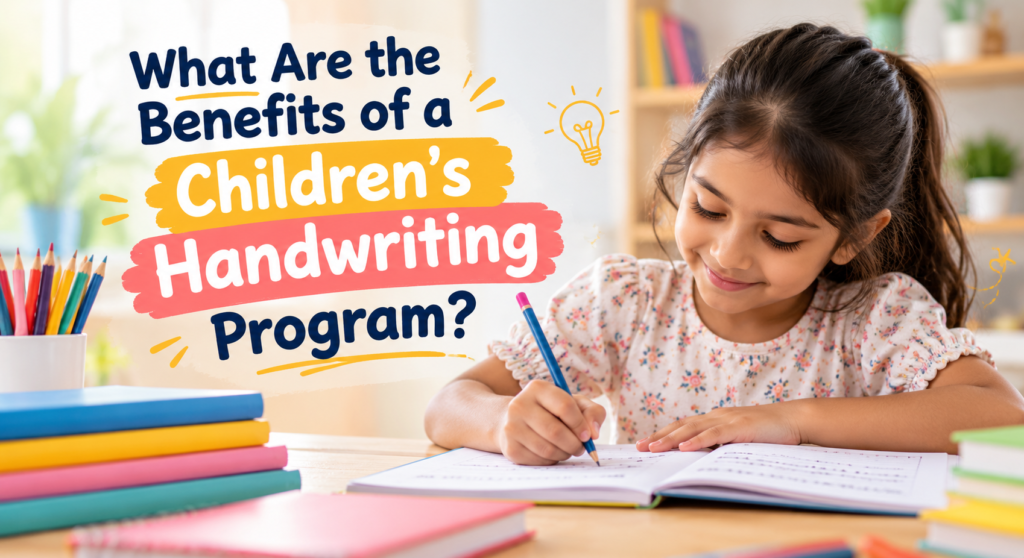
Handwriting is an important skill that supports children throughout their academic journey. Although digital devices have become a regular part of education, the ability to write clearly, comfortably, and confidently remains valuable. A well-designed Children’s Handwriting Program can help young learners develop the physical, cognitive, and practical skills needed for effective handwriting. These programs typically provide structured practice, age-appropriate techniques, and guidance that can make writing more enjoyable and manageable for children.
Builds Strong Fine Motor Skills
Writing requires children to coordinate small movements of their fingers, hands, and wrists. Holding a pencil correctly, controlling pressure, forming letters, and maintaining consistent movements all require fine motor coordination.
A structured handwriting program gives children regular opportunities to practise these movements. Over time, repeated activities can help strengthen hand muscles and improve control. Better fine motor skills can also support other everyday activities, such as drawing, colouring, cutting with scissors, tying shoelaces, and using classroom materials.
Improves Letter Formation and Writing Accuracy
Young children often struggle with remembering how letters and numbers should be formed. They may reverse letters, use inconsistent shapes, or start writing them from incorrect positions. Without proper guidance, these habits can become difficult to change.
A handwriting program introduces children to systematic letter formation. Teachers can demonstrate appropriate starting points, stroke directions, spacing, and proportions. Regular practice helps children develop more consistent writing patterns and gradually improve their accuracy.
Develops Better Hand-Eye Coordination
Handwriting involves continuous communication between what children see and how their hands move. They need to observe letters, understand their shapes, and reproduce those shapes on paper.
Structured handwriting activities encourage this connection between visual perception and physical movement. Improved hand-eye coordination can benefit children beyond handwriting, particularly during activities that require careful visual attention and controlled movements.
Supports Classroom Learning
Clear handwriting can make it easier for children to complete classroom activities. Students may need to copy information from a board, complete worksheets, write answers, take notes, or participate in written assessments.
When handwriting becomes more automatic, children may spend less mental energy thinking about how to form individual letters. This can allow them to focus more attention on what they want to communicate. As a result, handwriting practice can complement broader academic development.
Encourages Writing Speed and Fluency
Some children know what they want to write but struggle to put their thoughts on paper quickly. Slow handwriting can become frustrating, especially when classroom activities require children to complete written work within a specific period.
A structured program provides repeated practice that can gradually improve writing fluency. As children become more comfortable with letter formation and pencil control, their writing movements may become smoother and more efficient. The objective should not simply be speed, but a healthy balance between speed, readability, and comfort.
Increases Confidence in Writing
Children can become discouraged when they compare their handwriting with that of classmates or when they frequently receive corrections. Positive instruction can make a significant difference in how they approach writing.
A good handwriting program focuses on gradual improvement rather than perfection. Children can receive encouragement as they develop new skills and recognise their own progress. This sense of achievement can encourage them to participate more confidently in writing activities.
Teaches Proper Pencil Grip and Posture
The way children hold a pencil and position themselves while writing can affect their comfort and control. An inefficient grip or poor sitting position may make writing unnecessarily difficult.
Handwriting instruction can teach children age-appropriate pencil grip, paper positioning, wrist movement, and sitting posture. These habits can support comfortable writing and reduce unnecessary strain during longer writing sessions.
Helps Establish Consistent Spacing and Alignment
Good handwriting involves more than forming individual letters correctly. Children also need to understand where letters should sit on a line, how much space to leave between words, and how to maintain consistent letter sizes.
Handwriting programs can introduce these concepts through guided exercises and worksheets. With practice, children can become more aware of margins, baselines, word spacing, and overall page organisation. These skills contribute to handwriting that is easier for others to read.
Makes Practice Structured and Engaging
Children may lose interest when handwriting practice feels repetitive or overly difficult. A carefully designed program can introduce activities gradually, moving from basic strokes and shapes to letters, words, and sentences.
Age-appropriate exercises, creative activities, and achievable goals can make practice more engaging. When children associate handwriting with positive learning experiences, they may be more willing to practise consistently.
Provides Individualised Support
Children develop handwriting skills at different rates. Some may need additional practice with pencil control, while others may struggle with letter formation, spacing, or writing endurance.
A structured program can help identify specific areas that need attention. Instructors can then adapt activities according to the child’s current ability. Individualised feedback can be particularly useful because it allows children to work on specific challenges instead of repeating skills they have already mastered.
Encourages Long-Term Learning Habits
Handwriting development requires patience and regular practice. Participating in a consistent program can teach children the importance of practising a skill over time. This habit can extend beyond handwriting and support their approach to other areas of learning.
Children learn that improvement does not always happen immediately and that consistent effort can lead to better results. Such an approach can contribute to positive study habits and a more productive attitude toward learning.
Conclusion
A well-structured handwriting program can provide children with much more than better-looking writing. It can support fine motor development, hand-eye coordination, letter formation, writing fluency, classroom participation, and confidence. By providing age-appropriate instruction and consistent practice, these programs can help children develop handwriting skills in a comfortable and encouraging environment.
For parents and educators, choosing a program that focuses on proper technique, gradual progression, positive feedback, and individual needs can help children build a strong foundation for written communication. While technology continues to influence modern education, handwriting remains an important skill, and developing it effectively during childhood can provide lasting academic and practical benefits.
For More Insightful Articles Related To This Topic, Feel Free To Visit: https://xuzpost.com/